Last checked: 1 July 2026
Editorial Note:
The widely reported “£150 off energy bills” was not a cash payment but an estimated average reduction in policy costs within tariffs from 1 April 2026.
The government put the average saving at about £154 (rounded to £150), while Ofgem’s typical dual-fuel household saw a modelled £134 reduction. The price cap fell by £117 in April due to offsetting network and regulated costs.
Northern Ireland has a separate energy market and is not covered by Ofgem’s Great Britain price cap.
This is informational, not financial/legal advice. Household costs depend on consumption, tariff, meter, payment method, region and individual circumstances.
Quick Answer: What Changed to UK Household Energy Bill Levies in 2026?
From 1 April 2026, households stopped funding the Energy Company Obligation through their gas and electricity tariffs. The government also transferred 75% of domestic Renewables Obligation costs from electricity bills to general taxation.
These measures were intended to remove an average of approximately £150 a year from underlying household energy costs. Customers did not have to apply, and the relevant reductions were passed through unit rates on variable, fixed, prepayment and other eligible tariffs.
The changes did not remove all policy costs, VAT, standing charges, network costs or exposure to wholesale energy markets. The government’s household energy-bill update confirms that actual savings vary according to energy use and tariff type.
Key takeaways:
- ECO costs are no longer included in household energy bills.
- 75% of domestic Renewables Obligation costs are now funded through taxation.
- The average estimated saving is around £150 per year, but varies by usage.
- No application is required; savings are applied automatically through tariffs.
- Other costs, including VAT and wholesale prices, still affect overall bills.
What Are UK Household Energy Bill Levies and Why Do They Appear on Gas and Electricity Bills?
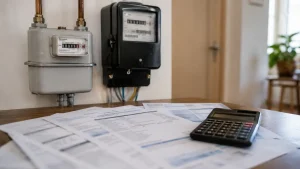
UK household energy bill levies are charges used to fund government-backed environmental, renewable-energy and social programmes. Ofgem generally groups them under “policy costs”.
They support areas such as:
- renewable electricity generation
- energy-efficiency improvements
- assistance for vulnerable households
Energy suppliers collect these costs through tariffs to meet government obligations.
Levies are only one part of an energy bill. Households also pay for wholesale energy, network operation, supplier costs, metering, standing charges and VAT.
Historically, more policy costs have been placed on electricity than gas. Nesta estimated that, under the October–December 2024 price cap, 82% of domestic levy revenue came from electricity bills and 18% from gas. This reflects a past imbalance rather than current post-April 2026 costs.
This is why information about UK household energy bill levies in 2022 may now be misleading. The market conditions and funding structure have changed significantly since then.
Which Green Levies Were Removed or Reduced in April 2026?
Two principal programmes were affected: the Energy Company Obligation and the Renewables Obligation. The first stopped being collected through household bills, while most of the domestic cost of the second moved to public funding.
Energy Company Obligation: Ending Bill-Funded Costs
The Energy Company Obligation, or ECO, required participating suppliers to support eligible insulation, heating and energy-efficiency improvements.
Funding through household bills ended when the previous ECO arrangement concluded on 31 March 2026. Removing that cost lowered the relevant gas and electricity unit rates rather than creating a separate rebate or bank payment.
Some customers of smaller suppliers had not previously paid ECO costs because those suppliers were outside the obligation. Their savings could therefore differ from those of customers whose tariffs had included the scheme.
How Did the Renewables Obligation Change?
The Renewables Obligation supports earlier investments in eligible renewable electricity generation. It was not abolished.
From April 2026, the Exchequer took responsibility for 75% of the domestic share of its cost for the period from 2026–27 to 2028–29. The remaining share continues to be funded through the applicable energy-market arrangements.
Moving expenditure from bills to taxation changes how the programme is financed. It does not eliminate the underlying contractual cost.
Before and After April 2026
| Cost or programme | Before April 2026 | From April 2026 |
| Energy Company Obligation | Recovered through relevant domestic tariffs | No longer levied through household bills |
| Renewables Obligation | Domestic costs are recovered mainly through electricity bills | Government funds 75% of the domestic share |
| Feed-in Tariffs | Included within electricity policy costs | Continues for accredited installations |
| Warm Home Discount | Funded by domestic customers | Continues as a separate support programme |
| Domestic VAT | Charged at 5% | Remains at 5% |
| Climate Change Levy | Not charged to ordinary households | Still a non-domestic tax |
Is Everyone Getting £150 Off Energy Bills in 2026?
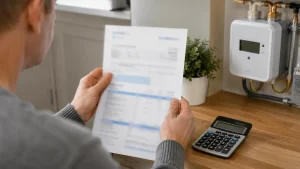
There is no universal £150 cash payment under the levy reforms. Instead, the government estimated an average reduction of about £150 in household energy costs. Its detailed calculation produced a rounded figure of £154, made up of roughly £88 from shifting Renewables Obligation costs, £59 from ending ECO funding and £7 from the associated VAT effect.
For Ofgem’s typical medium-use dual-fuel household, the estimated saving is lower at around £134 because that modelled household uses less electricity than average. Actual savings vary depending on consumption, with higher electricity users likely to see greater reductions.
The change was applied automatically through tariffs. It should not be confused with the Warm Home Discount, a separate £150 rebate for eligible households.
Which Taxes, Green Levies and Policy Costs Still Remain on UK Household Energy Bills?
The April measures did not abolish every environmental or social energy charge. Several costs continue to be recovered directly or indirectly through domestic tariffs.
Remaining Domestic Policy Costs
Remaining costs include part of the Renewables Obligation, Feed-in Tariff commitments, the Warm Home Discount, the Green Gas Levy and support for areas with high electricity distribution costs.
Other mechanisms, including Contracts for Difference and the Capacity Market, can also influence the costs suppliers recover from customers. These schemes are not necessarily displayed as separate lines on an individual bill.
Nesta’s pre-reform analysis found that policy costs had a greater effect on electricity than gas, creating particular pressure for electrically heated homes. Its monetary estimates are based on the 2024 price cap and must therefore be treated as historical context.
Is VAT the Main Tax on Gas and Electricity?
For readers searching for the tax on gas and electricity in the UK, domestic fuel and power are normally subject to VAT at the reduced rate of 5%.
VAT is separate from green levies. It is a general consumption tax rather than funding one named environmental or social programme. Removing VAT and removing policy levies are therefore different policy proposals.
Does the Climate Change Levy Apply to Household Bills?
No. The Climate Change Levy principally applies to energy used by businesses and public-sector organisations.
The rate changes introduced on 1 April 2026 should not be presented as a direct increase in ordinary domestic energy charges. HMRC’s Climate Change Levy policy paper states that the measure is not expected to affect individuals because the levy is not charged on energy supplied to individuals and households.
Commercial landlords and property businesses may encounter the levy on qualifying non-domestic supplies, but that is distinct from a residential customer’s household bill.
Why Can Energy Bills Rise Even After Household Levies Are Cut?
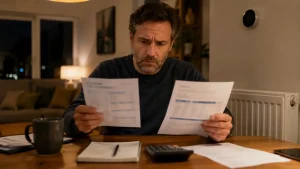
Reducing one component does not control every other part of an energy bill.
Ofgem lowered its typical annualised Direct Debit price-cap figure by £117, or 7%, to £1,641 for April–June 2026. Policy-cost reform was the principal reason for that reduction, although rising network costs partly offset the underlying levy savings.
Tim Jarvis, Ofgem’s Director General for Markets, said: “The main driver of today’s reduction is the change to policy costs announced by the Chancellor in the budget.”
From 1 July, the typical annualised figure increased by 13% to £1,862. According to Ofgem’s July–September 2026 price-cap announcement, the increase resulted from higher wholesale gas prices connected to conflict in the Middle East.
This did not mean ECO had returned or the Renewables Obligation reform had been reversed. It meant increases elsewhere in the calculation outweighed the levy reduction.
The price cap also does not set a maximum total bill. It limits applicable unit rates and standing charges. A household that consumes more energy will still pay more.
How Do the 2026 Levy Changes Affect Different Households and Property Types?
The effect depends on how a property is heated, how much energy it uses and who holds the supplier account.
Homeowners, Tenants and Landlords
For homeowners, lower policy costs may reduce part of the property’s running expenses, but wholesale prices and energy efficiency remain more important to the final bill.
Tenants who pay suppliers directly generally receive tariff changes in the same way as owner-occupiers. Where energy is included in rent or a service charge, the impact depends on the tenancy terms, metering arrangements and how the landlord calculates recoverable costs.
Landlords should distinguish between domestic supplies and energy used for commercial premises. The Climate Change Levy may be relevant to certain business supplies but not to ordinary household accounts.
Who May Save More or Less from the Changes?
Electricity-heavy homes may receive a greater levy-related reduction because the Renewables Obligation applies to electricity. This may include:
- Electricity-only properties
- Homes with direct electric heating
- Households using heat pumps
- Homes charging electric vehicles regularly
A typical dual-fuel household may receive less than the government’s whole-market average. In general:
- Low-use households will see a smaller monetary reduction
- High-use households may experience a larger overall saving
Nesta has argued that concentrating levies on electricity can disadvantage certain groups, particularly:
- Electrically heated homes
- Lower-income households
It also suggests this structure may weaken the financial incentive to switch from gas boilers to heat pumps. Any future rebalancing would therefore need safeguards to protect households that could otherwise face higher gas costs.
What Could Happen Next to Green Levies on UK Energy Bills?
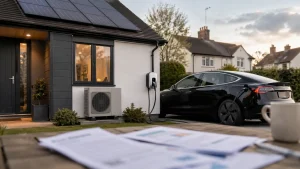
Future reforms may shift more policy costs into general taxation, rebalance charges between electricity and gas, remove domestic energy VAT, or expand targeted support for vulnerable households.
Each option has trade-offs. Moving levies to taxation can lower visible bills but still requires public funding. Eliminating schemes entirely could cut costs but risk reducing investment in renewables, insulation, or fuel-poverty programmes.
Recent BBC coverage referenced political proposals rather than enacted policy. As of 1 July 2026, ECO costs have been removed from bills and 75% of domestic Renewables Obligation costs are publicly funded, while VAT and other charges remain.
Energy levies still affect affordability, but wholesale prices, efficiency, usage, and tariff choice continue to shape household bills.
Conclusion
UK household energy bill levies changed significantly in April 2026, but the reforms did not remove every policy cost or guarantee permanently lower bills. ECO funding left domestic tariffs, while government funding absorbed 75% of domestic Renewables Obligation costs.
Even so, VAT, remaining levies, network charges and wholesale prices still shape what households pay.
For homeowners, tenants and landlords, usage, tariff choice and property efficiency remain central to overall energy affordability in 2026 and beyond.
Frequently Asked Questions
Are standing charges the same as green levies?
No. Standing charges are daily fixed charges covering network, supplier and regulated costs. Some policy costs may be recovered through them, but the whole standing charge is not a green levy.
Do fixed-tariff customers receive the April 2026 reduction?
Suppliers confirmed that applicable ECO and Renewables Obligation savings would be passed to existing fixed-tariff customers through amended unit rates. The precise reduction depends on the tariff and usage.
Does Northern Ireland receive the same £150 reduction?
The Great Britain arrangement applies to England, Scotland and Wales. Northern Ireland has a separate regulated energy market and is not covered by Ofgem’s domestic price cap.
Why have electricity bills carried more policy costs than gas bills?
Renewable electricity programmes have historically been funded mainly through electricity tariffs. Nesta’s 2024 analysis estimated that electricity bills provided 82% of domestic levy revenue.
Is the Warm Home Discount part of the Budget’s £150 saving?
No. The Warm Home Discount is a separate £150 rebate for eligible households. The Budget measure reduced the underlying policy costs included in general tariffs.
Can landlords pass energy costs to tenants?
Tenants who contract directly with suppliers pay through their tariffs. Where a landlord supplies energy through rent or service charges, recovery depends on the tenancy agreement, metering and applicable resale rules.
Do households need to apply for the levy reduction?
No. Suppliers applied the relevant reduction automatically. Separate support programmes, including some Warm Home Discount arrangements, may have their own eligibility or application requirements.
How We Checked This?
This article was checked against current Department for Energy Security and Net Zero guidance, Ofgem price-cap announcements, HMRC tax information, independent Nesta research and the supplied BBC reporting.
The review included:
- Confirming the official names of the relevant energy schemes and their implementation dates.
- Checking the government’s estimated £150 average reduction and Ofgem’s modelled household figures.
- Comparing the April and July 2026 Ofgem price-cap periods and identifying which policy costs changed.
- Distinguishing confirmed government policy from proposals, and separating tariff reductions from other schemes like the Warm Home Discount.
- Prioritising official government and regulatory sources while avoiding guaranteed savings or assumptions about individual outcomes.
No political proposal has been presented as enacted government policy. Individual savings have not been described as guaranteed because actual bills depend on consumption, tariff type, payment method, location and wider market costs.