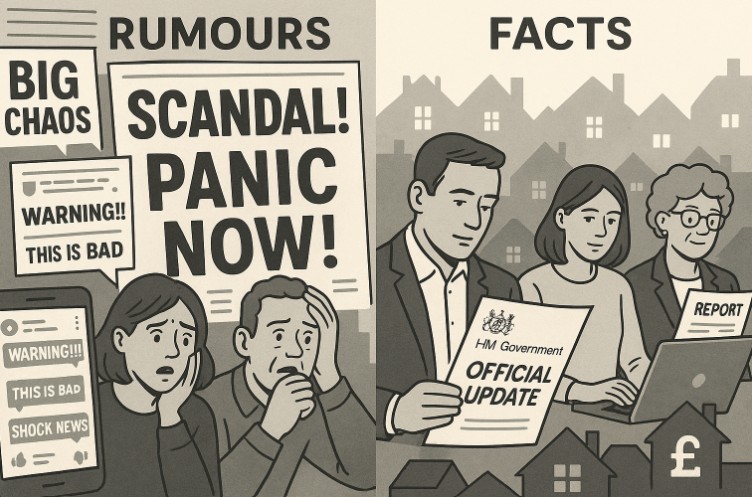
Current status: The scheme has been legally challenged. It has not been cancelled or ruled unlawful.
Quick Answer: Has the FCA Compensation Scheme Been Cancelled?
No. The FCA Motor Finance Consumer Redress Scheme has not been cancelled.
However, the legal challenges have delayed payments that were expected to begin during 2026. The FCA has removed payment dates from its consumer guidance until it can confirm a revised timetable.
Its current advice is that consumers who are concerned about historic motor finance commission arrangements should complain directly to their lender.
The regulator is currently taking a pragmatic approach to implementation. It is not requiring lenders to:
- Contact customers according to the original scheme timetable.
- Make compensation payments according to that timetable.
- Submit monthly scheme reports during the legal challenges.
Lenders must nevertheless continue important preparation, including identifying potentially relevant agreements, gathering commission and disclosure records and planning for both a scheme and a possible no-scheme outcome. The latest position is explained in the FCA’s information for motor finance firms.
Status as of 1 July 2026:
| Question | Confirmed position |
| Has the scheme been cancelled? | No |
| Has it been ruled unlawful? | No |
| Are original payment dates reliable? | No |
| Can consumers still complain? | Yes |
| Is an £830 payment guaranteed? | No |
| Must lenders continue preparing? | Yes |
| Is there a confirmed Tribunal decision date? | No |
What Is the FCA Lender Compensation Plan Dispute About?

The official name of the programme is the Motor Finance Consumer Redress Scheme. The FCA introduced it on 30 March 2026 after examining historic commission arrangements between motor finance lenders and credit brokers, including vehicle dealerships.
The FCA’s motor finance policy statement generally covers potentially eligible regulated agreements entered into between 6 April 2007 and 1 November 2024. Hire purchase and Personal Contract Purchase agreements may be included, while Personal Contract Hire leases are excluded.
The scheme addresses three principal types of commission arrangement:
- Discretionary commission arrangements: The broker could select or influence the customer’s interest rate and potentially earn more commission by choosing a higher rate.
- High commission arrangements: Commission was at least 39% of the total cost of credit and 10% of the amount borrowed.
- Contractual ties: The broker used only one lender or gave one lender a right of first refusal, subject to specified exceptions.
The FCA estimates that around 37% of agreements made during the relevant period may be eligible, equal to approximately 12.1 million agreements. It forecasts £7.5 billion in consumer redress and an average of about £830 for each compensated agreement.
Those figures are modelling estimates across the scheme. They are not promised amounts for individual borrowers.
| Scheme detail | FCA estimate or rule |
| Relevant period | 6 April 2007 to 1 November 2024 |
| Potentially eligible agreements | Approximately 12.1 million |
| Estimated proportion eligible | Around 37% |
| Estimated consumer redress | £7.5 billion |
| Estimated total industry cost | £9.1 billion |
| Estimated average compensation | Around £830 per compensated agreement |
| Current position | Scheme challenged and original payment timetable delayed |
Why Are Lenders Challenging the FCA Motor Finance Redress Scheme?
The lenders’ challenges are not limited to the overall cost of compensation. They raise questions about the FCA’s legal powers, the treatment of historic agreements, limitation periods, assumptions about consumer loss and the methodology used to calculate redress.
These are legal arguments awaiting determination. They should not be reported as established findings against the FCA or against the lenders.
Does the FCA Have the Power to Make the Scheme Rules?
At least one challenge disputes the FCA’s power to establish the rules and its approach to determining whether consumers suffered losses.
The applicants argue that parts of the scheme may impose liability through broad presumptions and standard calculations without giving sufficient weight to the individual circumstances of each agreement.
The FCA’s position is that an industry-wide scheme is lawful and offers a faster, more consistent and less expensive solution than requiring millions of consumers to pursue separate complaints or court cases.
Why Are Pre-2014 Agreements and Limitation Periods Disputed?
The challenges include the application of scheme rules to agreements entered into before 1 April 2014.
They also question how the FCA has applied legal limitation principles when deciding whether consumers suffered loss or damage for which compensation remains payable.
Limitation rules can depend on when a legal claim arose, when relevant information became known and the particular route through which a complaint or claim is pursued. Consumers should not assume that an online statement about limitation periods determines their individual legal position.
Are the Presumptions About Unfairness and Loss Lawful?
Under parts of the scheme, lenders may be required to presume that an inadequately disclosed relevant arrangement created an unfair relationship under section 140A of the Consumer Credit Act 1974.
They may also be required to presume that the unfair relationship caused the consumer loss or damage, unless the applicable rules allow that presumption to be rebutted.
The Tribunal will consider whether these rules are within the FCA’s powers and whether the regulator established a sufficient connection between inadequate disclosure, unfairness and compensable loss.
Why Are the Redress Formula and Property Rights Being Challenged?

For many cases, the FCA’s methodology combines an estimate of overpaid interest with the commission paid and compensatory interest. Caps are then applied to reduce the risk of overcompensation.
The rules can use an estimated interest-rate reduction of 17% for agreements from April 2014 and 21% for earlier agreements. Compensatory interest is based on the annual average Bank of England base rate plus one percentage point, subject to a minimum of 3% for a year.
The lender applicants argue, among other grounds, that parts of the methodology may not sufficiently reflect actual consumer loss. They also allege unlawful interference with property rights protected by the Human Rights Act 1998.
That allegation does not mean a human-rights breach has occurred. It is one of the legal grounds the Upper Tribunal has been asked to examine.
Which Consumers Could Be Affected by the Legal Challenge?
The dispute may affect people who used finance to obtain a car, motorbike, van or campervan between 6 April 2007 and 1 November 2024 and were not adequately told about a relevant commission or contractual arrangement.
Potentially affected consumers include those who:
- Have already submitted a motor finance commission complaint.
- Suspect that a dealer could increase the interest rate to earn more commission.
- We’re not clearly told about a high commission arrangement.
- We’re not told that the broker was tied to a particular lender.
- Have received an acknowledgement but no final complaint outcome.
- They are represented by a claims-management company or law firm.
Simply having used PCP, paying interest or financing a vehicle during the relevant period does not prove that compensation is due.
Which Agreements Are Generally Excluded?
According to the FCA’s current consumer guidance, the scheme will not normally apply where:
- The vehicle was obtained through Personal Contract Hire.
- The complaint has already been considered on its merits by the Financial Ombudsman Service.
- A court has already determined the claim.
- The consumer has accepted compensation.
- A pre-6 April 2008 agreement exceeded £25,000.
- The agreement was for business purposes.
- The loan exceeded the FCA’s annual high-value threshold.
High-value loans excluded from the scheme may still be capable of being raised through the ordinary complaints process. The outcome will depend on the facts and applicable time limits.
The scheme may also cover agreements belonging to customers who have died. Their personal representatives or beneficiaries may be able to contact the lender, although evidence such as a will or grant of probate may be required before compensation can be paid.
How Has the Dispute Changed Compensation Payments and the Timeline?

The original timetable can no longer be relied upon.
The FCA has said it will not currently require lenders to send customer communications or make payments according to the original dates. Monthly reporting has also been suspended during the legal challenges.
This regulatory approach is not the same as cancelling the scheme. Firms are still expected to complete preparatory work that would be useful under different possible outcomes.
What Work Must Lenders Continue?
The FCA expects lenders to continue the following:
- Identifying relevant complaints and finance agreements.
- Gathering records about commission and customer disclosure.
- Obtaining missing information from brokers where necessary.
- Resolving cases involving multiple professional representatives.
- Cooperating with the Financial Ombudsman Service.
- Assessing operational and financial resources for potential redress.
- Preparing for a complaint-led process if the scheme cannot continue.
The FCA’s June 2026 guidance also states that firms should consider potential redress liabilities when assessing whether they have adequate financial resources.
What Is the No-Scheme Contingency Plan?
The FCA has not decided that the scheme will fail. However, it has told lenders to prepare for that possibility.
If all or part of the scheme were quashed, the regulator could consider revising the rules. A revised scheme would probably require further consultation and could face another legal challenge.
The FCA has therefore instructed lenders, on a precautionary basis, to be ready from mid-November 2026 to handle complaints under ordinary statutory timeframes if a complaint-led route becomes necessary.
This is a planning assumption, not a confirmed date for compensation or a prediction of the Tribunal’s decision.
What Should Consumers Do While the Scheme Is Under Challenge?
The FCA’s current advice is to complain directly to the lender where a consumer has concerns about a motor finance commission arrangement.
Its official car finance claims guidance provides a complaint process and lender contact details. The complaint is free to make.
A consumer can take the following practical steps:
- Identify the lender through the finance agreement, bank statements, credit report or dealership paperwork.
- Record the vehicle registration, agreement number and approximate start date.
- Submit a complaint directly to the lender.
- Save the complaint, acknowledgement and reference number.
- Retain finance documents, emails, statements and dealership correspondence.
- Tell the lender about any change of address or contact details.
- Monitor FCA updates rather than relying solely on social-media adverts or compensation calculators.
A complaint records the consumer’s concern, but it does not prove eligibility or guarantee a particular payment.
The FCA says consumers who complain before the scheme begins should have their case assessed, and any compensation paid, sooner than those who wait to be contacted. Consumers who have already complained and received an acknowledgement do not currently need to submit the same complaint again.
Does a Consumer Need a Claims Company or Solicitor?
No. Consumers can complain directly to their lender for free without using a claims-management company or law firm. Paid representatives may charge over 30% of any compensation, reducing what you receive.
Using multiple representatives can also lead to disputes or duplicate fees. The FCA warns about misleading adverts that suggest claims services are necessary. If you feel misled or unfairly treated by a representative, complain to them first, then escalate to the appropriate ombudsman if unresolved.
What Could the Upper Tribunal Decide?

The Tribunal is not limited to choosing between keeping the entire scheme unchanged and removing it completely.
The Scheme Could Be Upheld
If the challenges fail, the scheme could continue under revised implementation and payment dates.
Lenders would then assess eligible agreements under the FCA’s rules. Processing millions of agreements would still take time, so an unsuccessful legal challenge would not necessarily result in immediate payments.
Individual Rules Could Be Quashed
The Tribunal could invalidate particular provisions while leaving other parts of the scheme intact.
The affected rules could relate to:
- Pre-April 2014 agreements.
- Limitation periods.
- Presumptions of unfairness or loss.
- Compensatory interest.
- APR adjustments.
- Redress caps or calculation methods.
The FCA could respond by amending the scheme, reconsidering eligibility or consulting on replacement rules.
The Scheme Could Be Quashed More Broadly
A wider ruling against the FCA could result in a complaint-led process involving lenders, the Financial Ombudsman Service and, in some cases, the courts.
The FCA says this alternative would probably be slower and more expensive and could result in some eligible consumers receiving nothing because they never complain.
No consumer should assume that this outcome has already occurred.
| Possible outcome | Potential effect for consumers |
| Scheme upheld | Implementation resumes under revised dates |
| Certain rules quashed | Eligibility or calculations may change |
| Revised scheme introduced | Further consultation and delay are possible |
| Scheme quashed broadly | Greater reliance on individual complaints |
| Further appeal | Legal uncertainty could continue |
Could the Dispute Affect the Wider UK Credit Market?

The immediate effect is financial and operational uncertainty within the motor finance industry.
Lenders must maintain complaint teams, gather historic records, prepare systems and assess possible compensation liabilities without knowing the final scheme structure.
The FCA argues that a standardised solution would provide certainty and help support a healthy market offering competitively priced motor finance. The lenders challenging the rules argue that compensation must remain lawful, proportionate and properly connected to consumer loss.
It is reasonable to infer that a prolonged dispute could influence lenders’ capital planning, compliance spending, risk controls and future commission arrangements. However, there is not enough evidence to state that this dispute will directly change UK mortgage rates, house prices or the availability of unrelated household credit.
Conclusion
The FCA lender compensation plan dispute has delayed the payment timetable but has not cancelled the Motor Finance Consumer Redress Scheme. Consumers should avoid assuming they are eligible or relying on estimated payouts.
Those concerned about historic motor finance commission can still complain directly to their lender for free and keep supporting records.
The final outcome will depend on the Upper Tribunal’s decision and any subsequent regulatory changes or appeals.
Frequently Asked Questions
What is the FCA compensation plan?
Its official name is the Motor Finance Consumer Redress Scheme. It covers certain historic motor finance agreements where relevant commission or lender-broker arrangements were not adequately disclosed.
Has anyone received motor finance compensation?
Some consumers may have received money through individual complaints, settlements, ombudsman decisions or court cases. Those outcomes are separate from payments under the new industry-wide scheme.
When will car finance compensation be paid?
There is no dependable payment date as of 1 July 2026. The FCA has removed dates from its consumer guidance while the legal challenges continue.
How much is the average payout?
The FCA estimates around £830 per compensated agreement. Actual compensation may be higher, lower or unavailable depending on the agreement and final legal position.
Which agreements may qualify?
Potentially eligible agreements were generally made between 6 April 2007 and 1 November 2024 and involved a covered discretionary, high or tied commission arrangement. Exceptions apply.
Can a consumer complain without a claims company?
Yes. Consumers can complain directly to their lender for free. A paid representative does not guarantee success and may deduct substantial fees.
What should an existing complainant do?
A consumer who has already complained and received an acknowledgement generally does not need to complain again. They should keep their records and monitor official updates.
How We Checked This?
This article was checked against the FCA policy statement, current consumer guidance, the FCA’s legal-challenge summary and its latest information for firms.
Editorial accuracy note: This article separates confirmed FCA information from legal allegations and unresolved questions. Estimated eligibility, compensation and payment dates are not guarantees.
Important information: This article is informational and does not constitute financial or legal advice. Consumers with court proceedings, insolvency issues or concerns about limitation periods should consider independent professional advice.