Understanding your energy bill is more important than ever. With fluctuating prices and increased awareness of household spending, more people are paying attention to the fine details on their energy statements.
One of the most common yet misunderstood terms is “in credit”. What does it actually mean, and how does it affect your payments?
In this guide, we’ll break down what it means to be in credit on your energy bill, why it happens, what your options are, and how you can take control of your energy account for better financial stability.
What Does ‘In Credit’ on Your Energy Bill Actually Mean?
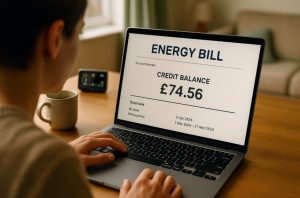
When an energy account is described as “in credit”, it means the customer has paid more to their supplier than the cost of the energy used during that period. This surplus is held on the account and can be used against future bills or reclaimed by the customer.
Energy providers in the UK commonly use estimated billing based on predicted annual usage. To simplify payments, they divide this estimated cost into equal monthly Direct Debits.
If actual energy usage is lower than estimated, especially during warmer months, the customer’s payments may exceed consumption, leading to a credit balance.
It’s important to differentiate between being in credit and being in debit, as each has different implications for how a customer should manage their account.
What’s the Difference Between Being In Credit and In Debit?
Energy bills often include terms like “in credit” and “in debit”, but understanding the difference is key to knowing whether you owe money or are owed money by your supplier.
- In credit means you’ve paid more than the cost of your energy usage. Your energy supplier holds the surplus amount on your account, which can be used to offset future bills or refunded upon request.
- In debit indicates that you’ve used more energy than you’ve paid for. This results in an outstanding balance that you need to pay to your supplier.
In Credit vs In Debit
| Term | Definition | What It Means for You | Typical Cause | What You Can Do |
| In Credit | You’ve overpaid compared to your actual usage | Supplier owes you money | Overestimated usage, seasonal dips | Request refund or leave on account |
| In Debit | You’ve underpaid compared to your usage | You owe the supplier money | Underpayment, increased consumption | Make payment or adjust Direct Debit |
Knowing where your account stands helps you avoid payment issues and manage your household energy budget more efficiently.
Why Might Your Energy Account Be in Credit?
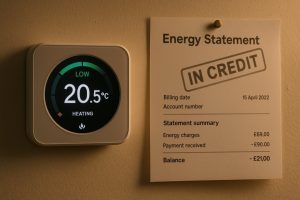
There are several reasons why an energy account may accumulate credit. Understanding these can help households manage payments more effectively and avoid overpaying.
- Fixed monthly Direct Debits that do not reflect real-time usage
- Reduced energy usage during warmer seasons
- Estimated billing based on previous years or averages
- Manual meter readings not submitted, leading to assumptions by the supplier
Customers using less energy than anticipated will often see a build-up of credit, which can be used later or refunded on request.
Should You Worry If Your Energy Account Is in Credit?
In most situations, being in credit is beneficial. It acts as a buffer for periods of high energy consumption. However, consistently high credit levels may suggest overpayment and inefficient budgeting.
Leaving a reasonable level of credit on the account can prevent sudden large bills in winter. On the other hand, a growing credit balance could indicate that Direct Debit amounts are unnecessarily high.
Consumers should monitor this balance regularly and assess whether adjustments to their payment plan are needed. In some cases, it may make more sense to reclaim the surplus or reduce monthly payments, especially if financial pressures exist.
Can You Claim Back Energy Credit from Your Supplier?
Yes, UK regulations give consumers the right to reclaim credit balances from energy suppliers. According to Ofgem guidelines, suppliers must refund credit unless there is a valid reason not to, such as pending meter readings or a recently submitted estimated bill.
To request a refund:
- Submit an up-to-date meter reading if required
- Contact the energy supplier directly through customer support or your online account
- Ensure there are no pending payments or balances due
Refunds are usually processed within 10 working days, and if this does not occur, the consumer can escalate the complaint through the Energy Ombudsman or Citizens Advice.
Refund Process from Major UK Energy Suppliers
| Supplier | Refund Policy | Required Action |
| British Gas | Allows online refund requests with updated reading | Submit meter reading |
| EDF Energy | Refunds processed within 10 working days | Contact via online account |
| Octopus Energy | Auto-adjusts Direct Debits; refunds on request | Email or call customer care |
| E.ON Next | Requires up-to-date readings and account review | Request via account or app |
Knowing your rights and following your supplier’s refund process ensures you can retrieve any overpaid amounts efficiently.
How Can You Check If You’re in Credit on Your Energy Account?
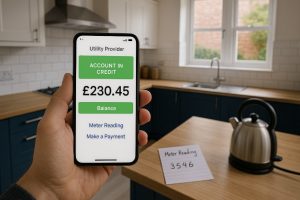
Energy suppliers provide multiple ways for customers to check their balance and determine whether their account is in credit.
- Use the supplier’s online account portal
- Review the latest paper or digital energy bill
- Check through the mobile app, if available
- Monitor via smart meters which offer real-time usage and billing
Regularly reviewing your account helps you stay informed about how much energy you’re using and how your payments align with consumption.
On the bill, the credit balance is usually displayed as a negative number (e.g., -£56.21), indicating that the supplier owes you money. If you are unsure, check the “account balance” section or look for terminology such as “your account is in credit”.
What Should You Do If Your Credit Is Too High?
A consistently high credit balance on your energy bill might seem like a positive, but it can also indicate that you’re regularly overpaying.
This means your funds are tied up unnecessarily with your supplier rather than being available for your household budget. Here’s how to take control of the situation.
Review Your Payment History and Usage
Start by comparing your monthly payments to your actual energy usage. Many suppliers provide annual summaries that show energy consumed versus payments made. A large discrepancy may point to overpayment.
Request a Refund of Surplus Credit
If your account is significantly in credit and your recent meter readings are up to date, you can request a refund. Most UK suppliers will return the excess within 10 working days, although this can vary.
- Check your supplier’s policy on credit refunds
- Ensure your account has no outstanding debt
- Submit a recent and accurate meter reading
Adjust Your Direct Debit Amount
Speak to your supplier about recalculating your Direct Debit. Many providers allow customers to adjust payments to better reflect actual usage. A lower monthly bill can free up money for other essential expenses.
Monitor Your Account More Regularly
Regular account monitoring, especially during seasonal changes, ensures you can make timely adjustments. Set reminders to:
- Submit monthly meter readings (unless using a smart meter)
- Log in to your account to view balances
- Track your usage through your supplier’s app or dashboard
Keeping your credit level in check helps maintain efficient budgeting and ensures you’re not overcommitting financially.
Is It Better to Stay in Credit or Request a Refund?

Both options have advantages, and the right choice depends on individual financial needs and energy consumption patterns.
Remaining in credit provides a cushion for high-usage months. It’s particularly useful during winter, when heating usage spikes. It also avoids sudden jumps in payment amounts or unexpected bills.
Requesting a refund can be helpful when:
- Your credit balance is higher than necessary
- You are moving home or switching suppliers
- Your energy consumption has changed significantly
For some, reducing the Direct Debit amount is preferable to taking a lump sum refund, allowing for continued smoother monthly budgeting.
What Happens to Your Credit If You Switch Energy Suppliers?
Switching energy suppliers is a common way to save money, but many customers worry about what happens to any credit left with their current supplier. The good news is that you’re entitled to that money, and reclaiming it is usually straightforward.
Understand the Final Bill Process
When you switch, your current supplier will generate a final bill based on your last meter reading. This reading is shared between both suppliers to ensure accurate billing.
- Take and submit a final meter reading on your switch date
- Keep a record of the reading and any communications
- Wait for your final bill, typically issued within 6 weeks
Receive Your Credit Refund
Once your account is closed and the final balance calculated, any remaining credit will be refunded. Refunds are usually processed within 10 working days after the final bill is issued.
- Refunds are typically paid via the same method as your Direct Debit
- Contact your old supplier if you haven’t received the refund on time
- In case of disputes, contact Citizens Advice or the Energy Ombudsman
Avoid Delays by Providing Accurate Readings
One of the most common causes of delay in receiving a credit refund is missing or incorrect meter readings. If you don’t provide one, the supplier may estimate usage, potentially reducing your refund or delaying the process.
- Always submit a final meter reading on the day of the switch
- Confirm the reading has been received and accepted
- Use smart meter data if available for faster processing
What If You’re Still Owed Credit After Several Weeks?
If your credit hasn’t been refunded after six weeks of switching:
- Contact your old supplier’s customer service department
- Check the terms in your final bill for the refund timeline
- Raise a complaint if necessary through Ofgem-approved channels
Staying proactive during the switch process ensures your money is returned promptly and the transition to a new supplier is as smooth as possible.
How Can You Avoid Large Credit Balances in the Future?

Avoiding large credit build-ups can help with household cash flow while still ensuring that bills are paid on time.
Here are a few simple strategies:
- Submit regular meter readings if you don’t have a smart meter
- Use a smart meter to automate and ensure accurate tracking
- Review your energy usage and payments quarterly or bi-annually
- Adjust your Direct Debit if your usage decreases
Regular account reviews ensure your payments remain appropriate for your actual consumption.
Conclusion
Understanding what it means to be “in credit” on your energy bill empowers you to manage your payments more effectively and avoid unnecessary overpayments.
Whether you choose to keep the credit for future bills or request a refund, being informed ensures better control over your household budget.
Regularly checking your account, submitting accurate readings, and adjusting payments when necessary can help maintain financial balance and prevent surprises, especially during high-usage seasons like winter
FAQs
What does it mean when my gas and electric bill is in credit?
It means you’ve paid more to your supplier than your actual usage, and the excess amount sits as a balance in your account.
Will my energy supplier automatically refund my credit?
Not always. While some suppliers may refund automatically, most require you to request it, especially if the credit amount is high.
Can I stay in credit to avoid future price hikes?
Yes, many customers build up credit during summer to offset higher usage or price increases during winter.
What if my energy account is in credit but I’m moving house?
Your final bill will reflect your balance. Any remaining credit will be refunded once the account is closed and readings confirmed.
How long does it take to receive a refund from my energy provider?
Typically, within 10 working days of your final bill or refund request, depending on the provider’s policy.
Does being in credit affect my credit score?
No, your energy account balance does not impact your credit score unless debts are left unpaid and sent to a collection agency.
Is it better to pay energy bills monthly or quarterly?
Monthly payments often help with budgeting and avoid large bills, while quarterly payments may result in temporary high balances.