Many people wonder whether it is actually possible to avoid paying electricity bills for life.
While one widely discussed UK case involves an individual who reportedly has not paid an electricity bill since 1970, the reality is that this was achieved legally by disconnecting from the National Grid and relying entirely on renewable energy systems.
For most households, completely eliminating electricity bills requires significant investment, careful planning, and a commitment to energy independence.
However, there are numerous ways to reduce electricity costs through efficiency measures and renewable technologies.
Key Takeaways
- One UK resident reportedly avoided electricity bills since 1970 through off-grid living.
- Non-payment while connected to the grid can lead to debt recovery, CCJs, and disconnection.
- Renewable energy systems can significantly reduce or eliminate electricity bills.
- Solar panels, wind turbines, and battery storage are common off-grid solutions.
- Living off-grid is legal in the UK if planning and safety regulations are followed.
- Energy-efficient appliances and home improvements can lower electricity costs.
- Government schemes and incentives may help fund renewable energy installations.
- Responsible energy management benefits both households and the wider energy network.
What Happens If You Don’t Pay an Electricity Bill for Decades?

Failing to pay an electricity bill for decades is not only unusual but legally and financially risky for most UK residents. Utility providers are regulated to ensure fair practices, but non-payment initiates a structured escalation process.
This includes late notices, payment reminders, and eventually disconnection.
In the UK, electricity supply is considered an essential service, and there are legal protections in place for both the provider and the consumer. However, if a customer persistently avoids paying their electricity bill while remaining connected to the grid, the supplier is entitled to:
- Disconnect the service after appropriate notice
- Involve debt collection agencies
- Apply for court judgements such as County Court Judgements (CCJs)
- Inform credit reference agencies, damaging the person’s credit profile
Individuals who haven’t paid a bill in decades are either disconnected from the grid or living through alternative, legal means of energy generation such as renewable energy systems.
In the rare example of someone not paying since 1970, the person achieved this by eliminating the need for grid-based electricity.
Why Is Paying Electricity Bills Important for the Community?
Timely payment of electricity bills plays a crucial role in supporting the broader energy infrastructure. Utility providers use the revenue collected to maintain the power grid, upgrade systems, and invest in greener technologies.
When consumers delay or avoid payments, it can place financial pressure on suppliers, which could lead to service limitations or price increases.
The wider community also benefits from reliable energy systems that are funded by regular consumer contributions. Bill payments help to:
- Ensure the stability and maintenance of electricity infrastructure
- Support the rollout of smart energy solutions and renewable technologies
- Fund assistance programmes for vulnerable customers
- Maintain fair pricing across all consumer groups
In extreme cases, non-payment by a significant number of users can contribute to increased tariffs for paying customers, as suppliers attempt to recover losses. The balance between consumption and contribution is essential for the continuity of national and regional electricity networks.
How Did One Person Avoid Paying Electricity Bills Since 1970?
How Did One Person Avoid Paying Electricity Bills Since 1970?
The individual featured in the widely discussed story achieved a unique form of energy independence by disconnecting entirely from the National Grid. This decision eliminated the legal obligation to pay utility companies. Instead, they invested in renewable energy systems to meet their electricity needs.
Their energy independence was achieved through:
- Installation of solar panels and a small-scale wind turbine
- Battery storage systems to retain energy for night-time use
- Efficient use of appliances to reduce overall demand
- Manual systems for tasks such as water heating and lighting
By maintaining a modest and carefully managed electricity usage pattern, the individual successfully met their daily needs without relying on commercial electricity suppliers. This approach required a long-term commitment to self-sufficiency and an initial investment in off-grid infrastructure.
An energy expert explained this situation clearly:
“Many people think avoiding electricity bills is simply about installing solar panels, but genuine energy independence requires careful planning, battery storage, and a willingness to adjust daily energy use. Most successful off-grid households monitor their consumption closely and make efficient use of every unit of power they generate.”
While this example remains highly unusual, it demonstrates that avoiding electricity bills legally is possible when a household generates and manages its own energy supply. However, for most people, fully disconnecting from the grid would require significant financial investment, ongoing maintenance, and substantial lifestyle adjustments.
What Are the Legal and Financial Consequences of Long-Term Non-Payment?

Long-term non-payment of electricity bills can lead to serious legal and financial outcomes, especially for individuals who remain connected to the National Grid. Utility companies in the UK follow specific regulations when addressing non-payment, but the consequences become increasingly severe over time.
Legal Obligations Under UK Energy Law
In the UK, electricity providers are regulated by Ofgem and must follow a structured approach before disconnecting a household. However, if a customer continually fails to pay their bills, suppliers are allowed to:
- Pursue legal recovery of debts
- Apply for a warrant of entry to disconnect supply
- Refer the debt to collection agencies
- Initiate court proceedings to secure payment
A County Court Judgement (CCJ) may be issued if the debt remains unpaid, significantly affecting the individual’s ability to access future credit or financial services. These judgments can remain on a person’s credit file for up to six years.
Financial Impact on the Individual
Besides legal repercussions, there are long-term financial effects that can follow prolonged non-payment. These include:
- Accumulation of late fees and penalty charges
- A sharp decline in credit score
- Higher interest rates on future financial products
- Difficulty in securing rental properties or loans
Many consumers underestimate how a missed utility bill can influence other areas of life. Even a few months of non-payment can trigger cascading consequences that take years to resolve.
Strain on Utility Providers and the Grid
Electricity providers rely on regular payments to maintain the infrastructure and supply chain. Unpaid bills not only affect company revenue but also increase operational costs due to:
- Increased staff time spent on debt recovery
- Legal fees and administrative processes
- Potential need to raise tariffs to cover losses
When one segment of the population consistently avoids payment, it can shift financial pressure onto paying customers, resulting in broader consequences for the community.
Can Renewable Energy Really Help You Avoid Electricity Bills?
Renewable energy systems offer a legitimate path to reducing or even eliminating electricity bills. However, the extent of savings depends on the scale and efficiency of the system, the user’s energy habits, and whether the household remains connected to the grid.
A typical UK household might install solar panels or wind turbines to supplement grid electricity. Those aiming for complete bill elimination must generate enough energy to support all electrical needs and incorporate storage systems to cover periods with low generation.
Common renewable solutions include:
- Solar photovoltaic (PV) systems
- Small-scale wind turbines
- Battery storage units
- Hybrid systems with both solar and wind capabilities
While upfront costs can be significant, long-term savings and government incentives help to offset the investment.
Estimated Cost and Output of Common Renewable Energy Systems in the UK
| Energy Source | Initial Cost (Approx.) | Average Output | Typical Savings |
| Solar PV (4kW) | £5,000 – £7,000 | 3,400 kWh/year | £200 – £300/year |
| Wind Turbine (1.5kW) | £7,000 – £10,000 | 2,600 kWh/year | £150 – £250/year |
| Battery Storage | £4,000 – £6,000 | Depends on system | Varies |
How Can You Legally Live Off-Grid in the UK Today?
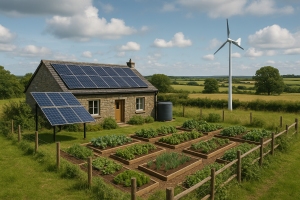
Living off-grid is not only legal in the UK but increasingly encouraged in the context of sustainable development. However, it requires adherence to planning, environmental, and health regulations. Any off-grid dwelling must meet minimum standards for sanitation, waste disposal, and safety.
To legally transition to off-grid living, one must:
- Secure land and obtain planning permission for building
- Install renewable energy generation and storage systems
- Establish water sources such as wells or rainwater harvesting
- Incorporate waste management systems like compost toilets or septic tanks
While urban areas are less suited to full off-grid living, rural properties often offer the necessary space and flexibility. Property owners should work with local councils to ensure compliance before disconnecting from public services.
A sustainability specialist explained the process clearly:
“Many people assume living off-grid simply means disconnecting from utility companies, but the reality is far more complex. Legal off-grid living still requires compliance with planning rules, environmental standards, and health regulations. The most successful projects are those that balance self-sufficiency with full regulatory compliance from the beginning.”
For individuals considering this lifestyle, careful planning is essential. Although off-grid living can reduce long-term utility costs and increase energy independence, it also requires ongoing maintenance, investment, and a commitment to managing resources responsibly.
What Are the Benefits and Challenges of an Off-Grid Lifestyle?
An off-grid lifestyle offers a range of personal and environmental benefits. It allows individuals to control their energy usage, reduce utility costs, and minimise their carbon footprint. However, it also requires significant responsibility and upfront investment.
Benefits include
- Independence from utility providers and fluctuating energy prices
- No ongoing electricity bills
- Potential eligibility for government grants or incentives
- Lower environmental impact through renewable usage
Challenges include
- High initial installation costs for energy systems
- Regular maintenance and technical knowledge required
- Limited availability of power during poor weather
- Reduced convenience compared to grid-connected homes
Off-grid living is not suitable for everyone. It demands a lifestyle that values resourcefulness, conservation, and long-term planning.
What Steps Can Be Taken to Reduce or Eliminate Electricity Bills in the UK?
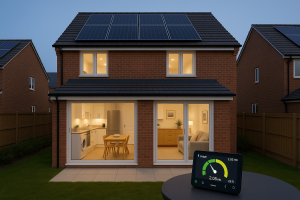
While fully avoiding electricity bills is not feasible for most people, there are effective ways to significantly reduce or even eliminate them through sustainable practices, energy efficiency, and government-backed schemes.
Improving Energy Efficiency at Home
Reducing electricity usage begins with making energy-conscious decisions within the household. Some of the most effective and low-cost methods include:
- Replacing traditional bulbs with LED lighting
- Installing programmable thermostats
- Switching off devices at the plug
- Using energy-efficient appliances rated A or above
Small changes in daily habits can lead to meaningful reductions in monthly energy bills. Insulation upgrades also play a vital role in reducing heating needs, which often consume the most energy in UK homes.
Investing in Renewable Energy Solutions
For those with the budget and space, installing renewable energy systems can dramatically reduce reliance on the grid. Solar panels and small-scale wind turbines are among the most common options available to UK homeowners.
Advantages include:
- Long-term savings on electricity bills
- Eligibility for payments through the Smart Export Guarantee (SEG)
- Greater control over energy production and consumption
Although the initial installation cost can be high, these systems often pay for themselves over time through energy savings and export payments.
Making Use of Government Grants and Incentives
The UK government and energy suppliers provide financial assistance to households seeking to become more energy efficient. Programmes such as the Energy Company Obligation (ECO) and Green Deal offer funding for:
- Wall and loft insulation
- Efficient heating systems
- Renewable technology installations
Eligibility for these grants may depend on household income, property type, and current energy performance rating.
Key Methods to Reduce or Eliminate Electricity Bills
| Method | Description | Potential Benefit |
| Energy-efficient appliances | Use of A-rated models | Lower energy consumption |
| Solar panel installation | Generates electricity on-site | Reduced grid reliance |
| Smart meters | Monitors real-time usage | Helps control consumption |
| Off-peak tariffs | Cheaper rates during low-demand hours | Cost-effective usage |
| Government schemes | Grants for home improvements | Reduced installation costs |
By combining energy-saving practices with smart investments, UK households can gain more control over their electricity expenses while supporting national sustainability goals.
Conclusion
The story of living without paying an electricity bill since 1970 highlights the possibilities and challenges of energy independence.
While legally disconnecting from the grid and relying solely on renewables is achievable, it requires careful planning, investment, and lifestyle adjustments.
For most people, reducing energy bills through efficiency and sustainable technologies remains the most practical path.
Whether fully off-grid or partially reliant on renewables, responsible energy management supports both individual savings and a more resilient national power system.
FAQs
How do people live without paying electricity bills?
Some people live off-grid by installing renewable energy systems such as solar panels and wind turbines, which allow them to generate their own electricity and avoid utility bills altogether.
Is it legal to disconnect from the grid in the UK?
Yes, it’s legal to live off-grid in the UK, as long as you comply with local planning laws and building regulations. You’ll also need to ensure that you meet basic health, safety, and environmental standards.
What renewable energy options are viable in the UK for homes?
The most common options include solar photovoltaic (PV) panels, small wind turbines, and biomass systems. These can be combined with battery storage to maximise independence from the grid.
How much does it cost to set up an off-grid energy system?
Costs vary depending on system size and energy needs. A basic off-grid solar setup can start around £5,000–£10,000, but larger or hybrid systems can cost upwards of £20,000.
Can avoiding electricity bills hurt your credit score?
Yes, failing to pay electricity bills while connected to the grid can lead to debt collection and County Court Judgements (CCJs), which negatively affect your credit rating.
How do electricity companies recover unpaid bills?
They may issue reminders, add late fees, assign debt to collection agencies, or take legal action. In severe cases, they may disconnect supply or pursue court proceedings.
Are there government grants for going off-grid in the UK?
Yes, some schemes like the Smart Export Guarantee and ECO provide financial support for installing energy-efficient systems or exporting excess energy to the grid.