Living next to a well-kept property can enhance not only your home’s value but also your everyday quality of life. However, if your neighbour’s garden has become overgrown, cluttered, or hazardous, it may lead to frustration and health concerns.
While everyone has the right to enjoy their outdoor space in their own way, the situation becomes complex when a garden becomes an eyesore or potential risk to the wider community.
So, can the council force your neighbour to tidy their garden? The answer is yes—under specific conditions and legal frameworks. This blog explores when and how local authorities in the UK can intervene in such matters.
How to Resolve a Dispute Over an Untidy Garden?: A Step-by-Step Guide
While the council has the power to intervene, taking a staged approach is often the fastest way to get results.
Step 1: The Informal Conversation
In many cases, a neighbour may not realize their garden has become a problem or may be facing personal challenges.
-
Approach them kindly: Assume they aren’t aware of the impact.
-
Be specific: Mention the exact issue, such as a blocked footpath or a specific smell.
-
Offer help: If you are able, offering to help with a quick trim can resolve things instantly.
Step 2: Seek Mediation
If direct talk doesn’t work, consider a third party.
-
External Mediation: Professional services can help facilitate a compromise without involving legal authorities.
-
Community Support: In some areas, local community groups offer dispute resolution.
Step 3: Contact Landlords or Housing Associations
If the property is rented, the tenant may be breaching their tenancy agreement.
-
Stricter Rules: Housing associations often have maintenance standards that are stricter than the council’s.
-
Landlord Responsibility: Ultimately, landlords must ensure their property doesn’t violate local laws.
Step 4: Formal Council Complaint
When health, safety, or the local “amenity” are compromised, it is time to involve the local authority.
-
Environmental Health: Contact them for rats, rotting waste, or hazardous smells.
-
Planning Department: Contact them if the garden is a visual eyesore that ruins the look of the street.
Checklist: Should You Report Your Neighbour?
Before contacting the council, use this checklist to see if the issue meets the threshold for official intervention.
-
Evidence of Pests: Have you seen rats or mice nesting in the overgrowth?
-
Physical Obstruction: Is a hedge or tree blocking a public footpath or your driveway?
-
Health Hazards: Is there rotting food waste or stagnant water attracting insects?
-
Visual Amenity: Is the garden filled with “visual pollution” like broken appliances or building rubble visible from the street?
-
Persistent Problem: Is this a long-term issue rather than a temporary lapse due to illness or bad weather?
Note: If you only checked items like “long grass” or “ugly plants,” the council is unlikely to take action as these are often considered matters of personal taste.
What Legal Powers Do Councils Have Over Untidy Gardens?

Local authorities in the UK have several legal avenues they can use when dealing with untidy or hazardous gardens.
Each law addresses a different aspect of the problem, depending on whether the issue is aesthetic, health-related, or contributes to anti-social behaviour.
Environmental Protection Act 1990
Under this act, councils can act if a garden poses a statutory nuisance, such as odours from waste or the presence of rats due to decomposing materials.
Environmental Health Officers may be called in to inspect the site, and if a nuisance is identified, an abatement notice can be issued, requiring the homeowner to resolve the problem.
Section 215 of the Town and Country Planning Act 1990
This section enables councils to serve a notice on owners or occupiers of land if its condition adversely affects the amenity of the neighbourhood.
This includes gardens that are overgrown, filled with rubbish, or visually detrimental to the surrounding area. The notice specifies required actions and a deadline.
Anti-social Behaviour, Crime and Policing Act 2014
Community Protection Notices (CPNs) can be issued under this act if a garden’s condition contributes to anti-social behaviour.
This could include persistent mess, unpleasant smells, or structures that interfere with neighbours’ use of their property. CPNs are particularly relevant when previous informal warnings have been ignored.
The “Self-Help” Rule: Dealing with Overhanging Branches and Hedges
If your neighbor’s garden is encroaching on your property, you don’t always have to wait for the council to act. Under UK common law, specifically the Law of Abatement, you have certain rights to take matters into your own hands.
Can I Cut My Neighbour’s Overhanging Branches?
Yes. If branches from a neighbor’s tree or hedge overhang your boundary, you are legally entitled to trim them back. However, there are strict rules you must follow to stay on the right side of the law:
-
The Boundary Line: You may only trim the branches up to the exact point where they cross your property line. You cannot enter your neighbor’s land or lean over the fence to cut further back without their permission.
-
The “Cuttings” Rule: Legally, the wood and any fruit attached to the branches still belong to your neighbor. You should offer the cuttings back to them. However, do not simply throw them over the fence, as this could be considered fly-tipping or a nuisance; it is best to ask how they would like them disposed of.
-
Tree Preservation Orders (TPOs): Before you cut, check with your local council to ensure the tree isn’t protected by a TPO or located in a Conservation Area. Pruning a protected tree without permission can lead to heavy fines.
Dealing with High Hedges
While the council rarely intervenes in “cosmetic” garden issues, they do have specific powers under Part 8 of the Anti-social Behaviour Act 2003 regarding high hedges.
-
The 2-Metre Rule: If a line of two or more evergreen or semi-evergreen trees/shrubs exceeds 2 meters in height and is blocking light to your home or garden, you can ask the council to intervene.
-
Exhaust All Options: The council will usually only investigate a high hedge complaint if you can prove you have tried to resolve the issue with your neighbor first.
Why This is Often Better Than a Council Notice
Council intervention via a Section 215 Notice or Community Protection Notice can take months to process. Utilizing your right to abatement is often the fastest way to resolve physical obstructions like blocked footpaths or driveways.
When Does a Garden Become a Nuisance or Health Hazard?

A garden doesn’t need to be picture-perfect, but when it deteriorates to the point where it affects the comfort, safety, or health of others, it may cross into legal territory.
Local councils only intervene in cases where the garden meets the threshold of a statutory nuisance or presents a public health hazard. Understanding the distinction between personal taste and legal nuisance is essential when determining if council action is likely.
What Constitutes a Nuisance?
A nuisance in this context typically refers to a condition on private property that unreasonably interferes with the use or enjoyment of neighbouring properties. While some overgrowth or disorganisation might be considered untidy, it only becomes a nuisance when it leads to:
- Obstruction: Overgrown hedges or trees encroaching on footpaths, driveways, or public spaces can become safety hazards or limit access for others.
- Visual Pollution: Piles of broken furniture, discarded appliances, and building rubble can create an eyesore that negatively impacts neighbouring property values.
- Offensive Odours: Compost heaps that are not properly managed or organic waste left to rot can produce foul smells that drift into neighbouring homes or gardens.
- Excessive Debris: Gardens cluttered with sharp objects, glass, or metal scraps may not just be unsightly—they can also be dangerous, particularly to children or pets nearby.
The key factor is the impact on others. If neighbours are unable to use their own gardens or homes comfortably due to the condition of an adjacent garden, they may have grounds for a complaint.
When Does It Become a Health Hazard?
A garden escalates from a nuisance to a public health hazard when its condition puts others at risk of disease or injury. The Environmental Health department within a local authority is responsible for assessing these risks. Common scenarios include:
- Vermin Infestation: Untidy gardens with food waste, stagnant water, or dense vegetation can provide ideal nesting and feeding conditions for rats, mice, and insects. This can pose serious health risks and is often a trigger for immediate action.
- Rotting Organic Material: Composting is encouraged when done correctly, but neglected piles of plant or food waste can attract flies and bacteria. Once decomposition produces harmful gases or attracts scavenging animals, it becomes a concern.
- Water Accumulation: Containers, tyres, or other items that collect rainwater can become breeding grounds for mosquitoes and other insects that transmit disease.
- Fire Risk: Excessively dry or unmanaged vegetation, particularly during warmer months, may increase the risk of accidental fires, especially if flammable materials like wood or fuel canisters are present.
These hazards are not only unpleasant but potentially dangerous. The council can intervene under Environmental Protection legislation and may act faster in these cases than for visual or amenity-related issues.
How Councils Determine Severity
When assessing a complaint, local authorities consider several factors:
- Proximity to neighbours – Does the issue directly affect nearby residents?
- Frequency and duration – Is the issue temporary or ongoing?
- Likelihood of harm – Is there evidence of pest activity or a realistic risk of disease?
In most cases, councils will send a health inspector or enforcement officer to visit the property, take photographs, and speak to the property owner. Depending on the findings, a formal notice may be issued, requiring the owner to address the problems within a set timeframe.
Is the Council Likely to Help?
| Condition of Garden | Category | Council Intervention |
| Overgrown but contained (long grass/weeds) | Cosmetic Untidiness |
Unlikely |
| Hedge/Tree blocking a footpath or road | Obstruction/Nuisance |
Yes |
| Piles of food waste with rats/mice | Health Hazard |
Yes (High Priority) |
| Stagnant water in open containers | Health Hazard |
Yes |
| Foul-smelling compost or rotting organic waste | Statutory Nuisance |
Possibly |
| Building rubble or appliances visible from street | Amenity Impact |
Yes |
Can an Untidy Garden Affect Neighbourhood Amenity?

The term “amenity” in planning law refers to features that contribute to the attractiveness and livability of an area. A severely neglected garden can negatively affect both visual appeal and perceived safety.
Visual Disruption
If a property stands out due to its poor upkeep, it may lower the tone of the street and influence property values. Visual disruption may include:
- Piles of discarded items clearly visible from the street
- Dead plants or long-neglected flower beds
- Garden sheds in disrepair, collapsing fences, or broken gates
How Councils Evaluate Amenity Impact?
Councils evaluate the garden’s effect on public spaces and neighbours, considering factors like visibility, complaints, and whether the garden is in a prominent location.
How Do Councils Enforce Garden Clean-Up Notices?
Once a complaint has been investigated and validated, councils initiate formal proceedings to require the homeowner to take corrective action.
Section 215 Notice Process
A Section 215 notice will:
- Identify the exact issues that need to be resolved
- Provide a timeframe for compliance, typically between 28 to 56 days
- Advise on the right to appeal through the Magistrates’ Court
Failure to comply can result in fines or the council stepping in to carry out the work and charging the homeowner.
Community Protection Notices
A CPN usually follows a written warning. It is more flexible than a Section 215 notice and may apply to both owner-occupiers and tenants. Breaching a CPN is a criminal offence and can lead to a fixed penalty notice or court summons.
What Happens If a Neighbour Ignores the Council Notice?
When a notice is ignored, the council has a range of enforcement tools available.
Financial Penalties
Depending on the legislation used, penalties include:
- Fixed penalty notices (usually up to £100)
- Fines imposed by a Magistrates’ Court, often up to £1,000
- Daily fines for ongoing non-compliance, sometimes reaching several hundred pounds per day
Council Intervention and Cost Recovery
In more serious cases, councils may arrange for contractors to clean the garden. The costs of this work are then charged to the homeowner.
If unpaid, the charges can be recovered by placing a legal charge on the property, which must be paid upon sale.
How Can You Report an Overgrown or Messy Garden?
Reporting a neglected garden typically involves contacting your local council’s environmental or planning department.
Methods of Reporting
- Submitting an online complaint through the council’s official website
- Calling the environmental services helpline
- Writing a letter or email with attached photographs as evidence
What to Include in a Report?
- A clear description of the issue
- The property’s address
- Evidence, such as photographs or dates of repeated issues
Some councils offer an anonymous reporting option, although this might limit the extent of formal follow-up if legal proceedings are necessary.
What Are Your Rights and Responsibilities as a Neighbour?
While councils have legal powers, it’s usually best to attempt direct communication first. In many cases, homeowners may not realise the extent of the problem, or they may be dealing with personal challenges that make upkeep difficult.
If direct communication fails:
- Council involvement is an appropriate next step
- Mediation services may be offered in more complex or escalating disputes
- Landlords or housing associations should be contacted if the property is rented
Understanding both your rights and your neighbour’s situation can lead to a more amicable and quicker resolution.
Are There Exceptions or Grey Areas in Enforcement?
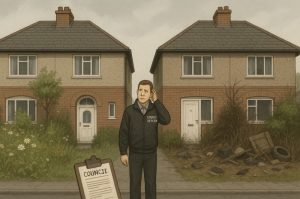
Council enforcement is not always straightforward, and many situations fall into ambiguous or subjective territory.
Private Land Rights
If an untidy garden is entirely on private land and doesn’t pose a public health or amenity concern, the council is unlikely to intervene.
Cosmetic neglect, such as slightly overgrown grass or untrimmed bushes, often doesn’t meet the threshold for action.
Seasonal and Temporary Issues
Short-term neglect due to travel, illness, or weather may be tolerated by councils. They often give property owners reasonable time to address issues, especially during wetter seasons when growth is rapid.
Housing Association Properties
Housing associations may enforce their own standards, which are usually stricter than council rules. Tenants may face eviction notices or fines for failing to maintain outdoor spaces according to the tenancy agreement.
Conclusion
Yes, the council can step in if a neighbour’s garden becomes more than just an eyesore. By relying on specific legislation such as the Environmental Protection Act and Section 215 of the Town and Country Planning Act, councils are empowered to ensure residential areas remain clean, safe, and visually appealing.
However, enforcement is not guaranteed and usually follows complaints supported by evidence.
Before escalating the matter, it’s often advisable to attempt a conversation with your neighbour. But when health, safety, or amenity is compromised, your local council has the authority and responsibility to act.
FAQs
Can my neighbour be fined for a messy garden?
Yes, especially if they ignore a formal clean-up notice from the council.
Does the council inspect gardens regularly?
No, inspections are typically reactive and occur after receiving a formal complaint.
Can I remain anonymous when reporting my neighbour’s garden?
In most cases, yes. However, full anonymity may not be possible if the matter goes to court.
Is there a minimum garden size for council action?
No. The focus is on the garden’s condition and its effect on others, not its size.
What if my neighbour’s garden is attracting rats?
This is considered a public health issue, and councils are obligated to investigate and act if necessary.
Do housing associations have different rules for gardens?
Yes, many include specific maintenance clauses in tenancy agreements that can be enforced independently of the council.
Can a landlord be held responsible for a tenant’s messy garden?
Yes. Ultimately, landlords are responsible for ensuring the property is maintained in accordance with local laws and agreements.