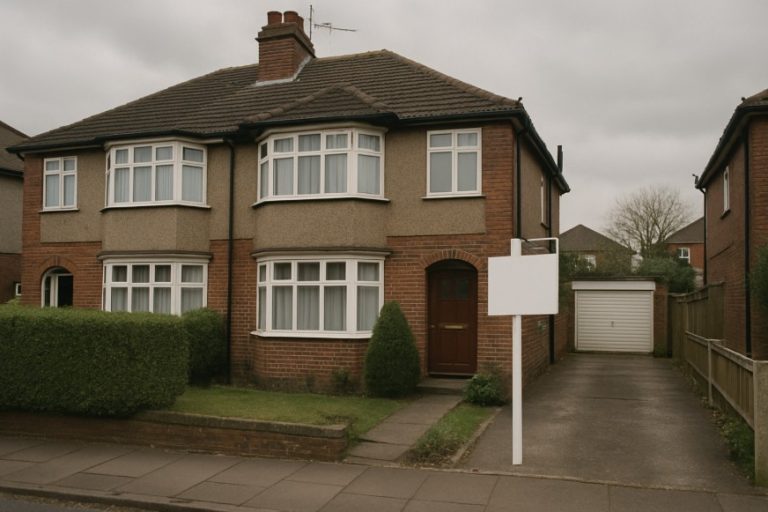
The estate agent said it would take three months, maybe four. That was six months ago. Now you’re facing your third fallen-through sale, each one collapsing for a different reason. The first buyer couldn’t secure their mortgage. The second buyer’s survey came back with damp issues they wanted £15,000 off for. The third buyer just disappeared without explanation after their solicitor got involved.
Meanwhile, your own deadline keeps getting closer. The new job starts in eight weeks. The probate needs settling. The divorce settlement requires the house to be sold. Whatever your reason for needing to move quickly, the traditional property market isn’t built for speed or certainty.
This is the reality facing thousands of UK homeowners in 2026. The market has buyers. Properties are selling. But the gap between “accepting an offer” and “completing the sale” has become a minefield of delays, complications, and disappointments that can derail even the most straightforward transaction.
Thomas Kaspersky from Quick House Buyer, one of the UK’s leading quick house buyers operating across London and nationwide, sees this pattern repeatedly. “We speak to homeowners every day who thought they’d sold their property months ago. They’ve already made plans based on that sale, but they’re still stuck waiting. The emotional and financial toll of these delays is real. For many people who need to sell a house fast, the traditional route doesn’t deliver the certainty they require.”
Understanding your real options matters more than ever, particularly when time-sensitive circumstances demand guaranteed outcomes rather than optimistic estimates.
Why Homeowners Choose Cash Buyers Over Estate Agents When Selling Fast in the UK?
The Traditional Estate Agent Route: Why a Quick House Sale Isn’t Part of the Package?

Walk down any high street, and you’ll see them. Estate agents remain the default choice for most sellers, and for good reason. They offer access to the broadest possible audience through Rightmove, Zoopla, and their own marketing channels. When everything goes smoothly, you get multiple viewings, competitive offers, and potentially the best price your property can achieve.
But that’s increasingly a big “if.”
Recent industry analysis shows roughly one in three sales falling through before completion. Mortgage lenders are being more cautious. Surveys are uncovering issues that nervous buyers use as leverage in negotiations or as escape routes. Chains are becoming longer and more fragile, with a single problem anywhere in the sequence capable of bringing the whole thing down.
The timeline tells its own story. Marketing your property takes 4 to 8 weeks to generate serious interest. Conveyancing adds another 8 to 12 weeks, sometimes more. Factor in delays with searches, surveys, and mortgage applications, and you’re looking at a 6 to 9-month process from first listing to completion.
That’s fine if time is on your side. It’s a nightmare if you’re working to a deadline.
Estate agents excel when your priority is achieving the absolute maximum sale price, and you have the patience to ride out the inevitable bumps. For everyone else, particularly those facing time-sensitive situations, the traditional route starts looking less like the safe choice and more like a gamble.
Property Auctions: Faster, But Still Uncertain
Auctions have gained popularity as a middle ground. The promise is simple: a fixed date, serious buyers with money ready, and a legally binding commitment the moment the hammer falls.
The modern auction landscape includes both traditional room auctions and online platforms, making the process more accessible than ever. Once you’re past the auction date, completion typically happens within 28 days. No chains. No mortgage applications falling through. No buyers getting cold feet.
But getting to that hammer moment requires upfront investment and accepts significant risk.
You’ll need to prepare a full legal pack before the auction, typically costing £500 to £1,000. Auction houses charge entry fees, marketing costs, and commission on successful sales. These expenses are payable whether your property sells or not.
Then there’s the dilemma of the reserve price. Set it too conservatively, and you might achieve a quick sale but leave money on the table. Set it realistically for market value, and you risk the property not selling at all. Unlike estate agent marketing, where an unsold property stays on the market, a failed auction means you’ve spent money and time with nothing to show for it.
Auctions work brilliantly for certain property types. Investment properties, land, buildings in need of major renovation, or unique homes that don’t fit standard valuations all perform well. But for a standard family home where you need guaranteed completion by a specific date, the auction route still carries too much uncertainty.
You might get speed. You might not get a sale.
Cash House Buyers: Trading Market Value for Certainty

This is where the UK property market has evolved significantly in recent years. Professional cash-buying companies operate on a different model that removes almost every variable from the traditional sale process.
No marketing period. No viewings. No chains. No mortgage applications. No survey negotiations. Just a straightforward transaction between you and a company that uses its own funds to purchase properties directly.
The process moves fast because it’s deliberately simple. You request a valuation and usually receive an initial offer within 24 hours. An independent RICS surveyor assesses the property to ensure the offer is fair and appropriate. You receive a final, binding offer with a completion date that suits your timeline. If you accept, the buyer’s solicitors handle all the legal work, often covering the costs themselves. Completion can happen in as little as 7 to 14 days, or you can choose a longer timeline if that better suits your circumstances.
The trade-off is transparent. Cash buyers typically offer between 75% and 85% of open market value. That 15% to 25% discount is the price of speed, certainty, and convenience.
For many sellers, particularly those in time-sensitive situations, the calculation makes perfect sense. Consider the real costs of waiting. Estate agent fees of 1% to 2% plus VAT. Solicitor fees of £1,000 to £2,000. Ongoing mortgage payments, Council Tax, utilities, and insurance while you wait for a sale that might collapse anyway. The opportunity cost of missing deadlines, losing job opportunities, or facing penalties for delayed probate settlements.
When you add up the real cost of a 6-month traditional sale that might not even be completed, the gap between a cash offer today and a theoretical higher offer months from now becomes far less significant than it first appears.
Reputable companies like the Quick House Buyer have built their businesses on transparency and fair dealing. They explain exactly how they calculate offers. They provide independent valuations. They don’t pressure sellers to accept. They understand that for many homeowners, testing the traditional market first makes sense.
But they also know that when life circumstances demand speed and certainty, they offer something the conventional market cannot: a guaranteed completion on a fixed timeline.
Making the Right Choice for Your Situation
The question isn’t which method is “best” in abstract terms. The question is which method is right for your specific circumstances.
Choose estate agents if: you have 6 to 9 months available, price maximisation is your absolute priority, and you’re prepared to accept the risk of sales falling through and having to start again.
Choose auctions if: you have a unique property that appeals to investors, you can afford the upfront costs, and you’re comfortable with the possibility of not achieving your reserve price.
Choose cash buyers if: you need guaranteed completion by a specific date, you’re facing time-sensitive circumstances like probate or relocation, or the stress and uncertainty of traditional sales outweighs the potential for a slightly higher price.
Your circumstances dictate the answer. Someone with mounting mortgage arrears needs a different solution than someone planning a retirement move in two years. A probate property with multiple beneficiaries requiring division needs different handling than a family upsizing when the right property becomes available.
Moving Forward with Confidence
The growing number of homeowners choosing cash buyers over estate agents in 2026 reflects a simple truth: when life circumstances demand speed and certainty, the traditional market’s promise of “maximum value” matters less than the guarantee of “definite completion.”
You don’t need to make any decisions today. Most reputable cash buyers offer free, no-obligation valuations that give you a clear baseline. You can test the traditional market while knowing you have a guaranteed backup plan. You can compare real offers against theoretical possibilities. You control the timeline and the final decision.
Whatever route you choose, understanding all your options means you’re making an informed choice rather than accepting the default because you didn’t know alternatives existed.
If your situation demands speed over speculation, certainty over chance, and guaranteed outcomes over optimistic timelines, getting a cash offer takes nothing away from your other options. It simply gives you the power to choose based on facts rather than hope.
Because when it comes to selling your home, hope isn’t a strategy. Having options is.