The UK rent control demonstration clearly shows that Britain is facing a deepening housing crisis driven by rising rents, limited affordable housing, and growing dissatisfaction with government policy.
Thousands of tenants protesting in London highlight how urgent the demand for rent controls and stronger protections has become. The situation reflects wider economic pressure where renters are struggling to maintain stability and affordability.
Key Takeaways:
- UK rent control demonstration signals escalating housing crisis
- Rising rent costs are outpacing wage growth across Britain
- Strong demand for rent caps and tenant protection laws
- Shortage of social and affordable housing continues to grow
- Corporate landlords and policy gaps are influencing housing access
- Public protests are shaping future housing policy discussions
What Happened at the UK Rent Control Demonstration in London?
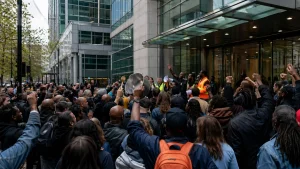
The UK rent control demonstration in London became a defining moment in the ongoing debate around housing affordability in Britain.
Thousands of tenants, housing activists, and union members gathered in central London to demand urgent reform in the rental sector. The scale of participation reflected a growing sense of urgency among renters who feel increasingly priced out of their communities.
Around 5,000 people joined the march, representing a wide coalition of organisations. These included the London Renters Union, Generation Rent, Action on Empty Homes, and the Fire Brigades Union, alongside political groups such as the Green Party.
The demonstration was part of a broader National Housing Demonstration, widely regarded as the largest housing protest in more than a decade.
Protesters marched through key areas of central London before assembling outside the offices of Blackstone, one of the world’s largest commercial landlords.
The choice of location was symbolic, representing frustration with corporate ownership of housing. A landlord shaped piñata was destroyed during the protest, reinforcing the message that large property investors are seen by many as contributing to rising rent costs.
The structure and organisation of the demonstration showed how coordinated the housing movement has become in the UK.
| Element | Details |
| Location | Central London |
| Attendance | Approximately 5,000 people |
| Key Groups | London Renters Union, Generation Rent, Trade Unions |
| Main Demand | Rent control and affordable housing |
| Symbolic Action | Protest outside Blackstone offices |
The protest was not just about numbers. It reflected a shift in public sentiment. Housing is no longer viewed as a background issue but as a central economic and social concern affecting millions.
Why Are UK Rent Control Demonstrations Gaining Momentum?
The increasing frequency of UK rent control demonstrations is closely tied to the sharp rise in rental costs across the country. Over the past decade, rent prices have grown significantly faster than average wages, creating a widening affordability gap.
In major cities such as London, rent consumes a substantial portion of household income. Many tenants now spend more than a third of their earnings on housing, leaving less for essential expenses. This imbalance has made renting unsustainable for a growing number of people.
Several factors are driving this momentum:
- Continuous increase in rent prices across urban areas
- Limited availability of affordable housing options
- Growing awareness of tenant rights and advocacy groups
- Dissatisfaction with government housing policies
Economic pressures have intensified these issues. The cost of living crisis has pushed many households to their financial limits. Renters who were previously managing are now struggling to keep up with rising costs.
An observer at the protest captured this shift in sentiment, stating
“I could see that people were not just protesting for change but reacting to years of pressure building up. Conversations in the crowd were about survival, not just policy.”
The momentum behind these demonstrations also reflects improved organisation among tenant groups. Digital platforms and social networks have enabled faster mobilisation, allowing campaigns to reach a wider audience and build stronger collective action.
How Does the UK Housing Crisis Affect Renters Today?

The impact of the housing crisis is most visible in the everyday experiences of renters, where financial pressure and limited choices are becoming increasingly common. These challenges are shaping how individuals and families navigate the rental market across the UK.
Rising Rent Costs and Affordability Challenges
Rent increases have become one of the most immediate challenges facing tenants in the UK. In many regions, rental prices have reached historic highs, making it difficult for individuals and families to secure stable housing.
The affordability gap can be clearly seen when comparing income growth with rent increases.
| Year | Average Rent Increase | Average Wage Growth |
| 2020 | 2.5% | 1.8% |
| 2022 | 5.2% | 3.1% |
| 2024 | 8.7% | 4.2% |
This imbalance means that even those with stable employment are finding it increasingly difficult to afford housing. First time renters and young professionals are particularly affected.
Shortage of Social and Affordable Housing
The decline in social housing development has significantly contributed to the housing crisis. Over the years, the number of council homes available has not kept pace with population growth and demand.
Many households that would traditionally rely on social housing are now forced into the private rental market, where costs are considerably higher. This shift has increased pressure on the private sector and contributed to rising rents.
Increasing Eviction Risks and Tenant Insecurity
Tenant insecurity has become a major concern. Without strong rent control measures, landlords have the ability to increase rents or terminate tenancies with relatively short notice.
This lack of stability affects not only financial security but also mental wellbeing. Families may be forced to relocate frequently, disrupting education, employment, and community ties.
What Are Protesters Demanding from the UK Government?
The demands emerging from the UK rent control demonstration are focused on creating a fairer housing system. Protesters are calling for policies that address both short term affordability and long term housing supply.
Key demands include:
- Implementation of rent control measures to limit excessive increases
- Increased investment in council and social housing
- Stronger legal protections for tenants
- Greater transparency in the rental market
These demands highlight the need for a balanced approach to housing reform. Protesters argue that without intervention, the current system will continue to favour landlords and investors over tenants.
A housing policy professional provided insight into the complexity of these demands, stating
“From my experience working with housing data, it is clear that supply alone will not resolve affordability. I have seen multiple cases where new developments are built, yet prices remain out of reach. There needs to be a regulatory framework that ensures housing remains accessible to ordinary residents.”
The range of demands reflects the multifaceted nature of the housing crisis. Addressing one aspect without considering others may lead to limited or temporary solutions.
How Is Government Policy Contributing to the Housing Crisis?

Government housing policy plays a significant role in shaping the rental market. While initiatives such as the Renters’ Rights Act aim to improve tenant protections, critics argue that these measures do not go far enough.
One key concern is the emphasis on private sector development. Policies that encourage large scale developments often result in high end properties that are not affordable for the majority of the population.
| Policy Area | Intended Outcome | Observed Impact |
| Renters’ Rights Act | Improve tenant security | Limited effect on affordability |
| Developer Incentives | Increase housing supply | Focus on luxury developments |
| Planning Reforms | Speed up construction | Reduced local control |
Tenant advocacy groups have raised concerns that these policies may unintentionally contribute to the housing crisis by prioritising economic growth over affordability.
Public perception of government policy has also shifted. Many renters feel that their needs are not being adequately addressed, leading to increased dissatisfaction and protest activity.
What Role Do Large Landlords and Corporations Play in UK Housing?
The growing presence of large scale property investors has significantly reshaped the UK housing market, influencing both rental prices and the availability of homes. Their role has become central to the broader discussion around affordability and access.
Influence of Corporate Landlords like Blackstone
Corporate landlords have become increasingly influential in the UK housing market. Their large scale investments allow them to acquire significant portions of rental housing, giving them substantial control over pricing.
This concentration of ownership can reduce competition and contribute to higher rent levels. Tenants often feel that corporate landlords prioritise profit over long term community stability.
Expansion of Luxury Developments vs Affordable Housing
A significant portion of new housing developments is focused on the luxury market. These properties are often targeted at investors rather than local residents.
| Development Type | Target Market | Affordability Level |
| Luxury Apartments | Investors | Low affordability |
| Build to Rent | Professionals | متوسط affordability |
| Social Housing | Low income households | High affordability |
This imbalance in development priorities has reduced the availability of genuinely affordable housing. As a result, many renters are left with limited options in the market.
Is Misinformation Shaping Public Opinion on the Housing Crisis?
Public understanding of the housing crisis is influenced by a range of narratives, some of which are not supported by evidence. Claims that certain groups are being prioritised in housing allocation have been widely debated.
Housing experts argue that these narratives can distract from the structural causes of the crisis, such as supply shortages and rising costs. Misinformation can also create division, making it more difficult to develop effective solutions.
Accurate information is essential for informed decision making. Without it, public debate may focus on the wrong issues, delaying meaningful reform.
Could Rent Control Be the Solution to the UK Housing Crisis?
Rent control is often presented as a potential solution to rising housing costs. It aims to limit rent increases and provide stability for tenants.
The effectiveness of rent control depends on how it is implemented.
| Factor | Positive Impact | Potential Risk |
| Rent Caps | Immediate affordability | Reduced landlord incentives |
| Tenant Stability | Long term security | Lower housing supply growth |
| Market Regulation | Controlled pricing | Administrative complexity |
International examples show that rent control can be effective when combined with other policies, such as increased housing supply and strong tenant protections.
The debate around rent control highlights the need for a balanced approach. Policymakers must consider both the benefits and potential challenges when designing housing reforms.
What Does the Future Hold for Renters in the UK?
The future of renting in the UK will depend on policy decisions made in response to the current crisis. Continued public pressure is likely to play a key role in shaping these decisions.
Several trends are expected to influence the housing market:
- Increased demand for affordable housing
- Continued growth of tenant advocacy movements
- Ongoing debate around rent control policies
The outcome of these developments will determine whether the housing market becomes more accessible or continues to present challenges for renters.
The UK rent control demonstration has made it clear that housing is a critical issue requiring sustained attention and action.
Conclusion
The UK rent control demonstration has brought national attention to the growing housing crisis, highlighting the urgent need for reform. Rising rents, limited housing supply, and policy gaps continue to affect tenants across the UK.
As demonstrations grow in scale and frequency, they signal a broader demand for systemic change. Whether through rent control or alternative solutions, addressing the housing crisis will remain a critical issue for the government and society as a whole.
Frequently Asked Questions
What is a rent control demonstration?
A rent control demonstration is a public protest where tenants and advocacy groups demand limits on rent increases and improved housing policies.
Why are rent prices rising in the UK?
Rising demand, limited housing supply, and increased investment activity have all contributed to higher rental prices.
What is the UK Renters’ Rights Act?
It is legislation aimed at improving tenant protections, though critics argue it does not fully address affordability issues.
Does rent control work in other countries?
Some countries have successfully implemented rent control, but results vary depending on how policies are structured.
Who organises housing demonstrations in the UK?
Groups like the London Renters Union, Generation Rent, and various trade unions often organise these protests.
Are corporate landlords affecting housing affordability?
Yes, large landlords can influence pricing and availability, often prioritising profit over affordability.
What can renters do to protect themselves?
Renters can join tenant unions, stay informed about their rights, and participate in advocacy efforts.