In most cases, you do not need planning permission for a shed in the UK because garden sheds are usually classed as permitted development. However, this only applies if the shed follows specific rules on height, size, placement, and usage.
A shed placed too close to a boundary, built too high, or used as living accommodation may require formal approval from your local council. Homeowners should also be more careful if they live in protected areas such as Conservation Areas or near Listed Buildings.
Key Takeaways
- Most garden sheds do not need planning permission in the UK.
- A shed within 2 metres of a boundary cannot exceed 2.5 metres in height.
- Dual-pitched roof sheds can reach 4 metres if placed further away.
- The shed must not cover more than 50% of the total garden area.
- Sheds must be located at the side or rear of the property.
- Sleeping accommodation or business use may require permission.
- Rules are stricter in Conservation Areas and around Listed Buildings.
What Counts as a Permitted Development Shed?
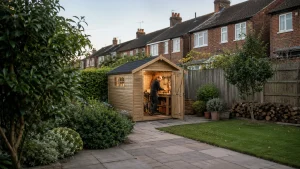
A shed is normally considered permitted development when it is used for ordinary domestic purposes such as storage, gardening equipment, bicycles, tools, or a home workshop.
This means you can usually install the structure without submitting a planning application, provided the building complies with the legal limitations set by UK planning regulations.
The shed must remain secondary to the main house. It cannot function as a separate residential property or independent living space.
Common acceptable uses include:
- Garden storage
- Hobby or craft space
- Home gym
- Potting shed
- Bicycle storage
- Small garden office for incidental use
What Are the Main Shed Rules in the UK?
Several rules determine whether planning permission is required. These regulations mainly focus on height, position, and overall impact on neighbouring properties.
Shed Height Rules
Height restrictions are one of the most important factors.
Your shed can usually be:
| Shed Type | Maximum Height Allowed |
| Dual-pitched roof shed | 4 metres |
| Flat roof or mono-pitch shed | 3 metres |
| Shed within 2m of boundary | 2.5 metres |
The 2.5-metre rule is strict. Even a small section of roof exceeding this limit could trigger planning issues.
A garden building installer explained this concern clearly:
“Many homeowners measure from the wrong point and accidentally exceed the limit. The height is measured from the highest natural ground level beside the shed, not from the inside floor.”
Shed Location Rules
The shed must normally be placed:
- At the rear of the property
- Or at the side of the property
- Not forward of the principal elevation of the house
In simple terms, you generally cannot place a large shed in front of your home without planning permission.
Corner plots and properties facing multiple roads can sometimes create confusion because councils may treat visible side areas differently.
How Much Garden Space Can a Shed Cover?
Outbuildings, extensions, sheds, and garden structures combined must not cover more than 50% of the land surrounding the original house.
The “original house” means the property as it first stood, not including later extensions added by previous owners.
This rule includes:
- Sheds
- Summer houses
- Garages
- Home offices
- Greenhouses
- Large extensions
If your garden already contains several structures, adding another shed may exceed permitted development limits.
Can I Use a Shed as a Bedroom or Home Office?
A shed used purely as a garden office or occasional workspace is usually acceptable without planning permission.
However, problems arise when the structure becomes self-contained living accommodation.
You will likely need permission if the shed includes:
- Sleeping facilities
- Permanent bathroom installations
- Full kitchen facilities
- Independent utilities for residential use
A planning consultant described this issue simply:
“The moment a shed starts functioning like a separate dwelling, councils take a much closer look. Occasional work-from-home use is usually fine, but permanent residential use changes the legal position entirely.”
Do Rules Change in Conservation Areas or for Listed Buildings?
Yes. Planning restrictions are stricter in protected locations.
You may require planning permission if your property is:
- A Listed Building
- Inside a Conservation Area
- Located within a National Park
- Inside an Area of Outstanding Natural Beauty (AONB)
In these areas, councils often limit the size, visibility, and placement of garden structures to preserve the character of the surroundings.
Even when permission is not technically required, homeowners are often advised to check with the local planning authority before starting construction.
Do Building Regulations Apply to Sheds?
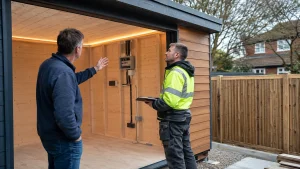
Planning permission and building regulations are separate legal requirements.
In many cases, small sheds do not require building regulations approval. However, regulations may apply if:
- The shed exceeds certain size limits
- Electrical installations are added
- The structure is used regularly by occupants
- The building is close to boundaries and made from combustible materials
This becomes more important for insulated garden rooms, offices, or large timber buildings.
What Happens If You Build a Shed Without Permission?
If a shed breaches planning rules, the local council can investigate and potentially issue enforcement action.
Possible outcomes include:
- Retrospective planning applications
- Required modifications
- Partial demolition
- Full removal of the structure
Neighbours commonly report sheds when they block light, overlook gardens, or appear excessively large near boundaries.
Checking regulations before installation is usually far easier and cheaper than resolving enforcement disputes later.
Final Thoughts
Most UK homeowners can install a shed without planning permission as long as the structure follows permitted development rules. The biggest issues usually involve height near boundaries, oversized garden buildings, or using the shed as living accommodation.
Before building, it is always sensible to measure carefully, review local restrictions, and confirm whether your property falls within a protected area. Even simple mistakes with height or placement can create unnecessary planning problems later.
FAQs
Can I build a shed right next to my neighbour’s fence?
Yes, you can usually build a shed close to the boundary, but if it is within 2 metres of the fence, the maximum height allowed is 2.5 metres without planning permission.
Do I need planning permission for a garden office shed?
Normally no, provided the garden office is for incidental home use and not used as separate living accommodation or a full-time business premises.
Can neighbours complain about my shed?
Yes, neighbours can raise complaints if the shed blocks light, affects privacy, or appears too large. Councils may investigate if planning rules have been breached.
Does a shed need foundations to meet regulations?
Small sheds often do not require formal foundations, but a stable and level base is recommended for safety, durability, and drainage.
Can I put electricity and lighting in my shed?
Yes, electricity can be installed in a shed, but the work should comply with UK electrical safety regulations and may require a qualified electrician.