There is no fixed national law for the legal time to mow the lawn in UK households must follow, but noisy mowing can become a statutory nuisance if it disturbs neighbours during unreasonable hours. Most UK residents should mow during sensible daytime periods and check local council guidance where needed.
Key takeaways:
- There is no exact UK-wide legal mowing time.
- Councils can act under noise nuisance rules.
- Avoid mowing between 11:00 PM and 7:00 AM.
- Recommended weekday mowing time is 8:00 AM to 8:00 PM.
- Saturday mowing is best between 9:00 AM and 7:00 PM.
- Sunday and Bank Holiday mowing is safest between 10:00 AM and 4:00 PM.
- Ignoring a noise abatement notice can lead to a fine of up to £5,000.
What Is the Legal Time to Mow Lawn in the UK?
There is no single UK law that gives an exact national time for mowing the lawn. However, residents still need to be careful because noisy garden machinery can become a problem if it disturbs neighbours at unreasonable hours.
The legal time to mow the lawn, UK homeowners usually ask about, is better understood as a matter of noise nuisance, local council guidance and neighbourly consideration.
A person mowing at a sensible daytime hour is unlikely to face issues. However, mowing very early, late at night or repeatedly for long periods may lead to complaints.
A practical guide many households follow is:
| Day | Recommended Mowing Time | General Advice |
| Weekdays | 8:00 AM to 8:00 PM | Usually reasonable for domestic mowing |
| Saturdays | 9:00 AM to 7:00 PM | Later start is more considerate |
| Sundays | 10:00 AM to 4:00 PM | Keep noise limited and brief |
| Bank Holidays | 10:00 AM to 4:00 PM | Check local guidance where possible |
These times are not a fixed UK-wide law, but they reflect what many people would consider reasonable in residential areas.
Is There a Specific UK Law for Lawn Mowing Times?
There is no specific Act that says every UK resident must mow only between exact hours. The main legal issue is whether the noise becomes a statutory nuisance.
Environmental Protection Act 1990
Under the Environmental Protection Act 1990, local councils can investigate noise that may cause a statutory nuisance. This can include noise from lawn mowers, strimmers, leaf blowers and other garden tools.
If a council decides the noise is unreasonable, it can issue a noise abatement notice. If that notice is ignored, the person responsible may face enforcement action and a fine.
Statutory Noise Nuisance
A statutory nuisance depends on more than loudness. Councils may consider:
- The time of day the mowing happens
- How often the noise occurs
- How long the mowing lasts
- The type of mower being used
- The impact on nearby residents
A property adviser described the issue clearly:
“I usually explain to homeowners that mowing is not the real problem. The problem starts when it happens at a time most people would reasonably expect peace and quiet.”
Local Council Enforcement
Local councils can take complaints seriously when noise is regular, excessive or clearly happening during antisocial hours. The period between 11:00 PM and 7:00 AM is especially sensitive for domestic noise.
What Are the Recommended Lawn Mowing Times in the UK?
The safest approach is to mow during ordinary daytime hours. Late morning to early evening is usually best, particularly in built-up areas where gardens are close together.
| Time | Risk of Complaint | Recommendation |
| Before 7:00 AM | Very high | Avoid mowing |
| 7:00 AM to 8:00 AM | High | Usually too early |
| 8:00 AM to 6:00 PM | Low | Generally reasonable on weekdays |
| 6:00 PM to 8:00 PM | Moderate | Keep it short |
| After 8:00 PM | High | Best avoided |
| 11:00 PM to 7:00 AM | Very high | Likely to be treated as antisocial |
People living in terraced houses, flats, retirement areas or estates with shared gardens should be especially careful, as noise can travel quickly between homes.
Can Someone Mow the Lawn Early in the Morning?
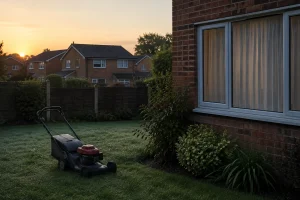
Mowing early in the morning is not always illegal, but it can be unreasonable. Before 8:00 AM on weekdays, many neighbours may still be sleeping, preparing for work or caring for children. On Saturdays, Sundays and Bank Holidays, expectations are usually even quieter.
Someone mowing at 6:30 AM with a petrol mower could easily cause a complaint, especially if it happens more than once. Even electric mowers can disturb people if used too early.
A sensible approach is to avoid mowing:
- Before 8:00 AM on weekdays
- Before 9:00 AM on Saturdays
- Before 10:00 AM on Sundays
- During quiet early hours in close residential streets
The more frequent the early mowing, the more likely it is to be viewed as unreasonable.
Is It Allowed to Mow the Lawn Late in the Evening?
Late evening mowing should usually be avoided. In summer, it may still be light outside at 8:30 PM or 9:00 PM, but that does not mean it is a suitable time for noisy garden work.
A garden maintenance professional explained this clearly:
“I always tell clients that daylight is not the same as permission. I may be able to see the grass at 9pm in summer, but neighbours may be trying to relax, sleep or put children to bed.”
Late mowing is more likely to cause problems when it involves petrol mowers, strimmers or long sessions. As a general rule, mowing should stop by 8:00 PM on weekdays and earlier on Sundays or Bank Holidays.
What Are the Lawn Mowing Rules for Sundays and Bank Holidays?
Sunday and Bank Holiday mowing is usually allowed, but it should be done with extra care. Many people expect these days to be quieter, especially in the morning and evening.
Sunday Mowing Guidance
The most neighbour-friendly time to mow on a Sunday is usually between 10:00 AM and 4:00 PM. This avoids disturbing people early in the morning or during the quieter evening period.
Bank Holiday Noise Considerations
Bank Holidays are often used for garden work, but they are also rest days for many households. Short mowing sessions during the middle of the day are usually more acceptable than long noisy work early or late.
| Day Type | Best Time to Mow | Times to Avoid |
| Sunday | 10:00 AM to 4:00 PM | Early morning and evening |
| Bank Holiday | 10:00 AM to 4:00 PM | Long noisy sessions |
| Saturday | 9:00 AM to 7:00 PM | Very early starts |
| Weekday | 8:00 AM to 8:00 PM | Late evening mowing |
Some councils, housing associations or managed estates may apply stricter guidance, so checking local rules is always sensible.
What Happens If Lawn Mowing Causes a Noise Complaint?
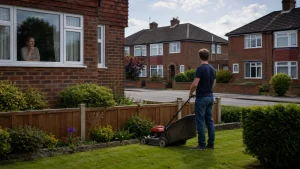
If lawn mowing causes a complaint, the first step is often informal. A neighbour may speak to the person directly or leave a polite note. If the issue continues, they may contact the local council.
The council may ask the complainant to keep a noise diary. This may include the date, time, duration and type of noise. If the council believes the mowing creates a statutory nuisance, it may investigate further.
A complaint is more likely to be taken seriously where mowing is:
- Very early or very late
- Repeated often
- Excessively loud
- Continuing for long periods
- Affecting sleep or normal home life
One short mowing session at a reasonable time is unlikely to lead to formal action. Repeated disturbance is the bigger risk.
How Can Local Councils Deal With Lawn Mower Noise?
Local councils have powers to investigate domestic noise complaints. If officers believe the noise is unreasonable, they can serve a noise abatement notice.
| Council Step | What It Means |
| Informal advice | The council may ask the person to reduce noise |
| Noise diary | The neighbour records dates and times |
| Investigation | Environmental health may assess the complaint |
| Abatement notice | A formal notice orders the nuisance to stop |
| Fine | Ignoring the notice can lead to prosecution |
For domestic premises, ignoring a noise abatement notice can lead to a fine of up to £5,000. This usually happens only after a formal process, not simply because someone mowed once at an inconvenient time.
How Can Homeowners Mow the Lawn Without Annoying Neighbours?
Homeowners can avoid most problems by choosing sensible times and using equipment responsibly. Good timing is often the easiest way to prevent disputes.
Practical steps include:
- Mow during the middle of the day where possible
- Avoid mowing before 10:00 AM on Sundays
- Stop mowing before the evening becomes quiet
- Use quieter electric equipment where practical
- Keep mower blades sharp
- Avoid long continuous mowing sessions
- Speak to neighbours before major garden work
Being considerate does not mean a person cannot maintain their garden. It simply means choosing times that are less likely to disturb others.
When Is the Best Time to Mow the Lawn for Healthy Grass?
The best mowing time also depends on the condition of the grass. Mowing wet, frosty or stressed grass can damage the lawn and make the job harder.
| Grass Condition | Should It Be Mowed? | Reason |
| Dry grass | Yes | Gives a cleaner cut |
| Wet grass | Not ideal | Can tear grass and clog the mower |
| Frosty grass | No | May damage roots and blades |
| Very hot weather | Avoid peak heat | Grass may be under stress |
Late morning or afternoon is often suitable because dew has usually dried. The grass should be dry and not frosty before mowing.
Should Tenants, Landlords and Homeowners Follow the Same Lawn Noise Rules?

Tenants, landlords and homeowners should all avoid creating unreasonable noise. Tenants may also need to follow tenancy agreement terms about nuisance, garden care and antisocial behaviour.
Landlords should make expectations clear where garden maintenance is part of the tenancy. Homeowners in leasehold properties or managed estates should also check lease rules and estate guidance.
The main principle is the same for everyone: lawn mowing should be done at a reasonable time and in a way that does not regularly disturb others.
Conclusion
There is no fixed national rule for the legal time that UK residents must follow, but timing still matters. Lawn mowing should be done during reasonable daytime hours to avoid disturbing neighbours or triggering council noise complaints.
Weekdays, Saturdays, Sundays and Bank Holidays may all carry different expectations, especially in quiet residential areas. By checking local council guidance, avoiding antisocial hours and mowing only when the grass is dry, households can stay considerate and protect their lawn.
FAQs
Is it illegal to mow the lawn before 8am in the UK?
It is not automatically illegal everywhere, but mowing before 8am may be considered unreasonable if it disturbs neighbours. Repeated early mowing could lead to a council complaint.
Can a neighbour complain about lawn mower noise?
Yes, a neighbour can complain if the noise is excessive, frequent or happening at antisocial times. The council may investigate if it appears to be a statutory nuisance.
What time should lawn mowing stop in the evening?
As a practical guide, mowing should usually stop by 8:00 PM on weekdays and earlier on Sundays or Bank Holidays.
Are petrol lawn mowers more likely to cause complaints?
Petrol mowers are often louder than electric models, so they may be more likely to cause complaints if used early, late or for long periods.
Can lawn mowing be treated as antisocial behaviour?
It can be if it is deliberately disruptive, repeated at unreasonable times or used to disturb neighbours. Normal mowing during sensible hours is unlikely to be treated this way.
Do councils have different garden noise rules?
Yes, council guidance can vary. Some councils publish recommended times, while others assess complaints case by case.
Is mowing the lawn on Sunday allowed in the UK?
Sunday mowing is usually allowed, but it is best done between 10:00 AM and 4:00 PM to reduce the chance of disturbing neighbours.