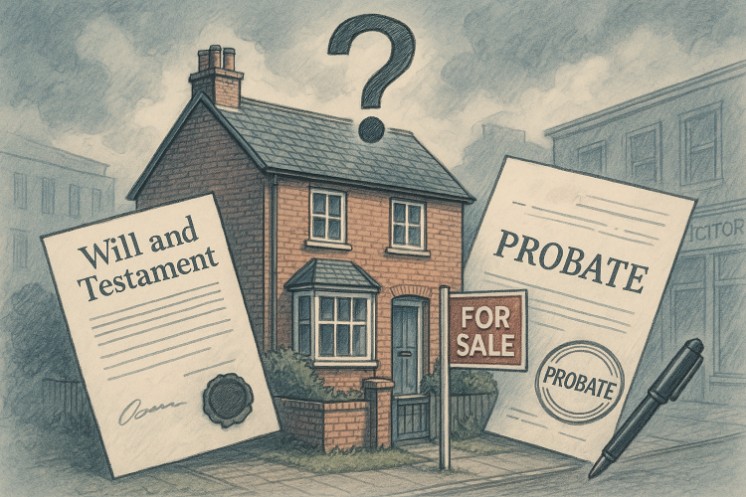
Yes, you can contest a will after probate has been granted in the UK, but it becomes more complex, time-sensitive, and costly. While legal challenges are still possible even after assets have been distributed, the process requires strong legal grounds, quick action, and often professional guidance. Delays can significantly reduce your chances of success and increase the difficulty of recovering assets.
Key takeaways:
- You can challenge a will after probate, but it is harder than before probate
- Most claims must be made within 6 months of the grant of probate
- Valid legal grounds such as undue influence or lack of capacity are required
- Recovering assets is more difficult if the estate has been distributed
- Legal costs and financial risks should be carefully considered
What Happens Once Probate Has Been Granted in the UK?

Once probate has been granted in the UK, the legal authority to administer the estate is formally given to the executor named in the will.
This authority comes from the Probate Registry and allows the executor to begin handling all financial and legal matters related to the deceased’s estate.
At this stage, the estate moves from a preparatory phase into active administration. Executors can collect assets from banks, sell property, settle outstanding debts, and distribute the remaining estate to beneficiaries.
Probate also makes the will a public document, which means it can be accessed by interested parties, including potential claimants.
The significance of this stage lies in the fact that decisions and actions taken by the executor are legally recognised. Any challenge raised after probate must account for the steps already taken.
If assets have already been transferred or sold, reversing those transactions can be legally complex and sometimes impractical.
| Probate Stage | Key Actions Involved | Legal Impact |
| Before Probate | Valuing estate and applying for grant | Limited authority |
| Probate Granted | Executor gains legal control | Full authority to act |
| Estate Administration | Paying debts and distributing assets | Transactions become legally binding |
| Post Distribution | Assets transferred to beneficiaries | Harder to reverse decisions |
Another important aspect is that executors are expected to act in the best interests of the estate and its beneficiaries. If they proceed with distribution too quickly without considering potential claims, they may expose themselves to legal risk.
However, once distributions begin, the practical difficulty for anyone contesting the will increases significantly.
Is It Still Possible to Contest a Will After Probate?
It remains legally possible to contest a will after probate has been granted, but the process becomes more demanding.
The courts will still accept claims if they are supported by valid legal grounds, but the burden of proof often becomes heavier once probate has been completed.
The timing of the challenge is critical. If a claim is brought shortly after probate is granted and before assets are distributed, the situation is more manageable.
However, if there has been a delay and the estate has already been partially or fully distributed, the claimant may face additional legal barriers.
One solicitor explained the situation clearly:
“In many cases I have handled, clients assume probate is the final step and nothing can be done afterwards. That is not true, but the longer they wait, the more complicated and costly the process becomes.”
The courts consider several factors when reviewing post probate claims:
- Whether the claim has been brought within a reasonable timeframe
- Whether the estate has already been distributed
- The strength and credibility of the legal grounds
- The potential impact on beneficiaries
| Factor Considered | Impact on Claim Outcome |
| Timing of claim | Earlier claims are stronger |
| Distribution status | Distributed estates are harder to dispute |
| Evidence strength | Strong evidence improves success chances |
| Conduct of the executor | Poor conduct may support a claim |
Even though the law allows such challenges, it is not simply a matter of filing a claim. The claimant must be prepared to deal with procedural hurdles, possible resistance from beneficiaries, and the financial implications of legal proceedings.
What Are the Legal Grounds for Challenging a Will in the UK?

Contesting a will requires legally recognised grounds. Without valid reasons, the court is unlikely to intervene, regardless of personal dissatisfaction or perceived unfairness.
Lack of Testamentary Capacity
This ground applies when the person who made the will did not have the mental ability to understand what they were doing at the time. The law requires that the individual understand the nature of making a will, the extent of their estate, and the potential beneficiaries.
Medical records, witness statements, and expert opinions are often used to establish whether capacity was present.
Undue Influence or Pressure
Undue influence occurs when someone exerts pressure on the person making the will, effectively overriding their free will. This can be difficult to prove because it often happens behind closed doors without direct evidence.
The courts will look for patterns of behaviour, dependency, and any suspicious circumstances surrounding the creation of the will.
Fraud or Forgery
Fraud involves deliberate deception, while forgery involves falsifying a signature or document. These are serious allegations and require strong evidence, often including handwriting analysis or forensic examination.
Improper Execution of the Will
For a will to be valid in the UK, it must comply with strict legal formalities. It must be signed by the testator and witnessed by two independent individuals. Any deviation from these requirements can render the will invalid.
| Ground for Challenge | Description | Evidence Required |
| Lack of capacity | Mental inability to understand the will | Medical records, expert testimony |
| Undue influence | Coercion or pressure | Witness accounts, behavioural proof |
| Fraud or forgery | Deception or falsified documents | Forensic evidence |
| Improper execution | Failure to meet legal formalities | Witness statements, document review |
Each of these grounds must be supported by clear and convincing evidence. Courts do not overturn wills lightly, especially after probate has been granted.
How Long Do You Have to Contest a Will After Probate?
Time limits are one of the most critical aspects of contesting a will after probate. In the UK, claims made under the Inheritance Act 1975 must generally be issued within six months from the date probate is granted.
This time limit is strictly enforced in most cases. Although courts have discretion to allow late claims, this is relatively rare and usually requires exceptional circumstances.
A legal expert described the importance of timing as follows:
“I always advise clients that the six month window is not a guideline, it is a hard reality. Waiting too long can mean losing the right to bring a claim altogether.”
Different types of claims may have different practical timelines, but delay is almost always disadvantageous.
| Type of Legal Action | Standard Time Limit | Flexibility |
| Inheritance Act 1975 claim | 6 months from probate | Limited exceptions |
| Fraud or forgery claim | No fixed limit | Delay weakens case |
| Revocation of probate | As soon as possible | Case dependent |
| Executor misconduct claim | No strict limit | Must act promptly |
Acting early provides several advantages. It increases the likelihood that assets are still within the estate, reduces legal complexity, and strengthens the overall credibility of the claim.
What If the Estate Has Already Been Distributed?

When an estate has already been distributed, contesting a will becomes significantly more complicated. Instead of dealing only with the executor, the claimant may need to pursue multiple beneficiaries who have received portions of the estate.
This introduces additional legal and practical challenges. Beneficiaries may have already spent the money, sold property, or transferred assets to third parties. Recovering those assets may require separate legal proceedings and enforcement actions.
A solicitor shared their experience:
“I have seen cases where inheritance funds were spent within weeks. At that point, even if the claim succeeds, recovering the money becomes a separate legal battle.”
| Scenario | Legal Complexity Level | Recovery Difficulty |
| Estate not yet distributed | Low to moderate | Easier to resolve |
| Partially distributed | Moderate to high | Case dependent |
| Fully distributed | High | Often difficult |
| Assets sold to third parties | Very high | Complex enforcement |
Courts may still issue orders requiring beneficiaries to return assets, but enforcement depends on the financial situation of those beneficiaries. If funds are no longer available, recovery may be limited.
Who Is Eligible to Contest a Will After Probate in the UK?
Eligibility to contest a will is determined by legal standing. Only certain individuals have the right to bring a claim, and this depends on their relationship with the deceased.
Eligible individuals generally include spouses, civil partners, children, and those who were financially dependent on the deceased. In some cases, individuals who were not included in the will may still have a valid claim if they can demonstrate financial reliance.
| Eligible Person Type | Basis for Claim |
| Spouse or civil partner | Automatic eligibility |
| Children | Financial provision claims |
| Dependants | Proof of financial reliance |
| Beneficiaries | Interest in estate |
| Former spouses | Conditional eligibility |
The strength of the claim depends not only on eligibility but also on the specific circumstances and evidence presented.
What Steps Should Be Taken to Challenge a Will After Probate?

Challenging a will after probate requires a clear and structured approach. Each step must be handled carefully to avoid procedural errors or missed deadlines.
Seek Specialist Legal Advice
A solicitor specialising in probate disputes can assess the case, identify valid grounds, and guide the claimant through the legal process.
Notify Executors Immediately
Informing the executor of the intention to challenge the will may delay further distribution of the estate and preserve assets while the claim is being assessed.
Issue a Legal Claim
If the case proceeds, formal legal action must be initiated within the applicable time limits. This involves submitting the necessary documents to the court and presenting evidence to support the claim.
Taking early and decisive action significantly improves the chances of a successful outcome.
Can a Grant of Probate Be Revoked or Overturned?
Revoking a grant of probate is possible but uncommon. It typically requires strong evidence that the grant was issued based on incorrect or incomplete information.
Situations where revocation may be considered include the discovery of a later valid will, evidence of fraud, or significant procedural errors during the probate process.
The courts approach such cases cautiously, as overturning probate can disrupt completed transactions and affect multiple parties.
What Are the Costs and Risks Involved in Contesting a Will?

Contesting a will after probate can involve substantial financial risk. Legal fees can vary widely depending on the complexity of the case, the length of proceedings, and whether the matter goes to court.
While some solicitors offer conditional fee arrangements, these are not available in all cases and may still involve additional costs.
There is also the risk that if the claim is unsuccessful, the claimant may be required to pay the legal costs of the opposing party. This can significantly increase the financial burden.
Careful consideration of the potential costs and benefits is essential before proceeding with any legal action.
How Can Disputes Be Resolved Without Going to Court?
Many disputes are resolved through alternative methods such as mediation. This approach allows parties to negotiate a settlement without the need for formal court proceedings.
Mediation can be faster, less expensive, and less adversarial than litigation. It also provides greater flexibility in reaching a mutually acceptable outcome.
In many cases, courts encourage mediation as a first step before proceeding to a full trial, particularly in inheritance disputes where preserving relationships may be important.
Final Thoughts: Is Contesting a Will After Probate Worth It?
Contesting a will after probate in the UK is possible, but it is rarely straightforward. The process is time-sensitive, legally complex, and potentially costly. Success often depends on strong evidence, valid legal grounds, and prompt action.
For those considering a challenge, seeking professional legal advice early is essential. Understanding the risks, time limits, and practical realities can help determine whether pursuing a claim is the right decision.
FAQs
Can a will be changed after probate has been granted?
Once probate has been granted, a will cannot be changed, but it can be challenged or contested through legal action if valid grounds exist.
How successful are contested wills in the UK?
Success depends on the strength of the evidence and legal grounds. Cases involving clear issues such as fraud or lack of capacity have higher success rates.
Can beneficiaries be forced to return inheritance?
Yes, courts can order beneficiaries to return assets if a claim is successful, although enforcement may be complex.
Do all will disputes go to court?
No, many disputes are resolved through mediation or negotiation without formal court proceedings.
Can an executor be challenged after probate?
Yes, executors can be challenged if they fail in their duties or act improperly during estate administration.
Is there a deadline for contesting probate itself?
There is no strict deadline in some cases, but delays can significantly weaken a claim.
What evidence is needed to contest a will?
Evidence may include medical records, witness statements, financial documents, and expert opinions depending on the grounds of the claim.