Last checked: 6 July 2026
Asylum seekers are not generally entitled to new-build homes in the UK. The current controversy centres on reported plans to place asylum seekers in a new-build development in Stoke Heath, Shropshire, followed by reports that the Home Office halted further placements after public and political pressure.
For the UK property market, the issue is whether temporary asylum accommodation is being sourced in ways that affect local housing need, affordable housing delivery and community trust.
Official GOV.UK asylum support guidance confirms that eligible asylum seekers may receive housing and financial support while waiting for a decision, but this is separate from ordinary social housing allocation.
What Is the Latest Update on Asylum Seekers and New-Build Homes?
The latest attention centres on Stoke Heath in Shropshire, where reports said 83 asylum seekers were linked to 21 newly built homes that local residents believed had originally been intended for social or affordable housing. The issue quickly developed into a wider political debate over asylum accommodation and housing policy.
Key updates include:
- Stoke Heath case: Reports linked 83 asylum seekers to 21 new-build homes.
- Local concerns: Residents believed the homes were intended for social or affordable housing.
- Government response: According to the Telegraph’s report on the paused migrant housing plan, the Home Office paused the move following local and political pressure.
- Official statement: The Home Office reportedly stated that “New homes should never house asylum seekers.”
The Stoke Heath case relates to a specific local proposal, not a nationwide policy of allocating new-build homes to asylum seekers. It has instead become a high-profile example of the challenges surrounding asylum accommodation, local confidence, and government housing decisions.
What Does “Asylum Seekers in New-Build Homes” Actually Mean?
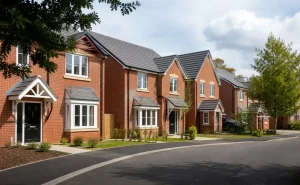
The phrase “asylum seekers in new-build homes” refers to people awaiting a decision on their asylum claim being accommodated in newly built residential properties arranged through the Home Office or its accommodation providers.
It does not mean they own the properties, have permanent tenancy rights, or are automatically receiving social housing. Eligible asylum seekers may receive temporary accommodation and financial support if they cannot support themselves while their claim is being considered. This system operates separately from local authority housing allocation.
As a result, a new-build property used for temporary asylum accommodation should not be confused with a permanent council or affordable housing allocation.
What Happened in Stoke Heath, Shropshire, and Why Did It Cause Concern?
The Stoke Heath case became controversial because it sat at the intersection of three sensitive issues: new-build supply, social housing expectations and asylum accommodation pressure.
Stoke Heath timeline
Recent reports have outlined a sequence of events relating to asylum accommodation in a new-build development.
Reported events include:
- A new-build estate in Stoke Heath, Shropshire, was reported to have 21 homes earmarked for asylum accommodation.
- Media reports said up to 83 asylum seekers were expected to be housed there.
- Local residents and the area’s MP raised concerns about the rural location, services, consultation and fairness.
- Subsequent reports said the Home Office halted or reversed the plan following backlash.
This timeline should be presented as reported coverage, not as a confirmed national programme.
Local Infrastructure and Consultation Concerns
The main concerns were not only about who would live in the homes. They also related to whether the development was suitable for a rural village with limited transport, school capacity, healthcare access and local amenities. These concerns are relevant to property-market readers because infrastructure planning is central to new-build acceptability.
What Has Been Confirmed and What Remains Reported?
Confirmed official policy shows that the Home Office can provide accommodation to eligible asylum seekers who would otherwise be destitute. Media reporting provides the specific Stoke Heath numbers and local reaction. That separation is important for accuracy, especially in a politically sensitive YMYL topic.
Why Has This Become a UK Property Market Issue?
The issue has attracted national attention because new-build homes are already in high demand amid the UK’s housing shortage. Reports that some newly built properties could be used for asylum accommodation have prompted wider debate about housing allocation, transparency, and the balance between local housing needs and temporary accommodation.
Key concerns include:
- Housing availability: Questions over how limited new-build housing should be allocated.
- Developer reputation: Concerns about the impact on public perception and future developments.
- Local confidence: Residents want reassurance that housing and infrastructure commitments will be honoured.
- Government policy: The challenge of reducing asylum hotel costs while addressing pressure on local housing.
The debate extends beyond one development, raising broader questions about housing policy, public confidence, and how the UK manages competing demands for limited housing resources.
How Does Home Office Asylum Accommodation Usually Work?
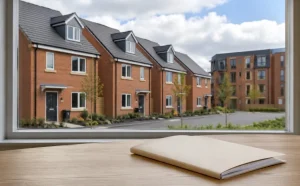
Home Office asylum accommodation is designed for eligible people who would otherwise be destitute while their asylum claim is considered. It can include different types of accommodation, such as houses, flats, hostels, hotels or other sites, depending on availability and suitability.
No-choice Accommodation Rules
The official Home Office allocation of asylum accommodation policy says the overriding principle is that accommodation is offered on a “no choice basis”. It also says accommodation is intended for people who would otherwise be destitute and have no other viable place to stay.
This means asylum seekers generally cannot choose to live in a specific town, city, region or property type. GOV.UK also states that people given accommodation “cannot choose where” they live and are unlikely to be placed in London or south-east England.
Role of Contractors and Accommodation Providers
Accommodation is typically arranged through government contracts and providers. In public debate, companies such as Serco, Clearsprings Ready Homes and Mears are often mentioned because they have been associated with Home Office accommodation services. The exact responsibility for any single site depends on the contract and local arrangements.
Hotels, Dispersal Accommodation and Cost Pressure
The pressure behind this issue comes partly from the high cost of hotels. The Government has been seeking to reduce hotel use and move people into other forms of accommodation, including dispersal accommodation and former military sites.
Relevant accommodation types include:
- hotels used as temporary accommodation
- shared houses or flats in dispersal areas
- hostel-style or initial accommodation
- larger non-detained sites, including some former military sites
- private-sector properties sourced through contractors
The policy challenge is to reduce cost without creating new pressure on local housing supply or placing people in unsuitable locations.
What Policy Changes Affect Asylum Seeker Housing in 2026?
The UK’s 2026 policy direction focuses on reducing reliance on asylum hotels, lowering accommodation costs, and introducing cost recovery for asylum seekers who are able to contribute financially.
According to the Home Office, the number of people housed in asylum hotels fell during 2025 as the government expanded the use of alternative accommodation. It has also announced plans requiring eligible asylum seekers to make a flat-rate contribution towards accommodation and support costs, with safeguards intended to prevent financial hardship.
“The cost of asylum accommodation on the British taxpayer is too high.” – The Home Secretary’s official statement
Policy points to note:
- GOV.UK lists standard cash support at £49.18 per person per week, or £9.95 where meals are provided.
- The Government has said cost recovery will apply where people are able to pay, with thresholds intended to avoid destitution.
- The Stoke Heath reporting should be read alongside this wider effort to move away from expensive hotel use.
These changes are significant, but readers should check GOV.UK for the current legal position before relying on any rule for personal, professional or investment decisions.
What Misinformation or Confusion Should Readers Avoid?
This topic can be easily distorted because it combines immigration, housing shortage and local politics. Property readers should separate confirmed facts from assumptions.
Fact-check table:
| Claim | More accurate position |
| “All asylum seekers are being given new-build homes.” | There is no confirmed universal entitlement to new-build homes. The current controversy is linked to specific reported cases. |
| “Asylum seekers can choose where they live.” | Official guidance says accommodation is generally allocated on a no-choice basis. |
| “Temporary asylum accommodation is the same as council housing.” | It is a separate Home Office support system, not ordinary social housing allocation. |
| “Every new-build site near London or Manchester is affected.” | There is no evidence that every new-build site in those areas is linked to asylum accommodation. |
| “Refugees and asylum seekers have the same housing status.” | Refugees have been granted protection; asylum seekers are still waiting for a decision. |
A careful article should avoid inflammatory language and should not describe reported arrangements as settled national policy unless official evidence supports that claim.
Are There Asylum Seekers in New-Build Homes Near London or Manchester?
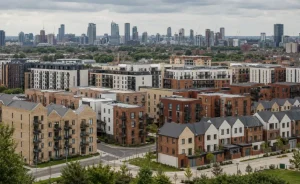
Searches for “asylum seekers new build homes near London” and “asylum seekers new build homes near Manchester” appear to reflect public concern about whether the Stoke Heath issue could be repeated in high-demand housing markets.
Why people search for London and Manchester cases?
London and Manchester are major housing-pressure areas. They also have large regeneration pipelines, high rents and strong public interest in affordable housing delivery. That makes them natural locations for related search queries, even when no specific local case has been confirmed.
New Towns and New-build Supply Near London and Manchester
The Government’s new towns programme is separate from asylum accommodation. In March 2026, the Ministry of Housing, Communities and Local Government named proposed new town locations including Crews Hill and Chase Park in Enfield, Thamesmead in Greenwich and Manchester Victoria North.
Each proposed location is expected to deliver at least 10,000 homes, with some delivering more over time.
The official draft programme says the proposed locations include Tempsford, Crews Hill and Chase Park, Leeds South Bank, Manchester Victoria North, Thamesmead, Brabazon and Milton Keynes. It also says community engagement will be a core part of the programme.
How to Check a Local Site?
Residents, buyers and investors should check council planning portals, local authority statements, Home Office updates and credible local reporting before sharing claims online. A rumour about a site is not the same as a contract, planning decision or official accommodation notice.
What Should Councils, Developers, Buyers and Local Residents Watch Next?
The next stage is about transparency and evidence. The Stoke Heath case has shown that local confidence can quickly weaken when residents believe housing use has changed without clear explanation.
Watch list:
- whether the Stoke Heath homes are returned to local or affordable housing use
- whether the Home Office publishes clearer rules on new-build accommodation
- whether contractors face tighter procurement requirements
- whether councils are notified earlier about proposed accommodation sites
- whether local infrastructure tests become more prominent in future decisions
- whether London, Manchester and other high-pressure areas receive clearer public communication
Overall, future decisions are likely to be judged not only by their outcomes but also by how openly they are communicated and how effectively they balance housing needs, community confidence, and government policy.
Conclusion
For the UK property market, this debate is not only about asylum policy. It is about whether scarce housing supply is being managed transparently and whether local communities trust the decisions being made around new developments.
Better communication, clearer rules and stronger local evidence will be essential if similar issues arise again.
Frequently Asked Questions
How do refugees get a new home after being granted status?
Refugees are different from asylum seekers because they have been granted protection. Once someone receives refugee status, asylum support may end and they may need to find private rented housing, apply for benefits if eligible or seek council homelessness help depending on their circumstances.
Where are the 12 new towns going to be built?
The “12” figure relates to earlier new towns discussions and shortlisting. The 2026 draft programme proposed seven locations for further consideration, including Tempsford, Crews Hill and Chase Park, Leeds South Bank, Manchester Victoria North, Thamesmead, Brabazon and Milton Keynes.
How much do landlords get paid to house asylum seekers?
There is no single public figure that applies to every landlord or property. Payments can depend on the contract, provider, property type, location and procurement arrangement. Readers should avoid relying on unsourced social media figures.
What are the new rules for asylum seekers in the UK in 2026?
The 2026 direction includes tighter asylum support rules, efforts to reduce hotel use and new powers for cost recovery from adults who can afford to contribute towards accommodation and support. The exact effect depends on legislation, eligibility and Home Office implementation.
How much money do asylum seekers get in the UK per week?
GOV.UK says asylum seekers usually receive £49.18 per person per week for essentials such as food, clothing and toiletries. If accommodation provides meals, the amount is usually £9.95 per person per week.
What is the one-year rule for asylum?
The phrase “one-year rule” can refer to different immigration contexts, so it should not be assumed to mean one fixed rule for every asylum case. Anyone affected should check current Home Office guidance or seek advice from a regulated immigration adviser.
Can asylum seekers apply for council housing?
Asylum seekers waiting for a decision are generally supported through the Home Office asylum support system, not ordinary council housing allocation. Housing rights can change after a person is granted refugee status, depending on eligibility and local authority rules.
Editorial Note:
This article is written for UKPropertyMarketNews.co.uk from a professional, business-journalistic viewpoint. It aims to explain the property-market relevance of the asylum seekers and new-build homes debate without using inflammatory language, unsupported claims or political slogans.
How We Checked?
We checked official GOV.UK asylum support pages, Home Office accommodation allocation guidance, the June 2026 Home Office cost-contribution update and the official new towns programme. We also reviewed accessible current reporting on Stoke Heath and treated media-only details as reported claims unless confirmed by official sources.
Some supplied reference pages were blocked or paywalled during checking, so official sources and accessible secondary reporting were used for verification.