The Nigel Farage council housing policy would, if introduced by a Reform UK government, require foreign nationals in social housing to move into private rented accommodation within three months or risk losing the right to remain in the UK.
The proposal is not current law, but it has triggered debate over housing fairness, immigration, council waiting lists and legal protections for existing tenants.
Key takeaways:
- The policy targets foreign nationals living in council or social housing.
- Supporters frame it as prioritising British citizens and local residents.
- Critics argue it is divisive, legally complex and unlikely to solve housing shortages.
- Councils could face tenancy, homelessness and equality law challenges.
- The private rental market may see extra pressure if the plan advances.
What Is the Nigel Farage Council Housing Policy on Foreign Nationals?

The Nigel Farage council housing policy focuses on removing foreign nationals from social housing if Reform UK were to gain power.
According to the policy position described in the supplied reference material, foreign nationals in council or social housing would be given a three-month grace period to find private rented accommodation.
If they did not do so, they could lose their right to remain in the UK and become liable for deportation. This makes the proposal much broader than a standard housing allocation reform. It links social housing eligibility directly with immigration status.
Three-Month Grace Period for Foreign Nationals
The central proposal is that affected foreign nationals would have three months to relocate from social housing into the private rental market.
In practical terms, this would require individuals and families to secure a tenancy, pay deposits, meet affordability checks and find a suitable property in a competitive rental sector.
That raises immediate questions about:
- Whether enough private rental homes would be available
- How families with children, disabilities or support needs would be treated
- Whether councils would still owe housing duties to some households
- How existing tenancy contracts would be handled
- Whether the proposal could face legal challenge
Link Between Social Housing and Immigration Status
A key feature of the Nigel Farage council housing policy is the way it connects council housing with immigration enforcement. In the UK, housing policy and immigration policy already interact in certain areas, including eligibility rules and right-to-rent checks. However, removing people from existing social tenancies on the basis of nationality would be a far more significant shift.
| Policy Area | Farage/Reform Position | Possible Impact | Key Concern |
| Social housing | Remove foreign nationals from council homes | More homes may be claimed to become available for others | Legal and practical barriers |
| Immigration status | Link continued residence to leaving social housing | Housing becomes tied to right to remain | Risk of legal challenge |
| Private rental market | Foreign nationals expected to rent privately | Extra demand in already pressured areas | Affordability and supply |
| Council waiting lists | Priority framed around British citizens/local people | Could appeal to people waiting for homes | May not solve shortage alone |
Why Has Nigel Farage Connected Council Housing With a “Two-Tier State” Claim?
The housing proposal sits within a wider argument made by Nigel Farage in his essay titled “Britain Is A Two Tier State – Against White People”, as described in the supplied reference text. In that essay, he claimed that public life in Britain has become unfair to white people, and he connected this argument with housing, healthcare, education, policing, the military and employment.
His comments have been condemned by critics, including Culture Secretary Lisa Nandy, who described his position as divisive. Farage has argued that he wants to set out his views in his own words and avoid them being misrepresented.
In housing terms, Farage claimed that rules which once gave priority to local people and people with ties to an area were weakened over time. This is central to the Nigel Farage council housing policy, because it presents social housing as a public resource that should be more tightly focused on British citizens and local residents.
The debate is politically sensitive because it brings together three highly charged issues:
- Social housing shortages
- Immigration and public services
- Equality, fairness and local priority
How Could the Policy Affect Foreign Nationals in Social Housing?
If implemented as described, the policy could have serious consequences for foreign nationals living in social housing. Some households may have lived in the UK for years, worked locally, raised children and built strong community ties. Others may have different immigration statuses, family circumstances or legal protections.
A blanket policy would therefore be difficult to apply without clear definitions. For example, policymakers would need to define who counts as a foreign national, whether exemptions would apply, and how mixed-nationality households would be treated.
| Household Situation | Possible Policy Question | Practical Issue |
| Foreign national with British children | Would the whole household have to leave? | Children’s welfare and schooling |
| Long-term resident with settled status | Would settled status protect the tenancy? | Immigration and housing law overlap |
| Mixed-nationality couple | Would nationality of one tenant affect all? | Tenancy rights and family rights |
| Disabled or vulnerable tenant | Would exemptions apply? | Care duties and safeguarding |
| Refugee or protected person | Would international obligations apply? | Legal protection and human rights |
A UK housing solicitor described the uncertainty clearly:
“I would expect any policy like this to face immediate scrutiny because social housing is not just an allocation issue. Existing tenants may have contractual rights, statutory protections and family circumstances that cannot simply be ignored.”
This professional insight shows why the Nigel Farage council housing policy would not only be a political proposal. It would also become a legal and administrative test for councils, courts and government departments.
What Does the Proposal Mean for Council Housing Waiting Lists in the UK?
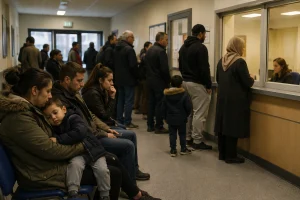
Council housing waiting lists remain a major issue across the UK. Many families wait years for suitable accommodation, especially in high-demand areas. Supporters of the Nigel Farage council housing policy may argue that removing foreign nationals from social housing could free up homes for British citizens and local families.
However, housing pressure is not caused by one factor alone. The UK’s social housing challenge is linked to long-term supply shortages, affordability pressures, population movement, rising rents and limited council housebuilding in many areas.
The proposal may therefore appeal to people who feel that the allocation system is unfair, but it does not automatically resolve the shortage of affordable homes.
| Pressure Point | How It Affects Social Housing |
| Limited supply | Fewer council and housing association homes are available |
| High private rents | More households seek social housing support |
| Temporary accommodation | Councils face rising costs and limited options |
| Local demand | Popular areas have longer waiting lists |
| Family size needs | Larger suitable homes are often harder to find |
For local authorities, the main challenge would be whether such a policy actually creates enough available homes to reduce waiting lists meaningfully. Even if some homes became vacant, councils would still need to manage allocation rules, legal checks, homelessness duties and local housing needs.
Why Has the Policy Sparked Political Criticism?
The Nigel Farage council housing policy has sparked criticism because it directly targets foreign nationals and sits alongside wider comments about race, equality and public institutions. Critics argue that this kind of language risks increasing division and blaming minority groups or migrants for structural housing problems.
Lisa Nandy’s response, according to the supplied reference material, was strongly critical. She said Farage should take his “hate and anger and division somewhere else” and argued that people want hope rather than more anger.
Supporters within Reform UK, including Suella Braverman as described in the supplied text, defended Farage’s argument and claimed that white people are treated less fairly than non-white people by institutions and high-level policies.
For the UK property sector, the political argument matters because housing confidence depends on clarity. Sudden or dramatic policy proposals can affect how tenants, landlords, councils and investors view future regulation.
Would Prioritising British Citizens Change Social Housing Allocation Rules?

Social housing allocation in the UK already involves eligibility rules, local authority policies and priority bands. Councils often consider factors such as homelessness, overcrowding, medical need, local connection and vulnerability.
The Nigel Farage council housing policy would go further by making nationality and immigration status a central dividing line for existing social housing tenants. That would be different from simply adjusting waiting list priority for future applicants.
A policy of this kind would likely require changes to legislation, guidance and council procedures. It could also require coordination between local councils, the Home Office and the courts.
Possible changes could include:
- Revised eligibility criteria for council housing
- Stronger local connection tests
- New checks on nationality or immigration status
- Guidance on mixed-status households
- Appeal routes for affected tenants
- Rules on exemptions and vulnerable households
The key issue is that council housing is not only about who joins the waiting list. It is also about what happens to people who already have a tenancy. Existing tenants may have stronger legal protections than new applicants.
How Does the Debate Link Immigration, Housing and Public Services?
The debate around the Nigel Farage council housing policy reflects a wider national argument about whether immigration increases pressure on public services. Housing is often at the centre of that discussion because people can see the shortage in practical terms: long waiting lists, high rents, overcrowded homes and difficulty accessing affordable accommodation.
However, the relationship between immigration and housing is complex. Some foreign nationals may need housing support, while others work in sectors that help sustain local economies, public services and construction. The same area may experience both housing demand from migration and labour supply from migrant workers.
| Debate Theme | Supporters May Argue | Critics May Argue |
| Fairness | British citizens should come first | Need should remain the main test |
| Local connection | Long-term residents deserve priority | Migrants may also have local ties |
| Housing shortage | Foreign nationals add pressure | Shortage is mainly about supply |
| Public services | Resources should be protected | Targeting groups may be divisive |
| Policy impact | Homes could be freed up | Legal and social harms may follow |
The housing sector will likely watch whether this proposal becomes a firm election policy, whether it is expanded into detailed legislation, and how other parties respond.
What Are the Legal and Practical Challenges Around Evicting Foreign Nationals From Council Housing?

The legal and practical challenges could be significant. Removing people from social housing is not as simple as issuing a political instruction. Councils, housing associations and courts must follow lawful processes, and tenants may have rights depending on their tenancy type and personal circumstances.
A housing policy consultant explained the issue in practical terms:
“From a council perspective, I would need clear national law, clear definitions and clear funding before such a policy could even be administered. Without that, local authorities would be left trying to enforce a politically sensitive rule with very high legal risk.”
This insight matters because councils are already under pressure. They manage waiting lists, homelessness applications, temporary accommodation, safeguarding responsibilities and limited housing stock.
Existing Tenancy Rights
Many social tenants have tenancy rights that cannot be removed without process. Councils may need to prove grounds for possession and follow court procedures. A policy based on nationality could therefore require new law and may still face challenge.
Human Rights and Equality Considerations
Because the proposal directly targets foreign nationals, it could raise equality and human rights questions. Courts may consider whether the measure is proportionate, whether it discriminates unlawfully, and how it affects family life, children and vulnerable people.
Local Council Responsibilities
Even if a household lost a social tenancy, a council may still have homelessness or safeguarding duties in some cases. This could create a situation where one part of the state removes housing while another part must respond to the consequences.
Could the Policy Influence the UK Property and Rental Market?
The Nigel Farage council housing policy could have knock-on effects for the private rented sector. If foreign nationals were required to leave social housing and rent privately, demand could increase in areas where rents are already high and available homes are limited.
For landlords, this could mean more enquiries in some locations. For tenants, it could mean greater competition. For councils, it could increase pressure if people cannot find affordable private accommodation within the proposed three-month period.
| Property Market Area | Possible Effect |
| Private rented sector | Increased demand from displaced households |
| Rental affordability | More pressure in high-demand towns and cities |
| Lettings process | More checks around immigration and affordability |
| Temporary accommodation | Potential rise if households cannot rent privately |
| Local councils | More administrative and homelessness pressure |
The policy could also influence investor sentiment. Some landlords may see increased demand, while others may worry about tighter checks, political uncertainty and further regulation.
What Should Landlords, Tenants and Property Professionals Watch Next?
Landlords, tenants and property professionals should avoid assuming that the Nigel Farage council housing policy is already law. At this stage, it should be treated as a political proposal that would require major legal and administrative detail before it could be introduced.
Key Areas to Monitor
The most important details to watch are whether Reform UK publishes a full housing policy document, how “foreign national” is defined, whether exemptions are included, and whether existing tenants would be treated differently from new applicants.
Policy announcements, legal scrutiny, council guidance and rental market reaction
Property professionals should also monitor whether other parties respond with alternative housing policies. The wider debate may push housing allocation, local connection rules and social housebuilding higher up the political agenda.
What Is the Bigger Picture Behind the UK Social Housing Debate?

The bigger picture is that social housing has become one of the UK’s most difficult policy areas. Many people feel locked out of affordable housing, while councils face growing demand and limited stock. Against that backdrop, proposals that promise to prioritise one group over another can quickly gain attention.
The Nigel Farage council housing policy speaks to voter frustration, particularly among people who believe they have waited too long for housing support. However, critics argue that the proposal risks oversimplifying a much deeper housing supply problem.
Any serious housing plan would need to address:
- Building more social and affordable homes
- Reducing reliance on temporary accommodation
- Improving planning and delivery
- Supporting councils with funding and powers
- Balancing fairness, need and local connection
- Protecting lawful tenants from unfair treatment
The public debate may focus on nationality, but the housing system also depends on supply, affordability and long-term planning.
What Is the Conclusion on Nigel Farage’s Council Housing Policy?
The Nigel Farage council housing policy is a major political proposal because it targets foreign nationals in social housing and links council tenancy rights with immigration status. Supporters may see it as a way to prioritise British citizens and local people. Critics view it as divisive, legally risky and unlikely to solve the deeper shortage of affordable homes.
For the UK property sector, the key point is that the proposal is not currently law. It would require detailed legislation, legal testing, council guidance and practical delivery plans. It could also place further pressure on the private rented sector if large numbers of households were expected to move from social housing into private rentals.
The debate is likely to continue because it touches on some of the most sensitive issues in British politics: housing, immigration, equality, public services and fairness. Whether the policy becomes a workable plan or remains a controversial political statement will depend on the details that follow.
What Are the FAQs About Nigel Farage Council Housing Policy?
What is Nigel Farage’s council housing policy?
The Nigel Farage council housing policy is a Reform UK proposal that would require foreign nationals living in social housing to move into private rented accommodation within a three-month period, or risk losing their right to remain in the UK.
Would foreign nationals be removed from council housing under the proposal?
Yes, the proposal described in the supplied reference material says foreign nationals would be expected to leave social housing and relocate to the private rental sector. However, the policy is not currently law and would require legal and administrative detail.
Is the policy currently law in the UK?
No. The policy is a political proposal. Existing housing law, tenancy rights, council duties and immigration rules would all need to be considered before any such policy could be implemented.
How are council homes allocated in Britain?
Council homes are generally allocated according to local authority rules, which may consider housing need, homelessness, overcrowding, medical conditions, local connection and other priority factors.
Can councils prioritise people with a local connection?
Many councils already use local connection rules in their allocation schemes. However, these rules must operate within the wider legal framework and cannot be applied in a way that unlawfully discriminates.
Why is social housing such a major political issue?
Social housing is a major issue because demand is high, supply is limited and many households face rising private rents. This creates pressure on councils and frustration among people waiting for affordable homes.
Could this policy affect private landlords?
Yes. If foreign nationals were moved from social housing into private rented accommodation, landlords in some areas could see increased demand. However, this could also increase affordability checks, competition and pressure on local rental supply.
What has been the political reaction to the proposal?
The proposal has been strongly criticised by political opponents, including Lisa Nandy, while supporters within Reform UK have defended the broader argument. The debate remains highly controversial because it links housing policy with immigration, race and equality law.