The terms building insurance and home insurance are often used as though they mean the same thing, but there is an important difference.
Building insurance, more commonly called buildings insurance in the UK, is not exactly the same as home insurance.
Buildings insurance specifically protects the physical structure of a property and its permanent fixtures and fittings. Home insurance is a broader term that can refer to buildings insurance, contents insurance, or a combined policy containing both.
MoneyHelper describes home insurance as an umbrella term covering two main types of protection: buildings insurance and contents insurance. They can usually be purchased separately or together under one combined policy.
Understanding the difference is particularly important for homeowners, mortgage borrowers, landlords, tenants and leaseholders because each may need a different type of cover.
What Is the Difference Between Building Insurance and Home Insurance?
The simplest difference is what each term covers.
Buildings insurance protects the physical property itself. This generally means the structure and permanent fixtures and fittings, including the roof, walls, floors, windows, fitted kitchen and bathroom.
Home insurance, meanwhile, is normally used as an umbrella term. A home insurance policy may provide:
- Buildings insurance only
- Contents insurance only
- Combined buildings and contents insurance
Therefore, someone saying they have “home insurance” does not automatically mean both their property and belongings are insured.
Those unfamiliar with the terminology can read more about what home insurance means before choosing a policy.
What Does Buildings Insurance Usually Cover?
Buildings insurance is designed to help with the cost of repairing or rebuilding a home when the structure is damaged by an insured event.
Depending on the policy, cover may include damage caused by:
- Fire and smoke
- Flooding
- Storms
- Subsidence
- Burst or leaking pipes
- Falling trees
- Vandalism
- Vehicle collisions
- Explosions
Permanent fixtures such as fitted kitchens, bathrooms and built-in units will also normally fall within buildings cover rather than contents insurance.
However, insurance policies differ significantly. Homeowners should check their individual policy wording rather than assuming every type of damage will be included.
For a closer look at the protection available, see what buildings insurance covers.
MoneyHelper also notes that buildings policies should provide sufficient cover for the cost of clearing the site and rebuilding the property if it were completely destroyed.
What Does Contents Insurance Protect?
Contents insurance protects possessions rather than the building itself.
An easy way to think about it is to imagine turning the house upside down. Many of the things that would fall out would potentially fall under contents insurance.
That could include:
- Furniture
- Televisions
- Computers
- Clothes
- Jewellery
- Kitchen appliances
- Curtains
- Personal belongings
Depending on the policy, contents insurance may protect belongings against risks such as theft, fire and flood. Additional protection may sometimes be available for accidental damage or possessions taken outside the home.
Anyone considering separate cover can also check how much contents insurance may cost.
Is Combined Home Insurance the Same as Buildings Insurance?

No. Combined home insurance offers broader protection than buildings insurance alone.
A combined policy normally contains both:
| Type of Cover | What It Generally Protects |
| Buildings insurance | Structure, roof, walls and permanent fixtures |
| Contents insurance | Furniture, electronics and personal belongings |
| Combined home insurance | Both the building and its contents |
For example, if a serious fire damaged a kitchen and destroyed a television, buildings insurance could potentially cover insured damage to the fitted kitchen, while contents insurance could potentially cover the television.
With a combined policy, both types of protection may sit under the same insurance arrangement.
Do Homeowners Need Buildings Insurance?
Homeowners will generally want buildings insurance because they are financially responsible for the property.
Buildings insurance is not generally a legal requirement in the UK, but mortgage lenders normally require borrowers to have suitable buildings insurance as a condition of the mortgage.
MoneyHelper states that homeowners with mortgages are normally required to have buildings cover, whereas contents insurance remains optional.
Someone who owns their home outright can normally decide whether to insure it. However, going without buildings insurance could leave the owner personally responsible for potentially substantial repair or rebuilding costs.
Homeowners unsure about the wider requirements can read more about whether home insurance is mandatory.
Do Mortgage Lenders Require Home Insurance?
A mortgage lender will generally be concerned with buildings insurance, rather than requiring the borrower to insure all of their personal possessions.
That is because the property itself acts as security for the mortgage.
A lender may therefore require suitable buildings cover to be in place, but contents insurance is normally the homeowner’s choice.
Some insurers sell buildings and contents protection together as a home insurance package, which can make it appear as though the lender is requiring full home insurance. Borrowers should check their mortgage terms and insurance requirements carefully.
Do Tenants Need Buildings Insurance?
Usually not.
For a normal rented property, responsibility for insuring the structure generally belongs to the landlord. MoneyHelper states that renters would ordinarily arrange contents cover for their belongings, while buildings insurance is the landlord’s responsibility.
A tenant may still choose contents insurance to protect possessions such as furniture, laptops, televisions, clothes and other belongings.
The landlord’s buildings insurance should not be assumed to protect property belonging to the tenant.
Who Arranges Buildings Insurance for a Leasehold Flat?
Leasehold properties work differently from many freehold houses.
For many leasehold flats, buildings insurance is arranged by the freeholder, landlord or building management arrangement, with leaseholders contributing towards the premium through their service charge.
MoneyHelper explains that where someone else owns the freehold, buildings insurance is likely to be included within the service charge. Where residents jointly own the freehold, they may share responsibility for arranging the building’s insurance.
The exact arrangement depends on the lease.
More information is available on leasehold buildings insurance responsibility.
Does Buildings Insurance Cover Everything in the House?
No.
Buildings insurance primarily covers the structure and permanent fixtures. It will not normally provide the same protection for movable personal possessions that contents insurance provides.
For example:
Usually associated with buildings insurance:
- Roof
- Walls
- Floors
- Windows
- Fitted kitchen
- Bathroom fittings
- Permanent plumbing
Usually associated with contents insurance:
- Sofa
- Television
- Laptop
- Clothing
- Jewellery
- Freestanding furniture
- Personal belongings
Exact definitions can differ between insurers, so policy wording remains important.
What Is Usually Excluded From Buildings Insurance?
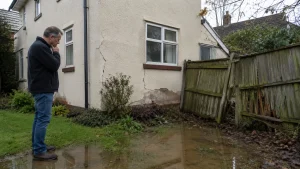
Buildings insurance is not a maintenance contract.
Policies commonly exclude problems caused by normal deterioration or inadequate maintenance. MoneyHelper notes that home insurance generally does not cover deliberate damage or problems arising from ordinary wear and tear.
Potential exclusions can include:
- General wear and tear
- Gradual deterioration
- Poor maintenance
- Some pest damage
- Damage that existed before the policy began
- Certain accidental damage unless additional cover was purchased
Insurers can also impose conditions relating to properties left unoccupied for extended periods.
The wording and exclusions should therefore be reviewed before purchasing or renewing cover.
How Much Buildings Insurance Cover Is Needed?
Buildings insurance should normally be based on the rebuild cost of the property, rather than simply its market value.
These figures can be very different.
A property’s market price includes factors such as the value of the land, location and local housing demand. Rebuild cost instead relates to how much it would cost to reconstruct the property following severe insured damage.
MoneyHelper warns that if the sum insured is insufficient to rebuild the home, an insurer may not pay the full amount of a claim, including in some cases where the damage is only partial.
Homeowners should therefore avoid automatically using the property’s purchase price as the amount of buildings cover required.
Should Buildings and Contents Insurance Be Bought Together?
There is no universal answer.
Buying buildings and contents insurance from the same provider can make administration simpler and may sometimes be competitively priced. MoneyHelper suggests comparing combined cover where both types of insurance are needed.
However, homeowners should compare:
- Total premiums
- Excesses
- Coverage limits
- Accidental damage protection
- Personal possessions cover
- Alternative accommodation cover
- Policy exclusions
- Individual item limits
The cheapest policy is not necessarily the most suitable if important risks are excluded or cover limits are insufficient.
Is Building Insurance the Same as Home Insurance?
No, buildings insurance is not exactly the same as home insurance.
Buildings insurance covers the physical structure of the property and permanent fixtures and fittings. Home insurance is the wider term commonly used for buildings insurance, contents insurance or a policy combining both.
A homeowner with a mortgage will normally need buildings insurance, while contents insurance is generally optional. Tenants usually only need to consider contents insurance because their landlord is typically responsible for insuring the building.
The key is to check the policy rather than relying on its name. Two products described as “home insurance” can provide very different levels of protection.
FAQs
Can I have buildings insurance without contents insurance?
Yes. Buildings and contents insurance can normally be purchased separately, so a homeowner can take out buildings cover without insuring their belongings.
Does buildings insurance cover furniture?
Usually not. Furniture is generally treated as contents and would normally require contents insurance rather than buildings insurance.
Is buildings insurance legally required in the UK?
It is not generally required by law, but a mortgage lender will normally require suitable buildings insurance as a condition of lending.
Does home insurance automatically include buildings insurance?
Not necessarily. “Home insurance” can describe buildings cover, contents cover or a combined policy, so the policy details should always be checked.
Does a tenant need home insurance?
A tenant does not normally arrange buildings insurance, but they may want contents insurance to protect their own possessions. The landlord’s policy should not be assumed to cover the tenant’s belongings.