UK landlords do not generally need contents insurance by law.
However, a landlord who supplies furniture, freestanding appliances, carpets, curtains or other removable items may need cover to avoid paying the full replacement cost after a fire, flood, escape of water, theft or another insured event.
The practical decision depends on what the landlord owns, whether the property is furnished and what any buildings or block insurance already protects.
What Is Landlord Contents Insurance?

Landlord contents insurance protects eligible belongings owned by a landlord and kept at a rental property. It normally responds when those items are damaged, destroyed or stolen because of an event listed in the policy.
This cover is different from buildings insurance, tenant contents insurance and broader landlord protections such as property owner’s liability, rent guarantee or legal expenses cover.
What Counts as a Landlord’s Contents?
A useful rule of thumb is to imagine turning the property upside down. Items that would fall out are often treated as contents, although policy definitions always take priority.
Typical examples include sofas, beds, tables, chairs, wardrobes, lamps, rugs, curtains, kitchenware and freestanding appliances. Carpets may also fall under contents cover, depending on how the buildings policy defines fixtures and floor coverings.
Only items owned by the landlord are protected. Furniture, clothing, electronics and other possessions belonging to tenants require separate tenant contents insurance.
What Is Normally Treated as Part of the Building?
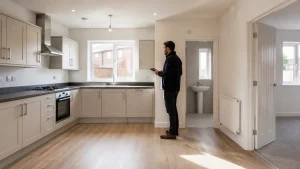
Walls, roofs, floors, fitted kitchens, bathroom suites, pipes and permanent fixtures are normally associated with buildings insurance. Integrated ovens, built-in dishwashers and fitted kitchen units are also commonly treated as part of the building rather than removable contents.
The dividing line can vary between insurers, particularly for carpets, fitted wardrobes and semi-integrated appliances. Landlords should therefore compare the contents definition with the buildings definition to prevent gaps or duplicate cover.
Is Landlord Contents Insurance a Legal Requirement in 2026?
Landlord contents insurance is not generally a statutory requirement in the UK. It remains a financial protection choice unless a mortgage agreement, lease, management arrangement or other contract creates a specific obligation.
Legal Requirements Versus Financial Protection
The official landlord responsibilities guidance lists duties concerning property safety, gas and electrical equipment, Energy Performance Certificates, tenancy deposits and right-to-rent checks. It does not impose a general requirement for private landlords to insure their furniture or other contents.
Nevertheless, the absence of a general legal duty does not remove the financial risk. A furnished property affected by fire or flooding could leave its landlord responsible for replacing several rooms of furniture and appliances.
Insurance also does not replace statutory repair and safety duties. A landlord remains responsible for the structure, heating, hot water, sanitary fittings and electrical wiring where the law assigns those responsibilities.
Mortgage and Lease Conditions
A landlord with a mortgage must obtain permission from the lender before letting the property, and the mortgage terms may require suitable buildings insurance. A lease may also state who arranges insurance and which risks must be covered.
For leasehold homes, the leasehold building insurance guidance explains that the landlord or freeholder will usually insure the building rather than its contents, with the cost commonly included in the service charge.
A leasehold landlord should request the block-policy summary before buying separate cover. The block policy may insure the structure while leaving furniture, freestanding appliances and other contents entirely unprotected.
Has the Position Changed in 2026?
Current government guidance does not establish a new general obligation for landlords to buy contents insurance. The distinction remains between compulsory legal duties and optional protection against financial loss.
Landlords should still review policy and contract documents whenever tenancy law, mortgage terms, ownership arrangements or the use of the property changes.
Which Landlords Are Most Likely to Need Contents Cover?
The need for cover usually increases with the number and value of items supplied to tenants.
Contents Cover Decision Table
| Property Arrangement | Likely Need | Main Items at Risk | Important Check |
| Fully furnished | High | Beds, sofas, tables, appliances and furnishings | Accidental and malicious damage terms |
| Part-furnished | Moderate to high | White goods, carpets, curtains and selected furniture | Total replacement value |
| Unfurnished | Low to moderate | Carpets, curtains or supplied appliances | Buildings-policy definitions |
| Leasehold flat | Depends on contents | Furniture and freestanding appliances | Existing block insurance |
| HMO or short-term let | Specialist assessment | Larger quantities of supplied contents | Occupancy and usage restrictions |
This table is a decision aid rather than a universal recommendation. Even an unfurnished property may contain several thousand pounds’ worth of landlord-owned flooring, window coverings and appliances.
What Does Landlord Contents Insurance Usually Cover?

Cover applies only to insured events and eligible items defined in the policy. It should not be assumed that every form of damage is automatically included.
Furniture and Freestanding Appliances
Landlord-owned sofas, beds, wardrobes, dining tables and chairs are common examples of insured contents. Freestanding washing machines, fridges, freezers, dishwashers and microwaves may also qualify, while integrated units are more likely to sit under buildings insurance.
Common Insured Events
Events Frequently Covered
- Fire or smoke damage.
- Flood or storm damage.
- Escape of water from a pipe or appliance.
- Theft or attempted theft.
- Vandalism by someone other than the tenant.
- Damage caused by another specified event in the policy.
The insurer will assess whether the incident, cause and damaged item meet the policy conditions before accepting a claim.
Optional Extensions
Accidental damage is often an optional extension rather than standard protection. Malicious damage by tenants, theft by tenants, loss of rent, emergency assistance, rent guarantee and legal expenses may also be separate additions.
Landlords should check each extension independently because a policy offering accidental damage may still exclude deliberate damage or theft committed by a tenant.
What Is Commonly Excluded?

Exclusions determine when the insurer will not pay, making them essential reading before cover is purchased.
Ordinary Wear and Tear
Normal deterioration through regular use is usually excluded. Fading fabric, worn carpets, rust, ageing furniture and gradual loss of appliance performance are maintenance or replacement costs rather than sudden insured losses.
One competitor source claims that contents insurance can pay for wear-and-tear repairs, but that statement conflicts with the clearer policy information reviewed for this article. Landlords should not rely on cover for gradual deterioration unless their policy expressly states otherwise.
Mechanical or Electrical Breakdown
A fridge that stops working because of age, poor maintenance or an internal fault is not normally covered by standard contents insurance. The same fridge may be covered if it is damaged by a qualifying fire, flood or escape-of-water incident.
Tenant-Owned Possessions
A landlord’s policy normally excludes a tenant’s clothes, furniture, computers, televisions and other personal belongings. Tenants must arrange their own insurance if they want protection against theft, fire, accidental damage or other risks.
Unoccupied-Property Restrictions
Many policies reduce or restrict cover after a property has been empty for a specified period. The landlord may need to notify the insurer, complete regular inspections, turn off water supplies or purchase specialist unoccupied-property cover.
The permitted period varies, so landlords should not assume that every policy uses the same 30-day or 60-day rule.
Claims Below the Excess or Above Policy Limits
The excess is the amount the landlord contributes towards an accepted claim. A £500 loss under a policy with a £350 excess may produce only a limited payment.
Policies may also impose a total contents limit and a maximum for any single item. Expensive furniture, electronics or specialist equipment should be declared where required.
Buildings, Landlord Contents and Tenant Insurance Compared
Each type of insurance protects a different interest, so one policy should not automatically be treated as a substitute for another.
Insurance Comparison Table
| Cover Type | What It Normally Protects | Typical Examples | What It Does Not Normally Protect |
| Buildings insurance | Structure and permanent fixtures | Roof, walls, fitted kitchen and bathroom | Loose landlord furniture |
| Landlord contents insurance | Movable belongings owned by the landlord | Beds, sofas, curtains and freestanding appliances | Tenant possessions |
| Tenant contents insurance | Belongings owned by the tenant | Clothing, computers and personal furniture | Landlord-owned items |
| Liability insurance | Certain legal liabilities | Injury or property-damage claims | Routine repairs or wear |
| Rent guarantee or legal expenses | Specified rent and dispute risks | Eligible arrears, repossession or legal costs | Physical contents damage |
These protections may be combined within one landlord policy, but their limits, exclusions and eligibility conditions remain separate.
Buildings Insurance
Buildings insurance covers the property’s physical structure, permanent fixtures and rebuilding risk. Mortgage lenders commonly focus on this cover because the building secures the loan.
Landlord Contents Insurance
Contents insurance focuses on landlord-owned movable property. It can be purchased with buildings insurance or, in some circumstances, as contents-only cover.
Tenant Contents Insurance
Tenant insurance protects the tenant’s own belongings. A landlord may recommend it but cannot assume the tenant has purchased it.
Why Standard Home Insurance May Not Be Suitable?
Ordinary home insurance is generally designed for an owner-occupied property. Letting a home changes its occupancy and risk profile, so the insurer must be told that tenants are living there.
Failure to disclose the correct use of the property could affect a claim or invalidate cover under the policy terms.
How Much Contents Cover Should a Landlord Buy?
The sum insured should reflect the current cost of replacing every eligible landlord-owned item, not its second-hand sale value.
Calculate Replacement Cost, Not Second-Hand Value
A landlord should list each room, record every supplied item and estimate the cost of buying a comparable new replacement. The calculation should include furniture, appliances, carpets, curtains, kitchen equipment and covered items kept in garages or sheds.
Receipts, photographs and a signed inventory can support both the valuation and a later claim.
New-for-Old Versus Indemnity Cover
New-for-old cover pays towards a new equivalent, subject to policy limits and deductions. Indemnity cover considers the item’s age, condition and depreciation, which may result in a lower settlement.
Avoid Underinsurance
If the declared value is too low, the landlord may not receive enough to replace everything after a major loss. Some policies may also reduce claims proportionately where underinsurance applies.
Eight Checks Before Choosing a Landlord Contents Policy

The lowest premium does not necessarily represent the best protection. Landlords should compare the circumstances in which a claim would actually be paid.
Policy Checklist
- Check which events are covered as standard.
- Confirm whether accidental damage is included.
- Look for malicious damage and theft-by-tenant protection.
- Compare compulsory and voluntary excesses.
- Review total and individual-item limits.
- Check restrictions during void periods.
- Confirm whether settlement is new-for-old or indemnity-based.
- Disclose the tenancy type, occupants and property use accurately.
A policy comparison should be based on equivalent cover levels, not price alone.
Is Landlord Contents Insurance Tax-Deductible?
Qualifying insurance premiums paid wholly for the property business may normally be claimed as an allowable rental expense. The property insurance tax deductions guidance covers insurance against damage to the building, damage to contents and loss of rent.
The official wording states: “Premiums on insurance policies covering the risks listed below will be allowable if paid for the purposes of the property business.”
This treatment is different from Replacement of Domestic Items Relief, which concerns qualifying expenditure on replacing domestic items. Ownership structure and individual circumstances can affect the correct tax treatment.
What Should a Landlord Do Next?
A landlord should first check the mortgage, lease and any freeholder or block insurance documents. The next step is to prepare a room-by-room inventory and calculate the current replacement value of all supplied belongings.
Policy comparisons should then examine exclusions, excesses, accidental damage, malicious damage, individual-item limits and void-period conditions. Cover should be reviewed whenever furniture, tenants or property use changes.
Conclusion
The answer to “do I need contents insurance as a landlord?” depends less on a general legal obligation and more on what the landlord owns inside the rental property.
A fully furnished home may expose the landlord to substantial replacement costs, while a genuinely empty property may need only buildings cover. Part-furnished and leasehold properties require closer examination because carpets, curtains, white goods and block-policy arrangements can create overlooked gaps.
Before choosing cover, the landlord should value every supplied item and compare the insured events, exclusions, excesses and optional extensions.
Frequently Asked Questions
Is Contents Insurance Legally Required for UK Landlords?
No general UK law requires most private landlords to purchase contents insurance. A mortgage agreement, lease or other contract may nevertheless impose particular insurance conditions.
Does an Unfurnished Rental Property Need Contents Insurance?
A genuinely unfurnished property may not require contents cover. However, landlord-owned carpets, curtains and freestanding appliances may still need protection.
Are Carpets and Curtains Covered by Landlord Contents Insurance?
Carpets and curtains are commonly treated as contents, but definitions vary. The landlord should check whether the buildings policy already covers fitted floor and window coverings.
Does Landlord Contents Insurance Protect Tenants’ Belongings?
No, it normally protects only belongings owned by the landlord. Tenants must arrange separate insurance for their furniture, clothing, electronics and personal possessions.
Does Contents Insurance Cover Accidental Tenant Damage?
Accidental damage may be available as standard or as an optional extension. It should not be assumed that a basic contents policy includes it.
Can a Tenancy Deposit Replace Contents Insurance?
No, a deposit is limited and governed by tenancy-deposit rules. It may not cover a major fire, flood, theft or extensive contents loss.
Does a Landlord Need Contents Cover for a Leasehold Flat?
The building may already be insured through the freeholder’s block policy. Separate contents cover may still be needed for furniture, appliances and other landlord-owned belongings.
Are Landlord Contents Insurance Premiums Tax-Deductible?
Qualifying premiums may usually be treated as allowable property-business expenses. Landlords should keep policy documents and payment records to support the deduction.