There is no single UK law setting a maximum tree height near houses. Instead, councils may act when trees block light, create safety risks, damage property, or cause neighbour disputes, especially under high hedge rules.
Key takeaways:
- Check local council guidance before planting, pruning, or removing trees.
- Plant most trees at least 5–10 metres from the house, depending on species and root spread.
- Avoid large or invasive trees such as willow, poplar, oak, sycamore, eucalyptus, plane, and ash near homes.
- Overhanging branches can usually be cut back to your boundary, but protected trees need permission.
- Regular pruning, root monitoring, and neighbour communication help prevent legal issues, property damage, blocked drains, and sunlight disputes.
What Will be the Maximum Height of Trees Near Houses UK?
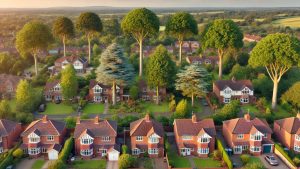
In the UK, there is no universal law that dictates the maximum height a tree can grow near a house. However, tree height is often regulated at the local level by council authorities. Most councils have specific guidelines about tree height and their proximity to residential properties.
Additionally, if a tree becomes a nuisance by overgrowing or blocking light, it may fall under the High Hedges legislation (Part 8 of the Anti-social Behaviour Act 2003). This law allows neighbours to raise complaints about trees or hedges that are too tall and causing issues.
The general rule of thumb is that if a tree is blocking natural light, or poses a risk to property, action may need to be taken. It’s crucial to consult with your local council to understand specific regulations in your area.
What is the Safe Planting Distance of Trees from Houses?
One of the most important considerations when planting a tree near your house is the safe distance required to avoid future problems. Trees planted too close to buildings can cause significant issues, including root intrusion, structural damage, and blocked drains.
The distance you should leave between a tree and your house depends on the species. Trees with shallow, spreading roots, such as willows or poplars, should be planted further away than smaller, less invasive species like ornamental trees.
A professional arborist explained this clearly:
“When I look at a tree near a house, I do not only think about how tall it is today. I look at how wide the roots may spread in 10 or 20 years, how much water the tree will take from the soil, and whether branches could eventually reach the roof, windows, drains, or neighbouring property.”
In general, it’s recommended to plant trees at least 5-10 metres away from a building, though this can vary based on the size and type of tree. Smaller ornamental trees may be suitable closer to a property, while larger species such as willow, poplar, oak, or eucalyptus usually need much more space to grow safely.
Before planting, always check the mature height and root spread of the tree, not just the size it is when you buy it. This helps reduce the risk of future foundation damage, blocked sunlight, broken drains, overhanging branches, and neighbour disputes.
Common Risks of Planting Trees Too Close
- Structural Damage: Large tree roots can crack foundations or lift patios and driveways.
- Water Damage: Roots can interfere with underground pipes and drainage systems, leading to leaks and blockages.
- Blocked Sunlight: Tall trees close to houses can block natural sunlight, affecting not just the aesthetics but also the energy efficiency of your home.
Always consider how big the tree will grow over time, and whether it might eventually exceed legal height restrictions.
What Are the Overhanging Branches and Neighbour Disputes?
A frequent source of tension between neighbours involves trees with overhanging branches. If branches from a tree on your property extend into a neighbour’s yard, they have the legal right to trim them back—provided they stay within their own boundary.
However, before taking any action, it’s always best to approach your neighbour politely and attempt to resolve the issue amicably.
In the UK, you are responsible for ensuring that any trees on your property do not cause a nuisance to others. This includes overhanging branches that might block light, drop debris, or pose a hazard.
If a neighbour feels that your tree is causing issues, they can contact the local council or pursue legal action to have the tree pruned or removed.
What Are the Risks of Tree Roots and Property Damage?

Tree roots can often cause as much damage as overhanging branches, particularly if they grow too close to your home’s foundations. Large, spreading roots can undermine the structural integrity of buildings, crack driveways, and block drainage systems.
Legal Responsibility for Root Damage
If tree roots from your property cause damage to a neighbour’s home, you may be held liable for repairs. It’s essential to take preventative action by ensuring that trees are planted far enough away from houses and that root growth is monitored.
Local councils often provide guidance on how to deal with tree roots that pose a threat to buildings. In extreme cases, it may be necessary to remove the tree entirely. However, you will need to check whether the tree is protected by a Tree Preservation Order (TPO) before taking any action.
What Are the Pruning and Maintenance of Trees Near Houses?
Regular maintenance of trees near your house is essential for both safety and legal reasons. The UK has specific regulations about pruning trees, particularly if they are protected by a TPO.
Key Points for Tree Maintenance:
- Pruning Height: Trees should be pruned regularly to ensure they do not exceed the maximum height allowed by your local council.
- Safety: Overgrown trees can become hazardous, particularly in stormy weather, where they are at risk of falling or causing damage to surrounding structures.
- Permits: If a tree near your property is protected, you will need permission from your local authority before performing any major pruning or felling.
Always consult with a professional arborist or tree surgeon to ensure you comply with local laws.
What to Do If a Neighbour’s Tree Is Too Tall?
If you find yourself in a situation where your neighbour’s tree has grown too tall and is causing problems, there are steps you can take.
Steps to Resolve Tree Disputes
- Talk to Your Neighbour: Most tree disputes can be resolved through direct communication. Politely explain the issue and suggest a solution.
- Seek Mediation: If talking doesn’t help, consider using a mediator to help reach a compromise.
- Contact Your Local Council: If the tree is breaching height regulations or blocking light, you can make a formal complaint to the council.
- Legal Action: As a last resort, you can take legal action, especially if the tree is causing damage to your property or posing a safety hazard.
In most cases, neighbourly disputes about trees can be resolved through communication and cooperation, but it’s important to know your rights.
Can I Cut Back Council Trees Overhanging My Property?

If a tree owned by the local council has branches overhanging onto your property, you may wonder if you’re allowed to cut them back. The answer depends on specific laws and regulations, but there are clear guidelines in the UK for handling this situation.
What Does the Law Say?
In the UK, you generally have the legal right to trim or cut back branches that are overhanging onto your property, as long as you do not cross into the land where the tree is growing.
This means you can usually trim branches back to the boundary line, but you should not enter council-owned land, climb the tree from the council side, or cut beyond your property boundary. You must also avoid causing unnecessary damage to the tree.
A professional tree surgeon explained this clearly:
“When I advise homeowners, I always tell them not to rush into cutting council trees. I first check whether the tree is protected, whether the branch is actually unsafe, and whether the pruning could weaken the tree. A small cut in the wrong place can create a bigger safety problem later.”
However, there are a few important points to consider when cutting back council trees:
- Tree Preservation Orders (TPOs): Many trees on council land, especially in conservation areas, may be protected by Tree Preservation Orders. If the tree has a TPO, you cannot prune it without permission from the local authority, even if the branches overhang your property. Pruning or damaging a protected tree without approval can lead to legal penalties.
- Check with Your Local Council: It is always best to contact your local council before cutting back branches from a council-owned tree. In some cases, the council may inspect the tree and carry out the pruning work themselves, especially if the branch is causing a serious obstruction, damage, or safety concern.
- Disposal of Branches: If you are allowed to prune the overhanging branches, the cut branches still belong to the tree owner. Where the tree is council-owned, it is sensible to ask the council how they want the branches handled. If they do not want them returned, you may need to dispose of the waste responsibly.
- Health and Safety: If the tree poses a safety risk, such as heavy, cracked, diseased, or storm-damaged branches overhanging your property, you should report it to the council rather than attempting risky work yourself. Local authorities are responsible for managing public safety risks from council-owned trees and may take action if the tree is considered hazardous.
What Should You Do if Council Trees Are Overhanging?
- Contact the Council: The first step is always to contact the local council and report the issue. They may take action themselves or give you permission to trim the branches.
- Check for TPOs: Verify whether the tree is protected by a Tree Preservation Order or if it’s in a conservation area. This can be done through your local council’s planning department.
- Prune Within Legal Limits: If you are given the green light, ensure that any pruning work remains within your boundary and does not damage the tree beyond the overhanging branches.
Can You Be Held Responsible for Damaging a Council Tree?
Yes. If you go beyond trimming overhanging branches and cause damage to a council tree, you could face legal action. This includes excessive pruning or cutting into council property to access the tree.
You may also be held responsible for any damage that affects the tree’s health or stability.
Trees Within 10 Metres of a House: What You Need to Know?
Planting trees within 10 metres of a house can be risky, especially if the trees have large, spreading root systems. While smaller trees and ornamental species might be suitable for this distance, larger species like oak, poplar, or willow are not recommended as their roots can cause significant damage to the foundation, walls, and drainage systems over time.
Key Considerations for Trees Within 10 Metres:
- Root Spread: Trees with invasive root systems can extend well beyond their canopy. Within 10 metres, these roots may encroach on the building’s foundation, cracking walls and disrupting underground pipes.
- Species Selection: If you are planting within 10 metres, choose species known for their compact root systems, such as birch, Japanese maple, or rowan.
- Potential for Damage: Even small trees can cause damage if planted too close. Roots can lift patios and driveways, while overhanging branches could block sunlight or damage roofing during storms.
- Regular Monitoring: Trees within this distance should be regularly pruned and monitored for potential hazards. This helps prevent them from growing too large and becoming a threat to the structure.
What Are the Worst Trees to Plant Near Houses in the UK?

Not all trees are suitable for planting close to homes, especially those with invasive roots or those that grow too large.
Some species can cause significant problems, including damage to foundations, underground pipes, and nearby structures. Below are some of the worst trees to plant near houses in the UK.
1. Willow (Salix)
Willow trees are known for their aggressive root systems that can extend far beyond their canopy. These roots seek out water sources, which makes them particularly problematic for drainage systems and water pipes.
If planted too close to a house, willow roots can cause severe damage to the foundation, walls, and underground utilities.
2. Poplar (Populus)
Poplars are fast-growing trees that can reach significant heights in a short amount of time. However, their root systems are notorious for being invasive and seeking out moisture.
Planting a poplar near your house could lead to issues with foundations, driveways, and underground pipes as the roots spread far and wide.
3. Oak (Quercus)
Although oak trees are revered for their longevity and grandeur, they are not ideal for planting near homes. Oak trees grow large, both above and below ground.
Their expansive root systems can damage foundations and disrupt nearby structures. Additionally, the sheer size of an oak tree poses a risk in terms of falling branches during storms.
4. Sycamore (Acer pseudoplatanus)
Sycamore trees can grow to impressive heights and are known for their strong and spreading roots. These trees are best suited for open spaces and parks rather than residential areas.
When planted too close to houses, sycamore trees can cause issues with root intrusion and blocked drains.
5. Eucalyptus (Eucalyptus spp.)
Eucalyptus trees are fast-growing and often favoured for their distinctive look. However, they have extremely deep and wide-spreading roots, which can lead to significant issues if planted near buildings.
Eucalyptus roots are known for causing foundation damage, while the tree’s height and susceptibility to dropping large branches make them a hazard in residential areas.
6. Plane Tree (Platanus)
Plane trees are another species with a strong root system that can cause structural problems when planted near homes.
They have the potential to damage pavements, driveways, and foundations, and their large branches can pose a threat to nearby buildings during heavy winds.
7. Ash (Fraxinus excelsior)
Ash trees are native to the UK and can grow to be very tall. However, their extensive root system can invade foundations and underground drainage systems if planted too close to homes.
Additionally, ash dieback disease, which affects a large number of ash trees in the UK, can weaken the tree, making it hazardous to buildings and people.
What Are the Tips to Avoid Issues with Tree Roots Near Houses?
- Choose Smaller Trees: Opt for trees with less invasive root systems such as Japanese maple, rowan, or cherry.
- Regular Maintenance: Ensure trees are regularly pruned and inspected for potential hazards.
- Consult an Arborist: Before planting trees near your home, seek advice from a professional to ensure you select the right species and maintain a safe distance.
Conclusion
Understanding the maximum height of trees near houses UK is essential for preventing disputes, property damage, and legal complications. Whether you’re planting new trees or managing existing ones, it’s important to be aware of local regulations and the potential risks associated with overgrown trees.
By following the guidelines, maintaining trees properly, and communicating openly with your neighbours, you can avoid the common pitfalls of tree ownership.
FAQs About Height of Trees Near Houses
How high can a tree grow in a residential area in the UK?
There is no specific height restriction for trees in residential areas, but local councils can impose limits if a tree becomes a nuisance or blocks light.
Who is responsible for overhanging branches in the UK?
The tree owner is responsible for ensuring their tree does not cause issues to others. However, neighbours have the right to trim overhanging branches as long as they remain on their own property.
What is the safe distance to plant a tree from my house?
It’s recommended to plant trees at least 5-10 meters away from your house to avoid damage from roots and overgrowth.
Can tree roots damage house foundations?
Yes, large tree roots can cause significant damage to house foundations, driveways, and underground pipes if planted too close.
What can I do if my neighbour’s tree is blocking sunlight?
You can speak to your neighbour or contact the local council to file a complaint if the tree is breaching height regulations.
Is there a law for cutting down trees near my house?
You may need permission from the local council to cut down or prune trees, especially if they are protected by a Tree Preservation Order.
Do I need permission to prune or remove a tall tree?
If the tree is subject to a Tree Preservation Order, you will need permission from the local council before pruning or removing it.