If a rental advert says £1,500 PCM, does every tenant have to pay £1,500, or is that the monthly rent for the entire property? The answer depends on what is being advertised and how the tenancy is arranged.
PCM means “per calendar month”, but it does not automatically mean per person. It describes the period covered by the rent rather than telling you whether the quoted amount applies to one tenant, one room or the whole property.
For example, a two-bedroom flat advertised at £1,500 PCM may have a total monthly rent of £1,500. A room in a shared house advertised at £700 PCM may instead cost £700 for that individual room.
Wording such as per person, per room and PPPCM therefore matters when interpreting a rental listing. Ultimately, the tenancy agreement should confirm exactly how much rent you are expected to pay.
How PCM Pricing Works Across Different Rental Listings?
The same PCM abbreviation can appear on several types of rental advert, but the figure beside it can represent different things.
| Rental Advert | What the Price May Represent |
| Two-bedroom flat – £1,600 PCM | £1,600 monthly rent for the whole flat |
| Double room – £700 PCM | £700 monthly rent for that room |
| Student house – £550 PPPCM | £550 per person per calendar month |
| Room – £750 PCM per person | £750 monthly for each person |
The key distinction is between the rental period and who the quoted price applies to.
PCM only tells you that the rent is expressed monthly. It does not identify the person responsible for paying it.
Anyone who needs the broader definition can first understand what PCM means when renting before comparing different types of rental adverts.
How to Identify Whether a PCM Price Is Per Person?
The quickest way to understand a PCM figure is to look at the property being advertised and the wording immediately around the price.
A listing for an entire flat or house will often display one overall monthly rent. A room listing, house share or student accommodation advert may instead display the price for an individual occupier.
Look for terms such as:
- Per Person
- Per Room
- PPPCM
- Individual Room
- Whole Property
- Total Monthly Rent
- Each Tenant
- Bills Included
For example:
Four-bedroom house – £2,400 PCM
may indicate that £2,400 is the monthly rent for the entire property.
By comparison:
Student room – £600 PCM per person
makes the individual monthly charge much clearer.
The advert helps you understand the asking price, but the contract matters more. A tenancy agreement should set out the rent and the responsibilities of the tenants named on it.
PCM vs PPPCM: Understanding the Difference
The extra letters in PPPCM make an important difference.
| Term | Meaning | Example |
| PCM | Per Calendar Month | £1,800 PCM |
| PPPCM | Per Person Per Calendar Month | £600 PPPCM |
| PW | Per Week | £200 PW |
| PPPW | Per Person Per Week | £150 PPPW |
PPPCM specifically tells you that the quoted figure applies to each person.
Suppose three people rent a property for £1,800 PCM and decide to split the cost equally.
The calculation is:
£1,800 ÷ 3 = £600 each
That works out at £600 per person each month.
However, this does not automatically mean there are three separate rental contracts of £600 each. If all three tenants sign one joint agreement, the contractual rent may still be £1,800 for the property.
Splitting PCM Rent Between Two or More Tenants
A whole-property rent can be divided between housemates for budgeting purposes.
Suppose a flat is advertised at:
£1,400 PCM
If two people rent the property and agree to divide the rent equally, each could contribute:
£1,400 ÷ 2 = £700
Other examples include:
| Total Monthly Rent | Renters | Equal Contribution |
| £1,200 | 2 | £600 each |
| £1,500 | 2 | £750 each |
| £1,800 | 3 | £600 each |
| £2,000 | 4 | £500 each |
| £2,500 | 5 | £500 each |
These calculations are useful for working out household budgets.
They should not automatically be treated as each tenant’s legal rent liability. The tenancy arrangement determines how responsibility for the total rent works.
PCM Pricing in Shared Houses and Room Rentals
Shared accommodation is one of the situations where PCM pricing can cause the most confusion.
A house share could involve separate room agreements or one tenancy covering the whole property.
When You Rent an Individual Room?
A tenant may rent one room under an individual agreement.
For example:
Double room – £725 PCM
If the advert and contract relate specifically to that room, £725 is likely to be the rent associated with the room rather than the rent for the entire house.
Other residents might have separate agreements and pay different amounts depending on room size, facilities or the terms agreed with the landlord.
When Housemates Rent the Whole Property?
A group may instead rent the entire property together.
For example:
Four-bedroom house – £2,400 PCM
Four housemates might decide to contribute £600 each, but the property can still have a contractual rent of £2,400 PCM.
Some shared properties can also be Houses in Multiple Occupation. Whether an HMO licence is required for four tenants can depend on the number of occupiers, how many households they form, the location and any additional local licensing rules.
HMO licensing is separate from PCM pricing, but it can be relevant when unrelated tenants are sharing a property.
Rent Responsibility Under a Joint Tenancy
Joint tenants may divide the monthly rent between themselves, but that does not necessarily create separate legal rental obligations.
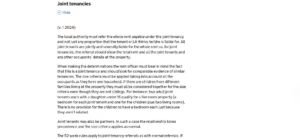
GOV.UK guidance explaining that joint tenants can be liable for the whole rent under a joint tenancy.
Consider four tenants sharing a property costing:
£2,000 PCM
They may normally contribute:
£500 each
However, where all four people are joint tenants, responsibility for the rent can extend beyond the amount each person normally transfers.
This becomes particularly important if one tenant stops paying their expected contribution.
A tenant should therefore avoid assuming:
“My usual share is £500, so I can never be responsible for anything more.”
The tenancy agreement should show whether the occupiers are joint tenants or whether each person has an individual agreement.
Sharing One Room: How the PCM Price Can Apply
Couples and other people planning to share the same room should also check how the advertised price works.
Imagine a double room advertised at:
£900 PCM
That does not automatically mean the occupants will pay £450 each, nor does it necessarily mean they will each be charged £900.
The £900 could be the price for the room itself. Alternatively, the landlord could have a different rental rate where two people occupy the room.
Before agreeing to the property, check:
- Whether Double Occupancy Is Allowed
- Whether The Price Is Per Room Or Per Person
- Whether The Rent Changes For Two Occupants
- Whether Both Occupants Will Appear On The Agreement
- Whether Household Bills Are Included
This is particularly important with room-rental adverts where the headline PCM price may appear before the full occupancy conditions.
How Student Accommodation Uses PCM and PPPCM?
Per-person pricing is common in the student market, which is why terms such as PPPCM and PPPW frequently appear in student property adverts.
Suppose a six-bedroom student property has a total rent of:
£3,600 PCM
If six students divide the property rent equally:
£3,600 ÷ 6 = £600 each
The listing may therefore also describe the equivalent rent as:
£600 PPPCM
Other student accommodation may be offered through individual room contracts instead. In that situation, the student may have a specific rental price attached directly to their room.
The important point is not to assume that every student property uses the same arrangement. Check whether you are signing an individual agreement or joining several tenants under one shared contract.
Bills, Council Tax and the True Monthly Cost
A per-person PCM figure does not automatically include household bills.
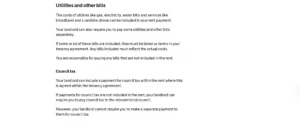
GOV.UK guidance showing how utilities and Council Tax may be included in rent or charged separately.
Consider these two rooms:
- Room A – £650 PCM excluding bills
- Room B – £750 PCM including bills
The first room has a lower advertised rent, but that does not necessarily make it cheaper overall.
An illustrative comparison could look like this:
| Monthly Cost | Room A | Room B |
| Advertised Rent | £650 | £750 |
| Energy | £65 | Included |
| Water | £20 | Included |
| Broadband | £15 | Included |
| Illustrative Total | £750 | £750 |
These figures are examples only. Actual household bills depend on the property, household usage, suppliers and tenancy terms.
Renters should establish whether electricity, gas, water, broadband and other services are included in the monthly figure.
Council Tax also needs separate consideration because responsibility can vary according to the occupancy arrangement. Our explanation of whether the landlord or tenant pays Council Tax covers the main situations.
Advertised PCM Rent and the 2026 Rental Bidding Rules
Important rental rules changed in England on 1 May 2026.
For relevant private tenancies, landlords and letting agents must state a specific asking rent when advertising or offering a property. They cannot invite, encourage or accept rental bids above that advertised amount.
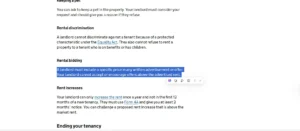
GOV.UK guidance on rental bidding and advertised rent rules introduced in England from 1 May 2026.
For example, if a property is advertised at:
£1,500 PCM
the landlord or letting agent cannot use rental bidding to accept £1,600 PCM instead.
This does not mean household bills or other legitimate costs are automatically included in the £1,500 headline rent.
The reforms also changed the rules around rent in advance. For relevant tenancies, landlords generally cannot require rent before the tenancy agreement has been signed and can normally request no more than one month’s rent in advance between signing and the tenancy starting.
These rules relate to England, so tenants elsewhere in the UK should check the rules applying in their part of the country.
Checks to Make Before Agreeing to the Monthly Rent
A headline PCM figure should never be considered in isolation.
Before signing an agreement or sending money, check:
- Who The Price Applies To – One person, one room or the whole property
- The Tenancy Type – Joint or individual
- The Contractual Rent – The amount stated in the tenancy agreement
- Your Expected Share – Particularly when living with other tenants
- Included Bills – Which household costs are covered by the rent
- Council Tax – Whether you or the landlord is responsible
- Payment Date – When rent becomes due each month
- Deposit Requirements – What needs to be paid before moving in
If a landlord or agent asks for money during the application process, understanding the rules around a holding deposit can help you distinguish it from the main tenancy deposit.
Where a separate tenancy deposit is required, renters should also know how the Tenancy Deposit Scheme works and when deposit protection applies.
If a listing simply says “£X PCM” and you cannot tell whether that figure is per person or for the property, ask the landlord or agent to confirm the position in writing before committing.
Conclusion
PCM does not automatically mean per person. It simply describes rent charged by the calendar month.
A flat advertised at £1,600 PCM may have a total property rent of £1,600, while a room advertised at £700 PCM may cost £700 for that individual room. Clear wording such as per person, per room, PPPCM or whole property helps show which arrangement applies.
Shared renters should also understand whether they are entering an individual tenancy or signing one joint agreement with other occupants. Dividing a monthly property rent between housemates can show everyone’s expected contribution, but that calculation does not always determine each tenant’s contractual responsibility.
Before agreeing to a property, check the full listing and tenancy agreement so you know exactly who the PCM rent applies to, what the price includes and how much you are expected to pay each month.
Frequently Asked Questions
Is PCM Always Per Person?
No. PCM means per calendar month. It tells you the rental period but does not automatically say whether the amount applies to one person, one room or the entire property.
What Does £500 PCM Per Person Mean?
It generally means the quoted monthly rent is £500 for each individual person. Check separately whether utilities, Council Tax or other costs are included.
How Does £1,000 PCM Work for Two Tenants?
If £1,000 PCM is the total property rent and two tenants split it equally, each may contribute £500. If the advert says £1,000 PCM per person, each individual would instead be quoted £1,000.
Can PCM Refer to the Price of One Room?
Yes. A room advert can show an individual PCM price, while an entire house or flat can also be advertised using one total PCM figure.
What Does PPPCM Mean in a Rental Advert?
PPPCM means per person per calendar month. It specifically indicates that the displayed monthly amount applies to each person rather than simply describing the total property rent.
Are Bills Included in a Per-Person PCM Price?
Not automatically. Some properties include bills in the advertised rent while others charge them separately. Check the advert and tenancy agreement to understand the full monthly cost.
How Would Four Tenants Split £2,000 PCM?
An equal mathematical split would be £500 each per month. However, joint tenants may have wider responsibility for the total rent, so an equal contribution does not necessarily define each person’s legal liability.