The Marie Potter lost house dispute shows how a parking disagreement can directly lead to the loss of a home through legal action, unpaid debts, and court enforcement.
In this case, a dispute over a shared driveway escalated into a court ruling, resulting in over £70,000 in damages and costs, a charging order on the property, and eventual eviction after an order for sale.
Key takeaways:
- A neighbour dispute over parking triggered legal proceedings
- Court awarded damages and legal costs totalling around £70,000
- A charging order secured the debt against the property
- An order for sale led to eviction and loss of the home
- A High Court challenge failed, confirming the legality of the process
What Happened in the Marie Potter Lost House Dispute?
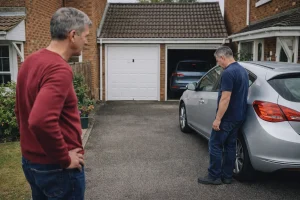
The Marie Potter lost house dispute stands as one of the most striking recent examples of how neighbour conflicts in the UK can escalate far beyond their original scope.
At its core, the case involved a disagreement over parking arrangements on a shared driveway in Shirley, Croydon. However, what began as a day to day inconvenience developed into a legal battle that ultimately resulted in the loss of a £575,000 home.
Marie Potter, aged 75, had lived in her property for more than two decades. When she first moved into Bennett’s Avenue in 1998, relations with her neighbour Kirsten McGowan were described as friendly and cooperative.
Over time, however, tensions began to surface regarding the use of a shared driveway that provided access to a garage at the rear of the neighbouring property.
The issue centred on how Mrs Potter parked her Ford Focus. According to the claim, the vehicle frequently obstructed access to the garage. What may initially have seemed like a minor inconvenience gradually turned into a persistent source of conflict.
Several important developments defined the progression of the case:
- Repeated complaints regarding blocked access
- Escalation from informal disagreement to formal legal action
- Court-awarded damages and legal costs totalling around £70,000
- Legal enforcement through a charging order on the property
- Eviction following an order for sale
As the dispute progressed, it became less about parking and more about legal rights, obligations, and financial consequences.
How Did the Marie Potter Lost House Dispute Begin?
The origins of the dispute highlight a common issue in UK residential settings where shared spaces require mutual understanding. Without clear boundaries or consistent communication, even small disagreements can grow into larger conflicts.
In this case, the shared driveway became the focal point. Both parties relied on it for different purposes, which created ongoing friction.
The Shared Driveway Conflict Explained
Shared driveways are often governed either by legal easements or informal arrangements. In practice, this means both parties must cooperate to ensure fair usage.
Here, the driveway served a dual purpose. It was used for parking by one neighbour and as an access route to a garage by the other. This overlap created a situation where one party’s convenience became another’s obstruction.
Over time, repeated use without agreement led to growing frustration.
Complaints About Blocking Garage Access
Mrs McGowan raised concerns that access to her garage was being blocked. These complaints were not isolated incidents but part of an ongoing pattern.
As disputes like this continue, they often shift from casual conversations to formal complaints. This transition marks a turning point where resolution becomes more difficult.
A conveyancing solicitor familiar with residential disputes explains the typical pattern.
“Access disputes involving shared driveways are extremely common. What starts as a practical issue often becomes a legal one when both sides feel their rights are being ignored.”
Breakdown of Neighbour Relations
As tensions increased, communication between the neighbours deteriorated. This is a critical stage in many disputes, where the possibility of informal resolution begins to disappear.
When trust breaks down, parties are more likely to seek legal remedies rather than compromise. This shift played a key role in the escalation of the Marie Potter lost house dispute.
What Legal Actions Were Taken in the Croydon Property Dispute?

Once the matter entered the legal system, it moved into a more structured and high risk phase. Legal proceedings formalised the dispute and introduced financial consequences that extended beyond the original issue.
In August 2020, the case was heard at Bromley County Court. The court ruled in favour of Mrs McGowan, awarding approximately £30,000 in damages. In addition, legal costs of around £27,000 were imposed.
This resulted in a combined financial liability of roughly £70,000.
The legal process followed a standard civil litigation pathway:
| Stage | Description | Outcome |
| Claim Filed | Complaint regarding obstruction | Case initiated |
| Court Hearing | Evidence reviewed | Judgment issued |
| Damages Awarded | Financial compensation granted | Debt created |
| Legal Costs Added | Expenses of litigation | Total increased |
At this stage, the dispute became a legally enforceable debt. Failure to pay triggered further enforcement actions.
A civil litigation lawyer explains the significance of this moment.
“Once a court judgment is made, the situation changes completely. The issue is no longer just about the dispute itself but about enforcing payment, which can involve serious legal consequences.”
How Did Marie Potter Lose Her House Over the Dispute?
The loss of the property occurred through a step by step legal enforcement process. Each stage increased the severity of the consequences.
Charging Order Placed on the Property
In December 2020, a charging order was placed on the home. This secured the debt against the property, meaning it could be recovered from its value.
Charging orders are a common enforcement tool in the UK when debts remain unpaid.
Order for Sale and Possession
In December 2021, the court granted an order for sale. This allowed the creditor to proceed with selling the property to recover the outstanding amount.
At this point, ownership rights become significantly restricted.
Eviction in April 2023
In April 2023, a warrant of possession was issued. Mrs Potter was evicted from her home, and her belongings were removed and stored at her expense.
The enforcement process can be clearly structured as follows:
| Enforcement Step | Legal Mechanism | Result |
| Charging Order | Debt secured | Property linked to debt |
| Order for Sale | Court approval | Sale process initiated |
| Possession Warrant | Eviction order | Removal from home |
A UK property litigation solicitor explains the seriousness of this stage.
“I would explain to any client that once a judgment is entered against you, it is not just about paying damages. It opens the door to enforcement actions that can directly affect your assets, including your home.”
Why Did the High Court Reject Marie Potter’s Claim?
After losing her home, Mrs Potter attempted to challenge the outcome in the High Court. She argued that the order for sale was invalid and sought compensation exceeding £250,000.
The court examined whether the original actions taken by the county court were lawful and within its jurisdiction.
Judge David Halpern KC ruled that the county court had acted correctly. He clarified that courts have the authority to enforce charging orders through property sales where the amount does not exceed £350,000.
The court’s reasoning can be summarised below:
| Argument | Decision | Explanation |
| Order invalid | Rejected | Lawfully issued |
| Jurisdiction exceeded | Rejected | Within £350,000 limit |
| Compensation claim | Denied | No legal basis |
The ruling confirmed that all enforcement actions had been carried out properly, leaving no grounds to reverse the outcome.
What Does UK Law Say About Property Disputes and Charging Orders?

The Marie Potter lost house dispute illustrates how UK law handles unpaid debts linked to property. Charging orders and orders for sale are key enforcement tools used by courts.
These mechanisms are designed to ensure that creditors can recover what they are owed.
| Legal Term | Definition | Real World Impact |
| Charging Order | Debt secured on property | Limits ownership control |
| Order for Sale | Forced property sale | Loss of home possible |
| Court Jurisdiction | Authority threshold | Determines enforcement scope |
| Possession Order | Right to evict | Loss of occupancy |
These legal tools are widely used and can have serious consequences when applied to residential properties.
Could the Marie Potter Lost House Dispute Have Been Avoided?
Looking at the case in detail, there were several opportunities where the dispute might have been resolved before reaching court. Early intervention is often the most effective way to prevent escalation.
Importance of Early Mediation
Mediation provides a structured way for both parties to resolve disputes without legal action. It encourages communication and compromise.
Risks of Escalating Neighbour Disputes
As disputes escalate, they become more difficult and expensive to resolve. Legal involvement often hardens positions and reduces flexibility.
Financial Consequences of Litigation
Costs associated with litigation can increase rapidly. These include solicitor fees, court costs, damages, and interest.
A comparison of resolution methods highlights the difference:
| Resolution Method | Cost Level | Likely Outcome |
| Informal Agreement | Low | Flexible solution |
| Mediation | Medium | Balanced outcome |
| Litigation | High | Court imposed decision |
The author reflects on the broader implications of such disputes.
“I have seen many cases where a simple disagreement could have been resolved early, but instead escalated into something far more damaging. The financial and emotional cost often outweighs the original issue.”
What Are the Key Lessons From the Marie Potter Lost House Dispute?
This case provides important lessons for homeowners, particularly those involved in disputes over shared spaces or access rights:
- Minor disagreements can escalate into serious legal battles
- Legal costs can exceed expectations and become unmanageable
- Property can be used as security for unpaid debts
- Early action can prevent long term consequences
A civil litigation lawyer reinforces the risks involved.
“People often underestimate how quickly legal costs can grow. Once enforcement action begins, it can become very difficult to control the outcome.”
How Common Are Neighbour Disputes in the UK Property Market?

Neighbour disputes are a common feature of the UK property market, particularly in areas where properties share boundaries or access points.
The most frequent causes include:
- Parking and shared access issues
- Boundary disagreements
- Noise complaints
A general overview is shown below:
| Dispute Type | Frequency | Typical Resolution |
| Parking Issues | High | Informal or legal |
| Boundary Disputes | Medium | Survey or court |
| Noise Complaints | High | Local authority involvement |
As housing density increases, these disputes are becoming more frequent.
What Should Homeowners Do If Facing a Similar Dispute?
Homeowners can reduce the risk of escalation by taking early and informed action. Understanding legal rights and responsibilities is essential.
Key steps include:
- Seeking legal advice at an early stage
- Attempting mediation before pursuing litigation
- Keeping detailed records of disputes
A structured approach can help manage the situation effectively:
| Step | Action | Benefit |
| Identify Issue | Clarify the problem | Avoid confusion |
| Communicate | Discuss calmly | Encourage resolution |
| Mediate | Use neutral third party | Reduce conflict |
| Seek Legal Advice | Understand risks | Protect assets |
Taking these steps can significantly reduce the likelihood of a dispute escalating into a serious legal and financial problem.
Conclusion
The Marie Potter lost house dispute highlights the serious consequences that can arise from unresolved neighbour conflicts. What began as a disagreement over parking ultimately resulted in the loss of a home and years of legal hardship.
This case serves as a reminder that early resolution, clear communication, and legal awareness are crucial in avoiding similar outcomes.
FAQs
Can you lose your home due to a neighbour dispute in the UK?
Yes, if a court awards damages and the debt is not paid, enforcement actions such as charging orders and orders for sale can result in losing a property.
What is a charging order and how does it work?
A charging order secures a debt against a property, allowing the creditor to recover the amount owed through its sale if necessary.
How much did Marie Potter owe in total?
The total amount was around £70,000, including damages and legal costs, though additional costs and interest increased the debt over time.
Why did the High Court reject her appeal?
The court found that the original order for sale was made within legal jurisdiction and was therefore valid.
What is an order for sale in property law?
It is a court order that allows a property to be sold to repay a debt secured against it.
Are neighbour disputes common in the UK?
Yes, they are relatively common, especially in areas with shared spaces or limited parking.
Is mediation better than court action in property disputes?
In many cases, mediation is quicker, less expensive, and more effective at resolving disputes without long-term consequences.