Legendary horse trainer Jim Bolger has officially placed his iconic Glebe House estate on the market for £3.5 million as he substantially scales down his racing operation after more than four decades of success.
The famous “home of champions” on the County Carlow Kilkenny border produced nearly 3,000 winners, including Derby hero New Approach and 2,000 Guineas winner Poetic Flare.
Widely regarded as one of Ireland’s most respected training establishments, the sale marks the end of a major era in horse racing history.
Key Takeaways
- Jim Bolger is scaling back his racing operations
- Glebe House has been listed for £3.5 million
- The estate spans approximately 150 acres
- Nearly 3,000 winners were trained there
- The property includes elite racing facilities
- The sale reflects wider changes in the racing industry
Why Has Legendary Trainer Jim Bolger Put His Iconic Racing Yard Up for Sale?
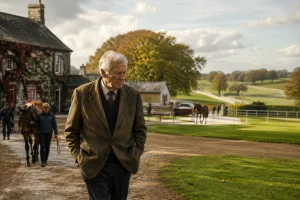
Jim Bolger’s decision to sell Glebe House reflects a significant shift in his long and influential racing career. At 84 years old, the trainer has openly acknowledged that he intends to scale back his operations substantially after decades of maintaining one of Europe’s leading training establishments.
The move marks the gradual closing chapter of a career that transformed modern horse racing in Ireland. Bolger built his reputation through a relentless commitment to excellence, producing champions year after year while operating from a relatively secluded countryside estate.
A Major Shift in a Historic Racing Career
When Jim and Jackie Bolger took over Glebe House in 1982, the property was far from the internationally recognised racing centre it would later become. Through careful planning and years of investment, the couple turned the estate into one of the most successful training bases in Europe.
The property evolved alongside Bolger’s growing reputation in racing. As his horses achieved success in Classic races and Group 1 events, Glebe House itself became associated with elite level competition. Trainers, owners and breeders from around the world viewed the estate as a benchmark for professional horse training facilities.
Bolger’s methods often differed from traditional approaches within the sport. He placed enormous emphasis on physical conditioning, stamina development and detailed preparation. These methods became central to the success of the operation and contributed significantly to the estate’s reputation.
The trainer once joked that visitors rarely arrived at the property accidentally because of its rural location. Despite its relative isolation, the estate became one of the most influential racing centres in Ireland.
Why the 84 Year Old Trainer Is Scaling Back Operations?
Maintaining a large scale racing operation requires constant investment, physical effort and operational oversight. As the racing industry has evolved, those demands have increased considerably.
Modern training establishments face rising costs linked to:
- Staffing and recruitment
- Veterinary care
- Horse transport
- Insurance expenses
- Facility maintenance
Even highly successful operations experience growing pressure to remain commercially sustainable while competing at the highest level.
A bloodstock advisor involved in Irish racing explained the realities clearly:
“I’ve worked around training yards for more than twenty years, and there comes a point where even the most dedicated trainers begin reassessing the scale of their operations. Glebe House is not a small private yard. It is a major professional facility that requires enormous daily commitment.”
Another racing consultant added:
“When people look at the headlines, they see a £3.5 million property sale. What they sometimes forget is the level of responsibility behind running an estate of this size. The decision is emotional as much as practical.”
The sale therefore appears to represent a carefully considered transition rather than a sudden exit from the sport.
The Emotional End of an Era in Irish Racing
For many within horse racing, the sale carries emotional significance because Glebe House became closely connected to some of the sport’s most memorable achievements.
The estate witnessed:
- Multiple Classic victories
- Group 1 championship wins
- International racing success
- Generations of elite thoroughbreds
Owners trusted Bolger to develop young horses into elite competitors, while racing fans followed the success of his stable with admiration.
The emotional reaction from the racing community reflects the respect Bolger earned throughout his career. His operation represented consistency and long term excellence in an increasingly commercial sporting environment.
What Makes Glebe House One of the Most Famous Horse Training Properties in Ireland?
Few equestrian properties in Ireland possess the historical importance or sporting legacy attached to Glebe House. The estate became globally recognised through decades of racing success and remains one of the most respected private training establishments in Europe.
The property’s reputation extends beyond its facilities. Glebe House became known for the philosophy behind its operation, where traditional horsemanship combined with scientific precision and disciplined preparation.
The History Behind the ‘Home of Champions’
The phrase “home of champions” was not simply a marketing slogan attached to the estate. It reflected the extraordinary list of horses developed and trained there over more than four decades.
Many of the horses associated with Glebe House achieved success at the very highest level of racing. Some became champions in Britain and Ireland, while others earned international recognition through major victories across Europe.
The estate gradually established itself as one of the central locations within Irish racing culture. Trainers, breeders and racing professionals viewed success at Glebe House as evidence of a horse’s elite potential.
The property also gained respect because of its ability to consistently produce top level horses over several decades.
How Glebe House Became a World Class Training Establishment?
One of the most remarkable aspects of Glebe House is the level of detail involved in its development. Jim Bolger personally contributed to designing parts of the training infrastructure, including the gallops that became central to his methods.
The gallops were specifically designed to improve:
- Stamina
- Balance
- Endurance
- Race conditioning
Every aspect of the property reflected a practical understanding of what racehorses required to compete at the highest level.
The estate includes extensive training and equestrian facilities that support professional operations across multiple racing disciplines.
| Property Feature | Description |
| Estate Size | Approximately 150 acres |
| Main Residence | Historic six bedroom house |
| Gallops | Professionally designed training gallops |
| Stable Facilities | Large scale equestrian infrastructure |
| Paddocks | Extensive grazing and exercise land |
| Location | County Carlow Kilkenny border |
The strategic location also contributes significantly to the estate’s value. Being situated less than an hour from the Curragh places the property close to one of the most important racing centres in Ireland.
The Role of Jim and Jackie Bolger in Building the Estate
Although Jim Bolger became the public face of the operation, Jackie Bolger played an equally important role behind the scenes. Her racing colours became widely recognised in major races, and together the couple built one of the sport’s most respected partnerships.
The success of the operation reflected long term planning rather than short term ambition. The Bolgers focused on creating an environment capable of consistently producing elite athletes over multiple generations.
Industry professionals frequently praised the professionalism of the operation and the structured approach taken toward horse development.
A racing manager who visited the estate regularly explained:
“What impressed people most about Glebe House was not only the facilities but the atmosphere. Everything had purpose. The organisation, the discipline and the consistency all reflected decades of experience.”
Which Champion Racehorses Were Trained at Glebe House?
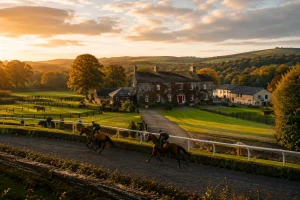
The list of champions connected to Glebe House is extraordinary and remains one of the strongest reasons behind the estate’s global reputation.
Over four decades, nearly 3,000 winners emerged from the yard, including multiple Classic winners and Group 1 champions. These achievements positioned Bolger among the greatest trainers in Irish racing history.
Several horses trained at the estate became internationally recognised stars.
| Famous Horse | Major Achievement |
| New Approach | 2008 Derby winner |
| Poetic Flare | 2021 2,000 Guineas winner |
| St Jovite | King George VI and Queen Elizabeth Stakes winner |
| Teofilo | Champion two year old |
| Dawn Approach | Classic winner |
| Trading Leather | Group 1 winner |
The achievements of these horses helped elevate both the trainer and the property itself into racing history.
New Approach and Derby Glory
Perhaps no horse symbolised Glebe House more powerfully than New Approach. The colt became one of the defining stars of modern flat racing after winning the Derby at Epsom in 2008.
His success represented:
- Careful long term development
- Elite conditioning methods
- Strategic race preparation
- Consistent performance management
Poetic Flare’s Classic Success
Poetic Flare provided another major highlight when winning the 2,000 Guineas in 2021. The horse demonstrated the continued effectiveness of Bolger’s methods even after decades within the sport.
The victory reinforced Glebe House’s reputation as a place capable of producing world class performers across generations.
St Jovite and International Recognition
St Jovite remains one of the most iconic horses associated with the yard. His dominance in the King George VI and Queen Elizabeth Stakes established him as an international racing superstar.
Success at that level helped strengthen:
- The global profile of Irish racing
- International confidence in Irish bloodstock
- Glebe House’s worldwide reputation
What Is Included in the £3.5 Million Legendary Horse Trainer Property Sale?
The property sale includes a complete professional racing infrastructure rather than simply a countryside estate. Buyers are effectively acquiring a fully developed equestrian operation with decades of proven sporting success behind it.
Inside the Six Bedroom Glebe House Residence
At the centre of the estate sits the historic main residence, originally built in 1760. The ivy covered property spans approximately 7,470 square feet and combines traditional architecture with practical luxury.
| Residential Feature | Details |
| Bedrooms | Six |
| Property Size | 7,470 square feet |
| Architectural Style | Historic country estate |
| Surroundings | Mature countryside landscape |
| Construction Era | 18th century origins |
The house itself contributes significantly to the estate’s prestige and overall value. Historic properties of this scale and character remain highly sought after within the luxury rural property market.
Gallops, Stables and Professional Equestrian Facilities
The equestrian facilities remain the estate’s defining feature. The training infrastructure was developed specifically for professional racing operations and includes carefully planned gallops, stables and paddock systems.
A former racing operations manager explained the value of the setup:
“I’ve visited many training facilities across Britain and Ireland, and very few compare to Glebe House in terms of functionality. The layout reflects years of practical experience rather than cosmetic design.”
The facilities include:
- Purpose built gallops
- Extensive stable blocks
- Horse exercise areas
- Large paddock sections
- Professional equestrian infrastructure
The 150 Acre Countryside Estate Explained
The scale of the estate provides significant long term value. Large rural properties with professional equestrian infrastructure remain relatively rare, particularly those connected to major sporting success.
Potential buyers may view the property as:
- A racing investment
- A breeding operation
- A private equestrian estate
- A long term rural asset
Its combination of sporting history and practical infrastructure makes it highly versatile.
Why Is the Property Being Described as a ‘Once in a Generation’ Opportunity?
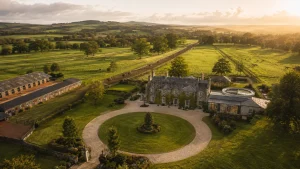
Industry experts frequently use the phrase “once in a generation” when discussing the sale because properties of this nature rarely become available.
The combination of racing history, infrastructure and location places Glebe House within an extremely exclusive category of equestrian estates.
| Key Selling Point | Importance |
| Racing Legacy | International recognition |
| Infrastructure | Elite training facilities |
| Land Size | 150 acres |
| Location | Near the Curragh |
| Historical Value | Four decades of racing success |
Rare Availability of Elite Racing Facilities
Professional racing yards with established reputations are rarely sold openly on the market. Many remain within families or private ownership groups for generations.
This rarity increases:
- Investor demand
- International interest
- Market competitiveness
- Long term property value
Strategic Location Near the Curragh
The Curragh remains central to Irish racing culture and training activity. Properties within close proximity benefit from access to racing networks, transport links and industry infrastructure.
Strong Interest Expected From Investors and Trainers
Property analysts believe international buyers may show significant interest because elite equestrian estates continue attracting wealthy investors worldwide.
The estate’s global reputation strengthens its appeal among:
- International racing investors
- Wealthy countryside buyers
- Professional horse trainers
- Bloodstock organisations
How Did Jim Bolger Transform Modern Horse Racing Training?
Jim Bolger’s influence extends beyond race results. Many industry figures credit him with modernising aspects of horse training through disciplined systems and scientifically informed preparation methods.
His approach challenged conventional thinking within racing and encouraged a more structured understanding of equine performance.
Bolger’s philosophy focused heavily on:
- Physical conditioning
- Mental preparation
- Long term horse development
- Consistent race planning
His methods influenced numerous trainers across Britain and Ireland, particularly younger professionals seeking long term success within the sport.
The continued success of horses emerging from Glebe House demonstrated the effectiveness of those methods over several decades.
What Impact Will the Sale Have on the Horse Racing Industry?
The sale of Glebe House carries symbolic importance because it represents the gradual transition of one of racing’s most respected operations.
Reactions From the Racing Community
Many racing fans and professionals reacted emotionally to news of the sale because of the estate’s association with historic victories and legendary horses.
A racing journalist commented:
“For people who followed Irish racing through the 1990s and 2000s, Glebe House became part of the sport’s identity. Seeing it sold genuinely feels like the end of a major chapter.”
The Future of the Glebe House Training Yard
One of the biggest questions surrounding the sale concerns how future owners will use the property.
Several possibilities exist:
- Continued professional training operations
- Private equestrian use
- Breeding activities
- Investment redevelopment
Given the quality of the facilities, many within racing hope the estate remains connected to horse training.
Changing Trends in British and Irish Racing Operations
The sale also highlights broader financial and structural changes occurring across the racing industry.
Large independent training operations face increasing pressure from:
- Rising operating costs
- Staffing shortages
- Infrastructure expenses
- Competitive commercial markets
As a result, ownership of elite racing facilities increasingly shifts toward wealthy investors and commercial partnerships.
Could Luxury Equestrian Property Sales Become More Common in the Racing World?
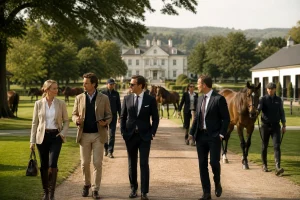
Luxury equestrian estates have become increasingly attractive to investors seeking long term rural assets with sporting prestige.
Properties connected to major racing history often command significant interest because they combine heritage with commercial potential.
The value of premium countryside estates has also risen steadily in recent years, particularly among buyers seeking privacy and land ownership opportunities.
Glebe House therefore reflects a wider trend where elite sporting properties become both lifestyle assets and investment opportunities.
The combination of:
- Historical significance
- Professional infrastructure
- Large acreage
- Racing prestige
continues driving demand within the luxury equestrian property market.
Conclusion
The legendary horse trainer property sale of Glebe House marks the closing of a remarkable chapter in Irish horse racing history. Jim Bolger’s decision to scale back operations reflects changing realities within the sport while highlighting the lasting importance of elite equestrian estates.
From producing Classic winners to shaping modern training methods, Glebe House became far more than a racing yard. Its £3.5 million sale represents both a historic transition and a rare opportunity connected to one of racing’s most respected legacies.
FAQs
Why is Jim Bolger selling Glebe House?
Jim Bolger is substantially scaling back his racing operation at the age of 84 and has decided to simplify his business interests by selling the estate.
How much is the legendary horse trainer property sale worth?
The Glebe House estate has been listed for approximately £3.5 million.
What horses were trained at Glebe House?
Famous horses trained there include New Approach, Poetic Flare, St Jovite, Teofilo and Dawn Approach.
Where is the Glebe House estate located?
The property sits on the County Carlow-Kilkenny border in Ireland, less than an hour from the Curragh.
What facilities are included in the property sale?
The sale includes a six-bedroom house, gallops, stables, paddocks and extensive equestrian training facilities across 150 acres.
Why is Glebe House important in horse racing history?
The estate produced nearly 3,000 winners, including 57 Group 1 champions and 13 Classic winners under Jim Bolger’s management.
Could the estate continue operating as a racing yard after the sale?
Yes, the existing infrastructure makes the property highly suitable for continued professional horse training operations.