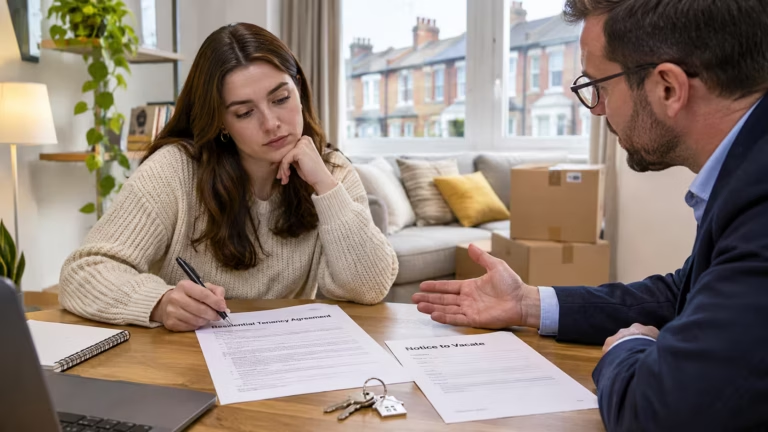
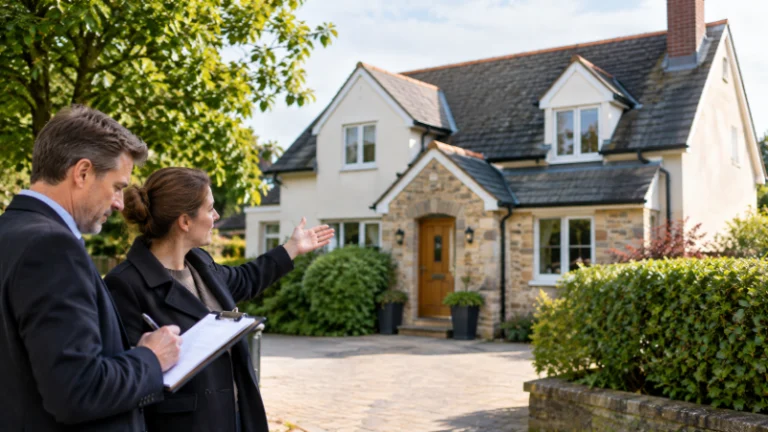
Yes, one person can live in a 3 bedroom council house in the UK. There is no general rule saying a council tenant must leave simply because they live alone in a larger home.
The main issue is usually not whether living there is permitted, but whether the tenant receives financial help with the rent. A working-age person receiving Housing Benefit or Universal Credit housing costs may have their eligible housing support reduced if bedrooms are considered spare.
Different rules can apply to pension-age tenants, people with disability or care needs, foster carers, succession cases and people applying for a council property for the first time.
When Can an Existing Tenant Stay in a 3 Bedroom Council House?
A council tenancy does not normally end simply because the household becomes smaller.
Someone may originally have moved into a three-bedroom property with a partner and children, but years later become the only person living there. That change in household size does not automatically cancel an established secure tenancy.
This situation can arise when:
- adult children leave home;
- a spouse or partner dies;
- a relationship ends;
- relatives move elsewhere;
- or family circumstances change over time.
The important issue is whether the tenant continues to comply with the conditions of the tenancy. This normally includes paying the rent, treating the property as their principal home and avoiding prohibited subletting.
Having unused bedrooms is therefore different from breaching a tenancy agreement.
A council may encourage someone occupying a larger property to consider moving to a smaller home because family-sized social housing is in high demand. However, voluntary downsizing is not the same as the tenancy automatically ending.
If the household changed following separation, responsibility for the property can be more complicated where both partners were originally tenants. The rules affecting a joint council tenancy after a relationship breakdown may determine who can remain legally responsible for the home.
Why Would a Council Allocate Three Bedrooms to One Person?
A new housing application is assessed differently from an existing tenancy.
Local authorities usually calculate the size of property an applicant requires according to household composition. A single adult with no additional housing needs would ordinarily be assessed as requiring one bedroom.
That means a person applying alone would not normally be offered a three-bedroom council house simply because they would prefer additional space.
| Applicant Circumstances | Typical Bedroom Requirement |
| Single adult | 1 bedroom |
| Couple | 1 bedroom |
| Single adult needing regular overnight care | Potentially 2 bedrooms |
| Approved foster carer | Additional room may be recognised |
| Parent with children | Depends on children’s ages and household composition |
| Applicant with qualifying disability needs | Assessed individually |
There can nevertheless be exceptions.
A council may recognise a need for additional accommodation where there are significant:
- disability requirements;
- overnight care arrangements;
- fostering responsibilities;
- medical needs;
- safeguarding concerns;
- or other exceptional welfare circumstances.
Councils also operate their own allocation schemes, meaning priority and available property sizes differ between areas.
Where health or safeguarding issues are involved, professional evidence can support an application. However, social services helping someone get a council house does not mean social workers themselves decide which property will be allocated.
Housing specialist Gavin Smart, chief executive of the Chartered Institute of Housing, has emphasised that access to social housing is governed by established eligibility and allocation rules.
This is particularly relevant to property size because councils generally allocate homes according to assessed housing need rather than preference.
How Does Living Alone in Three Bedrooms Affect Housing Support?
For working-age social tenants receiving Universal Credit housing costs or Housing Benefit, the number of bedrooms considered necessary for the household can affect how much rent support is available.
A single adult will normally be allowed one bedroom.
If that person occupies a three-bedroom council house, two bedrooms may therefore be treated as spare.
| Spare Bedrooms | Typical Reduction in Eligible Housing Costs |
| None | 0% |
| 1 spare bedroom | 14% |
| 2 or more spare bedrooms | 25% |
This is commonly called the Bedroom Tax, although it is technically an under-occupation reduction in eligible housing costs.
It is important to understand that the council does not reduce the actual rent by 25%. Instead, the amount of rent covered through the relevant benefit calculation can be reduced.
For example:
| Example Calculation | Amount |
| Eligible weekly rent | £140 |
| Under-occupation reduction at 25% | £35 |
| Amount remaining in housing-cost calculation | £105 |
| Potential weekly shortfall | £35 |
The tenant remains responsible for paying their contractual rent in full.
When Can an Extra Bedroom Be Allowed?
Not every apparently unused room is automatically treated as spare.
Additional-bedroom rules can apply where the tenant or another qualifying household member has particular circumstances.
Disability, Care and Fostering
An extra bedroom may be recognised where:
- a non-resident carer regularly stays overnight;
- a disability means two people who would normally share cannot reasonably do so;
- a foster carer meets the relevant conditions;
- someone has recently been approved as a foster carer;
- a qualifying household member is temporarily away for certain reasons;
- or specific armed forces rules apply.
The exact entitlement depends on the benefit being claimed and the household’s circumstances.
Evidence can be particularly important in disability-related cases. Medical records, care plans or other professional documentation may be needed to show why additional sleeping accommodation is necessary.
Gavin Smart has previously highlighted circumstances where households require additional space “for reasons of disability”. This demonstrates why a bedroom assessment should take account of actual housing needs rather than simply counting occupants.
Does the Spare-Room Reduction Apply to Pensioners?
The standard social-sector under-occupation reduction generally affects working-age Housing Benefit and Universal Credit claimants rather than pension-age Housing Benefit recipients.
As a result, a pension-age tenant may be able to remain alone in a three-bedroom council property without having Housing Benefit reduced merely because bedrooms are unused.
This does not mean every older tenant has identical entitlement. Mixed-age couples and households receiving Universal Credit can be subject to different rules.
Tenants should therefore confirm which benefit system applies to their household before assuming they are exempt.
Could the Council Ask a Tenant to Move to a Smaller Property?
Councils can encourage tenants to downsize, particularly where a large property is significantly under-occupied.
Many local authorities face shortages of two-, three- and four-bedroom social homes for families, so moving existing tenants into suitable smaller properties can help free up larger housing.
Councils may offer:
- priority for a smaller property;
- assistance with moving costs;
- removal support;
- financial incentives in some areas;
- or access to mutual-exchange arrangements.
A tenant who decides that maintaining three bedrooms is no longer practical could consider a transfer or a two-bedroom council house exchange.
Someone living entirely alone might also prefer a one-bedroom property because it could reduce heating, cleaning and general household costs.
However, moving is not always straightforward. Smaller social housing may not be available in the same neighbourhood, and relocating can disrupt access to family, carers, employment and medical services.
Housing specialists have repeatedly highlighted the shortage of appropriate social housing as a major obstacle to effective downsizing.
What Happens if Someone Becomes the Only Occupant After a Tenant Dies?
This situation is governed by succession rules rather than ordinary under-occupation rules.
Someone who lived with the original tenant does not automatically acquire the tenancy simply because they remain in the property after that person’s death.
They may first need to establish a legal or contractual right to succeed.
Relevant factors can include:
- whether the deceased held a secure tenancy;
- when the tenancy began;
- the relationship between the two people;
- whether the property was the person’s main home;
- whether there has previously been a succession;
- and the terms of the tenancy agreement.
A spouse, civil partner or qualifying partner may have stronger statutory succession rights than other relatives.
Adult children can face a more complicated position. The rules affecting whether a son can stay in a council house if the tenant moves out demonstrate why being part of the household does not automatically make somebody the tenant.
Similarly, attempts to add a daughter to a council tenancy should not be confused with guaranteeing future succession rights.
Where someone successfully succeeds to a tenancy but the home is substantially larger than they need, separate housing-law considerations may apply.
Can One Person Take in a Lodger?
A secure council tenant can generally take in a lodger, although they should check their tenancy agreement and notify the council where required.
This may appeal to someone with one or two unused bedrooms because rental income could help meet household expenses.
Before agreeing to the arrangement, the tenant should consider:
- tenancy conditions;
- whether council notification is required;
- the effect on benefits;
- Council Tax;
- household insurance;
- safety and safeguarding;
- and whether the person will legally be a lodger or a subtenant.
A lodger should not be taken in solely because the tenant expects this to remove the Bedroom Tax. Benefit rules distinguish between lodgers and members of the household, so occupying a spare room does not necessarily change the bedroom calculation.
Will a Lodger Affect the Council Tax Single-Person Discount?
Potentially.
Where only one counted adult lives in a property, the household can normally receive a 25% Council Tax single-person discount.
If another counted adult moves in as a lodger, that discount will normally no longer apply.
There are exceptions because some occupants can be disregarded for Council Tax purposes, including certain:
- full-time students;
- apprentices;
- carers;
- young people;
- and people meeting specific statutory conditions.
The financial effect of taking a lodger should therefore be considered as a whole.
| Possible Change | Potential Effect |
| Lodger rent | Extra household income |
| Council Tax discount | May be lost |
| Universal Credit | May require reassessment |
| Housing Benefit | Could be affected |
| Gas, electricity and water | Likely to increase |
Taking in a lodger may still be worthwhile, but the tenant should calculate the net benefit rather than looking only at the rent received.
Is Subletting the Entire Council House Allowed?
Generally, no.
Taking in a lodger while continuing to live in the council property is very different from moving elsewhere and renting the entire home to another household.
A secure tenant who unlawfully gives another person possession of the whole property can put their tenancy at serious risk.
The council house should ordinarily remain the tenant’s only or principal residence.
This can also become relevant where somebody spends long periods living somewhere else. The rules covering how long someone can be away from a council house involve questions about principal residence rather than simply how many bedrooms are unused.
Anyone considering leaving another person in occupation while living elsewhere should therefore obtain advice before making arrangements.
What Financial Help Is Available if the Property Becomes Unaffordable?
A 25% reduction in eligible housing costs can create a substantial rent shortfall for someone living alone.
The type of discretionary support available depends partly on where the tenant lives.
In England, councils now provide relevant support through the Crisis and Resilience Fund following changes introduced from April 2026.
Different discretionary housing-support arrangements continue to operate in Scotland and Wales.
Support may be particularly relevant where:
- a disabled tenant lives in an adapted home;
- moving would interrupt essential care;
- suitable smaller accommodation is unavailable;
- the tenant is experiencing severe financial hardship;
- significant relocation costs are involved;
- or exceptional household circumstances make an immediate move unreasonable.
Discretionary support should not be assumed to cover the shortfall permanently.
A tenant struggling to meet the rent should contact the council early rather than waiting until substantial arrears have developed.
What Should a Single Tenant Check Before Deciding Whether to Stay?
Whether remaining in a three-bedroom property makes sense depends on more than entitlement alone.
A useful review should include:
- Check the tenancy type. Secure, flexible and introductory tenants can have different rights.
- Confirm the bedroom assessment. Make sure the benefit authority is using the correct household information.
- Check for exceptions. Disability, care and fostering arrangements may affect the calculation.
- Calculate the monthly shortfall. Compare the full rent with the amount covered by housing support.
- Consider running costs. Larger properties may cost more to heat and maintain.
- Investigate transfer options. Smaller council housing may reduce long-term expenses.
- Assess a lodger carefully. Consider benefits and Council Tax as well as additional rent.
- Report household changes. Keep council and benefit records accurate.
- Do not informally sublet the whole property. This could put the tenancy at risk.
A pensioner who has occupied a home for several decades may reach a very different decision from a working-age claimant facing a significant rent shortfall.
Conclusion
One person can live in a three-bedroom council house where they hold a valid tenancy, and unused bedrooms do not automatically require them to move.
The main financial concern for working-age tenants receiving housing support is the under-occupation reduction, which can reach 25% where two or more bedrooms are considered spare.
Pension-age tenants and people with qualifying disability, care or fostering needs can be treated differently. Someone applying for a new council property alone will normally be assessed for a one-bedroom home.
Tenants should review affordability, benefit entitlement and tenancy conditions before choosing to stay, downsize or take in a lodger.
FAQs
Can one person legally live in a three-bedroom council house?
Yes. A person with a valid council tenancy can generally continue living there alone. Having spare bedrooms does not automatically make the tenancy invalid.
How much is the Bedroom Tax on a three-bedroom council house for one person?
If a single working-age tenant is assessed as needing one bedroom, the other two may be considered spare. Eligible housing costs can therefore be reduced by 25%.
Do I have to leave when my children move out?
Not automatically. An established tenancy does not normally end merely because adult children leave home, although the tenant’s benefit entitlement may change.
Can a pensioner live alone in a three-bedroom council property?
Yes. Pension-age Housing Benefit claimants are generally not affected by the standard social-sector under-occupation reduction.
Can disability justify an additional bedroom?
Yes, in qualifying circumstances. An extra bedroom may be allowed for issues such as regular overnight care or certain disability-related sleeping requirements.
Can a council offer one person a three-bedroom home?
It is possible but unusual. A single applicant would normally be assessed as needing one bedroom unless specific disability, care, medical or welfare circumstances justify additional space.
Can I rent a spare room to a lodger?
Secure tenants can generally take in a lodger, subject to tenancy conditions. Benefits and the Council Tax single-person discount may be affected.
Does having a lodger automatically remove the Bedroom Tax?
No. Benefit rules do not necessarily count a lodger as someone who creates an entitlement to another bedroom, so the under-occupation reduction may continue.