

England’s high value property tax is officially called the High Value Council Tax Surcharge, or HVCTS. It is scheduled to apply from April 2028 to owners of residential properties in England valued at £2 million or more.
The annual surcharge will initially range from £2,500 to £7,500, depending on the property’s valuation band. It will be charged in addition to ordinary council tax, and liability will generally fall on the property owner rather than the occupier.
Key Highlights:
- The policy applies to residential properties in England only.
- The starting valuation threshold is £2 million.
- The planned implementation date is April 2028.
- The initial annual charges range from £2,500 to £7,500.
- The Valuation Office will conduct a targeted valuation exercise.
- Several detailed rules remain subject to the post-consultation response.
The headline policy has therefore been announced, but owners should distinguish confirmed policy direction from consultation proposals that may still change.
What Is the England High Value Property Tax?
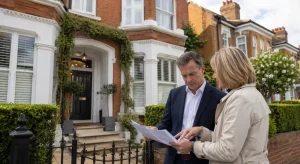
The England high value property tax is a new annual charge on owners of high-value residential property. Its official name is the High Value Council Tax Surcharge.
It is commonly described as a “mansion tax”, but that is an informal media label. A property does not need to resemble a mansion to qualify; its official valuation is what matters.
The surcharge is also not a replacement for council tax or a complete revaluation of every home in England. It creates four additional value bands for potentially qualifying properties, while existing council tax bands remain separate.
The government says the measure is intended to address differences between council tax bills for ordinary homes and exceptionally valuable properties.
Exchequer Secretary Dan Tomlinson said:
“A £10 million mansion in Mayfair should not be paying less council tax than an ordinary family home.”
That is a ministerial argument supporting the policy, rather than an independent assessment of its economic effects.
Which Homes Will Be Affected by the £2 Million Property Tax?
Residential dwellings valued at £2 million or more are expected to fall within the surcharge. A dwelling can include associated gardens, garages and domestic storage buildings that form part of the residential property.
Properties Potentially In Scope:
- Main residences may qualify when their assessed value reaches the threshold.
- Second homes may be included even though they may not qualify for payment deferral.
- Rental properties may be included, with liability generally falling on the owner.
- Company-owned residential homes may be charged to the legal owner company.
- Properties held in trust may create liability for trustees under the proposed rules.
- Long leasehold homes may require the leaseholder to pay in certain circumstances.
- Joint owners may be jointly responsible for the liability.
The property’s previous purchase price will not necessarily determine whether it qualifies. An older transaction, an unusual sale or substantial improvements could result in an official valuation above or below the price previously paid.
The charge is expected to affect fewer than 1% of English properties. Independent parliamentary analysis reported an official forecast of approximately 165,000 qualifying properties in 2028/29, although the actual total will depend on the valuation exercise and final exemptions.
How Much Will Owners Pay Under the High Value Council Tax Surcharge?
The planned annual charge depends on which of four valuation bands the property enters.
The Four Planned Charge Bands
Planned Charge Structure:
| Property Valuation | Initial Annual Surcharge | Approximate Monthly Equivalent |
| £2 million to £2.5 million | £2,500 | £208.33 |
| More than £2.5 million to £3.5 million | £3,500 | £291.67 |
| More than £3.5 million to £5 million | £5,000 | £416.67 |
| More than £5 million | £7,500 | £625.00 |
The official surcharge charging structure states that charges will be increased annually in line with Consumer Price Inflation.
These figures are the initial surcharge amounts and do not include the property’s ordinary council tax bill.
Will the Surcharge Replace Existing Council Tax?
No. Owners of qualifying homes will continue paying existing council tax alongside the HVCTS.
The two liabilities have different foundations. Ordinary council tax uses historic valuation bands based on 1991 property values, while the new surcharge will use a targeted valuation of high-value homes based on more recent evidence.
Annual Increases and Future Revaluations
Charges are expected to rise with inflation, while the Valuation Office plans to revalue qualifying properties every five years. The next general revaluation after implementation is scheduled for 2033.
A property may therefore move to another band following a general revaluation. Significant improvements made after April 2028 may also lead to reassessment at the earlier of a subsequent sale or the next revaluation.
Who Will Be Responsible for Paying the New Property Tax?

The surcharge is designed as an owner-based liability. This differs from ordinary council tax, which is frequently paid by the resident occupier.
Expected Liability Arrangements:
- An owner-occupier will generally pay when the home is within scope.
- A landlord will generally be liable instead of an ordinary tenant.
- Joint legal owners may be jointly and severally liable.
- A company may be liable when it legally owns the property.
- Trustees may be liable where a qualifying property is held in trust.
- A long leaseholder may be liable where the original lease exceeded 21 years.
- The freeholder may be liable where the long-lease definition does not apply.
The treatment of long leases and trusts formed part of the consultation’s detailed proposals. These arrangements should not be treated as final until the government publishes its response and the necessary legislation.
The consultation also explored a possible additional premium for non-UK resident owners. It did not establish that such a premium would definitely be introduced.
How Will High-Value Homes Be Assessed and Valued?
The Valuation Office will conduct a targeted exercise to identify homes likely to be worth £2 million or more and assign them to one of the four surcharge bands.
The proposed comparable method examines recent sales of similar properties and adjusts for relevant differences. Evidence may include location, property type, size, number of rooms, age, parking, land, condition and physical characteristics.
The official surcharge guidance page confirms that the valuation exercise will be separate from existing council tax bands.
A model-assisted approach is also planned. Automated valuation models will help identify potentially qualifying homes and produce initial estimates, but professional valuers are expected to review and assure the results. Less typical properties or areas with limited comparable sales may require greater reliance on individual evidence.
An estate agent’s estimate, mortgage valuation or online property estimate will not automatically decide the tax band. Similarly, a home previously sold below £2 million could still qualify if its relevant assessed value is higher.
Can Owners Challenge a Property Valuation or Tax Decision?
Owners are expected to receive routes for challenging both the valuation band and the liability shown on a bill. The exact procedures, deadlines and evidence standards remain subject to the final rules.
When Could a Valuation Be Challenged?
A challenge may be possible where the property should not appear on the list, has been placed in the wrong band or has undergone a significant physical change that reduces its value.
Other proposed grounds include an incorrect description of the property, a change in use or failure to reflect a relevant court or tribunal decision.
Evidence That May Support a Challenge
Useful evidence could include an independent valuation, recent comparable sales, floor plans, surveys, photographs, planning records, lease documents and evidence of structural problems.
A private valuation would not automatically override the official assessment. It could, however, help demonstrate why the assigned band may be wrong, particularly for an unusual home or one close to a threshold.
The Proposed Appeal Route
An owner would first challenge the relevant valuation or billing decision through the prescribed process. An unresolved dispute could then proceed to the Valuation Tribunal for England.
Billing challenges may cover cases where the person named is not liable, the amount is incorrect, or a deferral or discount has been applied wrongly. Owners should wait for final guidance before relying on a particular deadline or appeal sequence.
Which Parts of the High Value Property Tax Are Confirmed or Still Proposed?

The consultation closed on 14 July 2026. As of 15 July 2026, the government had not published its formal response, so several operational details remained unresolved.
The official high-value homes announcement says the surcharge is expected to affect fewer than 1% of properties and raise around £430 million annually from 2028/29.
Current Policy Status:
| Policy Detail | Status at Last Check |
| England-only residential surcharge | Announced |
| April 2028 implementation | Announced |
| £2 million threshold | Announced |
| Four initial charging bands | Announced |
| Existing council tax remains payable | Announced |
| Owner-based liability | Stated policy design |
| Annual CPI increases | Stated policy design |
| Five-year revaluations | Stated policy design |
| Long-leaseholder treatment | Consultation proposal |
| Deferral eligibility limits | Consultation proposal |
| Detailed exemptions and discounts | Awaiting final rules |
| Complete challenge process | Awaiting final rules |
| Non-resident owner premium | Option explored in consultation |
The policy does not begin immediately, does not apply across the entire UK and is not based solely on the purchase price. Final legislation and guidance will be necessary before every liability rule can be treated as settled.
How Could the Surcharge Affect England’s High-Value Property Market?
The surcharge will increase annual ownership costs, but its wider market effect cannot yet be predicted reliably.
Potential Effects on Owners and Buyers
Owners may need to budget for the surcharge alongside council tax, insurance, maintenance and mortgage costs. Buyers may also include expected HVCTS payments when assessing the affordability of a £2 million-plus home.
Properties near a band boundary could receive greater scrutiny during negotiations. However, the tax represents only one factor affecting prime property demand.
Could Valuation Thresholds Influence Buyer Behaviour?
Thresholds at £2 million, £2.5 million, £3.5 million and £5 million could affect how some buyers compare otherwise similar properties.
Buyers may consider the annual charge, future CPI increases, planned renovations, possible revaluation and resale demand. That does not mean every property near a threshold will lose value or sell below it.
Why the Market Impact Remains Uncertain?
Interest rates, mortgage availability, international demand, local supply and the wider tax environment may have a greater influence on prices than the surcharge alone.
The effect is likely to be geographically uneven. London represented 67% of registered English sales at £2 million or more between January 2024 and April 2026, followed by the South East, but qualifying homes also exist in other regions.
What Should Owners Do Before the Surcharge Starts in April 2028?

Owners do not need to take immediate action solely because their home may be worth £2 million. They should instead prepare reliable records and monitor the final policy.
Practical Preparation Checklist:
- Follow the government’s consultation response and subsequent legislation.
- Review title documents, leases, trust arrangements and joint ownership records.
- Retain plans and evidence relating to extensions or major alterations.
- Keep surveys and reports showing defects or unusual property characteristics.
- Review relevant comparable sales rather than relying on one online estimate.
- Check the draft valuation list when it becomes available.
- Record the deadline for challenging an incorrect band or liability decision.
- Budget for the surcharge in addition to existing council tax.
- Check final deferral, exemption and discount rules before applying.
- Obtain professional advice where ownership or valuation circumstances are complex.
The consultation proposes first bills in March 2028, with liability beginning in April. Payments would follow the council tax cycle, using 12 monthly instalments by default with the option to request 10.
Owners should avoid transferring assets, changing ownership structures or making major financial decisions solely in response to consultation proposals.
Conclusion
The England high value property tax, officially called the High Value Council Tax Surcharge, is scheduled to apply from April 2028 to owners of English residential properties valued at £2 million or more.
Initial annual charges will range from £2,500 to £7,500 and will be payable alongside ordinary council tax. Official valuations, rather than purchase prices alone, will decide which properties qualify.
Although the threshold, charge bands and broad implementation date have been announced, important rules covering deferrals, discounts, exemptions, leases, trusts and appeals still await final confirmation. Potentially affected owners should monitor official guidance and check future valuation information carefully.
FAQs About England High Value Property Tax
Does the Surcharge Apply at Exactly £2 Million?
Yes. The announced threshold covers residential properties valued at £2 million and above. The official assessment, rather than an owner’s preferred estimate, will determine whether the property reaches that threshold.
Will Owners Still Pay Ordinary Council Tax?
Yes. The surcharge is an additional annual charge and does not replace ordinary council tax. Qualifying owners will generally be responsible for both liabilities.
Can a Low-Income Owner Defer Payment?
A deferral scheme is planned for qualifying primary-residence owners. The consultation proposed an annual household income limit of £35,000 and savings limit of £16,000, but these remain proposed thresholds rather than final eligibility rules.
Are Second Homes Expected to Be Included?
A second home valued at £2 million or more may be within scope. However, the consultation proposed excluding second homes and company-owned properties from the individual deferral scheme.
Could Renovations Move a Home Into a Higher Band?
Yes, substantial improvements may affect a later valuation. The consultation states that significantly improved properties could be reassessed at the earlier of a sale or the next scheduled revaluation.
What Happens When a Qualifying Home Is Sold?
Liability may transfer when legal ownership changes. A sale could also trigger reassessment where the property has been significantly improved, but final notification and billing rules should be checked before completion.
Will Non-UK Resident Owners Pay More?
The standard surcharge is expected to apply according to property value and ownership. The consultation explored a possible additional premium for non-UK resident owners, but no such premium had been confirmed when this article was last checked.
Editorial Note
This article provides general information about an evolving property-tax policy. This is informational, not financial/legal advice. Final legislation, official valuations and individual ownership circumstances may produce different outcomes.
How We Checked?
The announced threshold, charge bands and implementation date were checked against current official publications. Consultation proposals were reviewed separately from confirmed policy statements. Parliamentary research was used to assess property numbers, regional concentration and valuation uncertainty.







One Comment