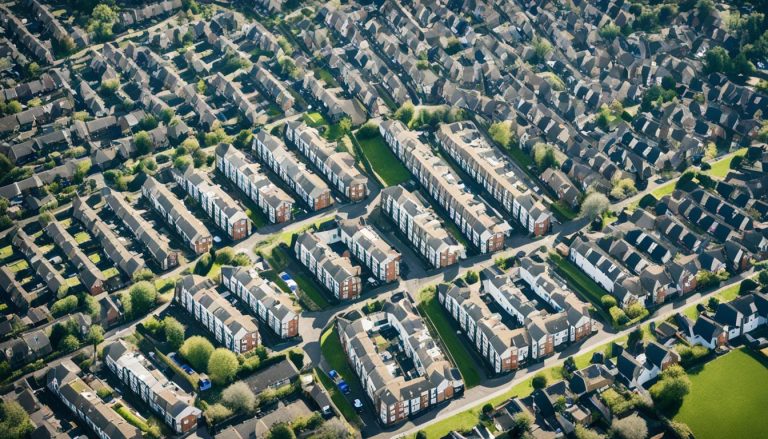
Morrisons is reportedly holding discussions with several potential investors, including US property group Realty Income, about a real estate transaction worth approximately £600 million.
The proposed Morrisons store property deal has not been completed, and no final structure has been publicly announced.
Current reporting indicates that it may involve financing secured against a portfolio of Morrisons stores rather than a conventional sale-and-leaseback arrangement.
The discussions come after Morrisons announced plans to close about 100 loss-making Morrisons Daily convenience stores.
These should not be confused with 100 full-sized supermarkets. The property financing discussions are understood to relate principally to Morrisons’ larger freehold store portfolio.
Morrisons property deal at a glance
| Key point | Current position |
| Reported transaction value | Approximately £600 million |
| Deal status | Discussions are continuing; no completed agreement has been announced |
| Potential investor | Realty Income is reportedly among several interested parties |
| Likely structure | Store-backed financing rather than necessarily a standard property sale |
| Property adviser | CBRE previously reviewed options involving Morrisons’ freehold portfolio |
| Earlier funding target | Up to £1 billion was reportedly considered in February 2026 |
| Store closure programme | About 100 company-owned Morrisons Daily convenience stores |
| Previous property transaction | £370 million agreement with Song Capital in 2024 |
| Current owner of Morrisons | Clayton, Dubilier & Rice, commonly known as CD&R |
What is the Reported Morrisons Store Property Deal?

The proposed transaction would allow Morrisons to raise approximately £600 million using part of its substantial property portfolio.
Reuters reported on 13 July 2026 that Morrisons was speaking to several parties, including Realty Income, about a potential real estate deal. The report stated that the transaction might not be a conventional sale-and-leaseback.
Instead, it could involve financing linked to a portfolio of stores. Morrisons, Realty Income and CBRE had not provided comments to Reuters when its report was published.
This distinction is important. A property-backed financing agreement does not automatically mean that Morrisons will sell the stores outright or stop trading from them.
The final structure could potentially involve:
- Loans or other funding secured against store properties
- The sale of certain property interests while Morrisons continues trading
- Long-term income rights granted to an investor
- A combination of property investment and structured financing
The exact stores, financing costs, lease terms and repayment arrangements have not been publicly disclosed.
Is Realty Income Buying Morrisons?
There is no confirmed evidence that Realty Income is attempting to acquire the Morrisons supermarket business.
Realty Income is reportedly considering participating in a property transaction, not a takeover of the supermarket company itself. Morrisons has already been privately owned by Clayton, Dubilier & Rice since October 2021.
Official Competition and Markets Authority records show that CD&R completed its acquisition of Wm Morrison Supermarkets Limited on 27 October 2021.
Realty Income describes itself as a major commercial real estate investor and capital provider. Its international portfolio includes properties in the UK and several other European countries, often operated under long-term net lease arrangements.
Therefore, the reported discussions appear to concern Morrisons’ real estate assets and financing requirements rather than the ownership of the grocery chain.
How Could the Morrisons Property Transaction Work?

Several structures are commonly used when retailers raise capital from property. However, the final Morrisons arrangement remains unknown.
Conventional Sale-and-leaseback
Under a sale-and-leaseback, a retailer sells a property to an investor and immediately signs a lease to remain in the building.
The retailer receives cash upfront but becomes responsible for ongoing rent. The investor receives rental income and owns the property.
Reuters reported that the proposed £600 million Morrisons deal is unlikely to follow this conventional model, although that position could change while negotiations continue.
Financing Secured Against Stores
A store-backed financing arrangement could allow Morrisons to retain ownership while using selected properties as security for funding.
This would be similar to a mortgage or secured corporate loan, although a transaction of this size would probably involve a more complex institutional financing structure.
The company would receive capital, but the properties could be subject to security rights and financial conditions until the funding was repaid.
Long-term Income Arrangement
An investor could also pay Morrisons for the right to receive a long-term income stream connected to selected properties.
This would resemble the structure used in Morrisons’ earlier agreement with Song Capital.
In September 2024, Sky News reported that Song Capital had agreed to pay £370 million for the right to receive an income stream from 75 Morrisons supermarkets over 45 years. Morrisons retained ownership of the freeholds involved in that transaction.
Long-term Income Arrangement
Morrisons owns a comparatively large portfolio of freehold supermarket properties. These assets can be used to generate funding without necessarily closing or relocating the stores operating from them.
In February 2026, Morrisons was reported to have appointed CBRE to examine options for raising up to £1 billion against part of its freehold estate.
The latest £600 million discussions appear to be a more developed or narrower version of that broader review, although the two reported figures do not represent confirmed transaction values.
Potential reasons for raising property-backed funding include:
- Reducing or refinancing existing debt
- Lowering short-term funding pressure
- Supporting investment in stores, logistics and technology
- Funding the wider Morrisons turnaround programme
- Releasing capital tied up in property assets
Morrisons has previously used property transactions as part of its debt-reduction strategy. The 2024 Song Capital agreement was presented as a way to release value from the estate while allowing Morrisons to retain the affected freeholds.
However, the eventual financial effect of the proposed £600 million deal will depend on its interest costs, rental commitments, security arrangements and duration.
How Are the 100 Morrisons Closures Connected to the Deal?

The closure programme and property discussions form part of a wider effort to improve Morrisons’ financial and operational performance, but they are not the same transaction.
Morrisons announced in May 2026 that it intended to close approximately 100 company-owned convenience stores that had been loss-making for several years. Many were inherited through the retailer’s acquisition of McColl’s.
The supermarket said the stores’ existing financial difficulties had been worsened by significant cost increases resulting from government policy choices. Reported pressures included higher employer National Insurance costs, increases in the National Living Wage and other operating expenses.
The first reported closures include Morrisons Daily branches rather than Morrisons’ large supermarket sites. The Woodley store in Reading, which also contained a Post Office counter, closed on 12 July 2026 after operating under the Morrisons Daily brand for less than two years.
Are 100 Full-sized Morrisons Supermarkets Closing?
No. Reports describing the programme as the closure of 100 “supermarkets” risk creating a misleading impression.
The closure programme concerns around 100 smaller Morrisons Daily convenience stores, many of which came from the McColl’s acquisition. It does not mean that Morrisons has announced the closure of 100 of its main supermarkets.
This is also why the stores involved in the closure programme may be different from the larger freehold supermarkets being considered for property-backed financing.
What Happened When Morrisons Bought Mccoll’s?
McColl’s entered administration in 2022 before Morrisons acquired its business and store network in a rescue deal.
At the time of the Competition and Markets Authority’s assessment, McColl’s operated more than 1,100 convenience stores and newsagents across England, Scotland and Wales. More than 250 already traded under the Morrisons Daily franchise brand.
After the acquisition, Morrisons converted hundreds of former McColl’s locations to the Morrisons Daily format. However, some stores continued to face weak trading performance and high operating costs.
Morrisons previously closed 132 unprofitable McColl’s stores following the acquisition, stating that those branches had no realistic prospect of becoming profitable within a reasonable period.
The latest proposed closures therefore represent a further review of the company-owned convenience estate rather than a sudden withdrawal from convenience retail.
How Does the £600m Proposal Compare With the Song Capital Deal?

The two transactions involve Morrisons’ property assets, but they may use different financial structures.
| Feature | Song Capital deal | Reported Realty Income discussions |
| Date | Reported in September 2024 | Reported in July 2026 |
| Value | £370 million | Approximately £600 million |
| Investor | Song Capital | Realty Income among several parties |
| Properties | 75 supermarkets | Portfolio not yet disclosed |
| Duration | Income rights for 45 years | Not disclosed |
| Freehold ownership | Morrisons reportedly retained it | Not yet confirmed |
| Status | Agreement was reported as struck | Discussions only |
Under the Song Capital agreement, the investor obtained rights to an income stream from 75 supermarkets for 45 years, while Morrisons retained the store freeholds.
The proposed £600 million arrangement may instead use secured financing or another store-backed structure. Until terms are published, it should not be assumed that it will operate in the same way.
What Could the Deal Mean for the UK Property Market?
A transaction approaching £600 million would be significant for the UK retail property market, particularly because it would involve supermarket-backed assets.
Large grocery stores can attract institutional investors because they often offer:
- Large sites with established local catchment areas
- Long operating histories
- Essential retail use
- Potentially lengthy contractual income
- Tenants with national brand recognition
Realty Income has already established a substantial European presence. Its investor materials stated that it had invested more than $15 billion across UK and continental European real estate by the end of 2025.
The Morrisons discussions may therefore be viewed as further evidence of international investor interest in UK grocery property. However, investor appetite will depend heavily on individual store performance, lease terms, property values and the financial strength of the operating business.
What Could the Deal Mean for Morrisons Customers and Employees?
A property transaction does not automatically result in store closures, job losses or changes to shopping prices.
If the funding strengthens Morrisons’ balance sheet, it could give the business more capacity to invest in pricing, store improvements, supply chains and digital services. That is a possible outcome rather than a confirmed commitment.
There are also potential long-term costs. Depending on the structure, Morrisons may have to make interest, rent or other contracted payments to the investor. Those obligations could limit future financial flexibility.
For employees, the more immediate risk comes from the separate convenience store closure programme.
Morrisons has said affected employees may be considered for alternative roles where suitable positions are available, but the number of redundancies from the 2026 closures had not been finalised when the programme was reported.
An Illustrative Example of Store-backed Funding
The following example is for explanation only and does not represent the reported Morrisons terms.
Suppose a retailer receives £600 million secured against a portfolio of 80 supermarkets. The simple average funding value would be £7.5 million per property.
However, that calculation would not show:
- The market value of each site
- Differences in store size and profitability
- Interest or rental costs
- Loan-to-value requirements
- Contract duration
- Inflation-linked payment increases
- Restrictions on selling or redeveloping stores
For this reason, the headline £600 million figure cannot by itself determine whether the arrangement would be favourable for Morrisons.
Timeline of Morrisons’ Ownership and Property Activity

27 October 2021: CD&R completed its acquisition of Morrisons, taking the supermarket private.
2022: Morrisons acquired the McColl’s convenience store business following its administration.
September 2024: A £370 million property income agreement with Song Capital involving 75 supermarkets was reported.
March 2025: Morrisons announced a broader optimisation programme involving cafés, Market Kitchens, convenience stores, counters, florists and pharmacies.
February 2026: Morrisons reportedly appointed CBRE to examine options for raising up to £1 billion from part of its freehold property portfolio.
May 2026: The retailer announced plans to close approximately 100 loss-making company-owned convenience stores.
12 July 2026: The Morrisons Daily branch in Woodley, Reading, closed alongside its Post Office counter.
13 July 2026: Reuters reported discussions over a potential £600 million store-backed real estate transaction involving Realty Income and other parties.
Final Takeaway
The Morrisons store property deal is currently a reported £600 million financing discussion rather than a completed sale or takeover.
Realty Income is among several parties understood to be considering a transaction linked to a portfolio of Morrisons stores.
The structure may involve store-backed financing instead of a conventional sale-and-leaseback, but the properties, payment terms and final use of the proceeds remain undisclosed.
The deal follows Morrisons’ decision to close around 100 loss-making Morrisons Daily convenience stores. Those closures form part of the retailer’s wider cost-cutting and restructuring programme, but they do not represent the closure of 100 full-sized Morrisons supermarkets.
Until Morrisons or the participating investors publish formal terms, the £600 million amount, transaction structure and financial consequences should all be treated as reported proposals rather than confirmed outcomes.
Frequently Asked Questions
Has the Morrisons £600m property deal been completed?
No. Discussions have been reported, but Morrisons has not announced a signed or completed £600 million transaction.
Who is Realty Income?
Realty Income is a US-listed commercial property investor and real estate capital provider. It owns properties in the United States, the UK and other European markets, with much of its income generated through long-term leases.
Is Morrisons being sold again?
There is no current evidence that Morrisons itself is being sold. The reported discussions relate to store properties and financing. CD&R remains the supermarket’s owner.
Why does Morrisons own so much property?
Morrisons historically developed and retained a large proportion of its supermarket freeholds. Owning property can provide operational control and asset security, but it also means substantial capital remains tied up in land and buildings.
Will the £600m deal affect supermarket opening hours?
No opening-hour changes have been announced in connection with the proposed property transaction. Any future changes would normally be determined at store level.
Which Morrisons stores are closing?
The 2026 programme concerns approximately 100 company-owned Morrisons Daily convenience shops. Individual stores are being confirmed through local consultations and announcements rather than through one final publicly available national list.
Are Morrisons Post Offices also closing?
Some Morrisons Daily branches contain Post Office counters, meaning a store closure can also result in the loss or relocation of local postal services. This occurred at the Woodley branch.
Could Morrisons use the £600m to pay down debt?
Debt reduction or refinancing is a plausible use of the proceeds, given Morrisons’ previous property transactions and the earlier review of funding options. However, the company has not publicly confirmed how all proceeds from a potential £600 million transaction would be allocated.
Does the proposed deal mean Morrisons is in financial trouble?
The talks demonstrate that Morrisons is actively managing its balance sheet and property assets. They do not, by themselves, prove that the company is insolvent or unable to continue trading. The company remains a major national grocery retailer, although it faces debt, cost and competitive pressures.
Important Note:
Editorial Note: This article has been reviewed against Morrisons corporate communications, Competition and Markets Authority records, and current reporting from Reuters, Sky News and the Financial Times.
Disclaimer: This article provides general property and business news information. It does not constitute investment, legal, tax or financial advice.
Readers should consult an appropriately qualified professional before making decisions based on a commercial property transaction or investment.