Last checked: 9 July 2026
Roman Abramovich’s Tel Aviv property has reportedly been listed for around £34m–£35m, making it more than just a luxury property story.
The reported listing highlights issues surrounding ultra-prime real estate, sanctions, cross-border compliance, frozen wealth and the liquidity of high-value assets.
For UK readers, the significance goes beyond the asking price. The story reflects how high-value international properties are viewed when linked to politically exposed individuals, sanctions or ongoing legal and financial matters.
Key Highlights:
- Abramovich’s Tel Aviv mansion has reportedly been listed for around £34m–£35m.
- The property is reportedly for sale, not confirmed as sold.
- Abramovich remains under UK sanctions, including an asset freeze and travel ban.
- The UK government says more than £2.5bn from the Chelsea FC sale remains frozen.
- The case highlights growing due diligence, compliance and geopolitical considerations in the luxury property market.
The reported listing is relevant to property investors, estate agents, lawyers, wealth advisers and those following developments in the global luxury real estate sector.
Why Is the Roman Abramovich Tel Aviv Property Listing Attracting Global Attention?
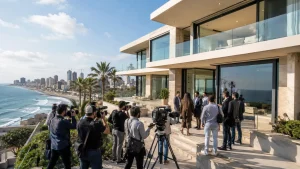
The listing has attracted attention because it combines a well-known billionaire, a reported £34m asking price, a prime Tel Aviv location and Abramovich’s UK sanctions background.
For property professionals, it shows that ultra-prime homes are increasingly assessed for legal, banking and ownership risks, not just location and prestige.
The attention is being driven by several factors:
- Abramovich is a former Chelsea FC owner and one of the most recognisable sanctioned billionaires linked to the UK.
- Tel Aviv’s prime districts are attractive to international and domestic high-net-worth buyers.
- A reported £34m listing places the property firmly within the ultra-prime bracket.
- Sanctions-sensitive ownership can affect buyer confidence, bank approvals and adviser due diligence.
- The story connects a local property asset to wider questions about global wealth mobility.
For a UK property audience, the relevance is not whether one mansion sells in Tel Aviv. The bigger question is whether high-value property is becoming harder to trade when ownership is connected to political controversy or sanctions.
What Is Known About the Reported £34m Roman Abramovich Tel Aviv Property Sale?
Available reports indicate that Roman Abramovich has reportedly listed a Tel Aviv mansion for around £34m–£35m. At present, the property should be described as a reported listing, not a confirmed sale, as no completed transaction has been officially verified.
While the reports note Abramovich’s sanctions background, they do not confirm that sanctions were the direct reason for the listing.
In any ultra-prime property transaction, factors such as buyer interest, legal due diligence, banking approvals and regulatory compliance can all influence whether the sale proceeds and the final price achieved.
How Does Abramovich’s Israel Property History Add Context to the Tel Aviv Listing?

Abramovich’s reported Tel Aviv property listing forms part of his wider real estate history in Israel. His previous high-profile property purchases provide useful context and help explain why the latest reported listing has attracted significant attention.
The Neve Tzedek Property Connection
Abramovich has previously been linked to major real estate in Tel Aviv’s Neve Tzedek area. Earlier reports said he bought the former Varsano Hotel property in 2015, a high-profile acquisition in one of the city’s most fashionable neighbourhoods.
Neve Tzedek is known for heritage buildings, boutique hotels, restored homes and proximity to the Mediterranean coast.
That background matters because it places the latest reported listing within a longer Israeli property story rather than treating it as an isolated sale.
How Is the Herzliya Estate Different from the Tel Aviv Property?
The Tel Aviv property should not be confused with Abramovich’s reported Herzliya Pituah estate. Herzliya Pituah is a separate luxury coastal area north of Tel Aviv. Previous reporting described Abramovich’s Herzliya purchase as one of Israel’s most expensive residential deals.
This distinction is important for factual accuracy. Tel Aviv, Neve Tzedek and Herzliya are not interchangeable locations, and the article should avoid blending separate property references into one asset.
Earlier Israeli Real Estate Reports
The latest reported Tel Aviv listing fits into a broader pattern of Israeli property reporting involving Abramovich. For readers, this context helps explain why a Tel Aviv sale attracts attention even before any completed transaction is confirmed.
Why Does Abramovich’s UK Sanctions Background Matter to This Property Story?
Abramovich’s UK sanctions background matters because it shapes how readers interpret the property listing.
In March 2022, the UK government announced sanctions against Abramovich, including an asset freeze, travel ban and restrictions on UK individuals and businesses dealing with him through its UK official sanctions announcement.
That does not prove sanctions caused the Tel Aviv listing. The property is in Israel, and any transaction would depend on jurisdiction, parties, banks, advisers and sanctions rules.
However, the sanctions context is relevant because it may influence how buyers, lawyers and financial institutions approach high-value deals.
For UK property professionals, the main lessons are practical:
- Sanctions screening is now central to high-value property transactions.
- Politically exposed ownership can slow legal and banking processes.
- Reputational risk can affect both buyers and intermediaries.
- Source-of-funds checks may become more detailed for high-profile sellers.
- A valuable property may still face liquidity constraints if the transaction is complex.
The property itself may be attractive, but ultra-prime sales increasingly depend on the confidence of banks, lawyers, buyers and regulators.
What Does the Frozen Chelsea Sale Money Reveal About Wealth, Sanctions and Property?

The frozen Chelsea sale proceeds show that even major assets can become legally difficult to monetise when sanctions, licensing and political commitments overlap.
The £2.5bn Chelsea Proceeds Dispute
The Chelsea sale remains central to UK interest in Abramovich. The UK government said more than £2.5bn from the 2022 sale had been frozen in a UK bank account, and in December 2025 it issued a Chelsea proceeds licence statement calling for the funds to benefit Ukraine.
The government statement included official comments from ministers:
Prime Minister Keir Starmer said:
“The clock is ticking on Roman Abramovich.”
Chancellor Rachel Reeves said it was “unacceptable” for the money to remain frozen.
Why the Dispute Matters Beyond Football
The issue is no longer only about Chelsea FC. It is about whether frozen wealth can be moved, donated or redirected when sanctions, legal ownership and government policy are all involved.
Reuters reported in March 2026 that Abramovich’s lawyers said he would fight any UK attempt to seize the Chelsea sale money, arguing the funds remained his property.
A Wider Question of Asset Liquidity
The dispute shows that wealth and liquidity are not the same. A billionaire may hold valuable assets, but sanctions, licences, legal proceedings and bank compliance can restrict how those assets are used.
| Asset issue | Property-market relevance |
| Frozen sale proceeds | Shows how valuable assets can become legally restricted |
| Sanctions licences | May determine whether money can move |
| Ownership disputes | Can delay resolution for years |
| Banking scrutiny | Can slow or block high-value transactions |
| Reputational exposure | Can affect buyer and adviser appetite |
This is why the Tel Aviv listing is being read as a wider signal, not only as a residential property story.
What Does the Tel Aviv Listing Signal for Ultra-Prime Real Estate?
The reported Tel Aviv property listing highlights how the ultra-prime real estate market is increasingly influenced by more than location, design or luxury.
Today, factors such as legal status, sanctions, regulatory compliance and the owner’s public profile can play an important role in high-value property transactions.
For premium properties, the pool of potential buyers is already limited. When a seller is subject to international scrutiny, buyers, banks and legal advisers may carry out additional due diligence before proceeding. This can make transactions more complex and extend the sales process.
Overall, the reported listing illustrates how luxury property has become closely linked with financial, legal and geopolitical considerations, alongside its traditional role as a valuable real estate asset.
Why Should UK Property Investors and Advisers Pay Attention?

UK property investors and advisers should pay attention because London remains one of the world’s most scrutinised luxury property markets.
A Tel Aviv listing involving Abramovich may not directly move London prices, but it reflects the same global forces affecting Mayfair, Knightsbridge, Belgravia and other prime districts.
For UK professionals, the practical relevance includes:
- Stronger source-of-funds checks
- More attention to beneficial ownership
- Higher sensitivity around politically exposed persons
- Greater reputational risk for agents and advisers
- More complex banking and legal approvals
- Slower transaction timelines in high-risk cases
The UK has strengthened scrutiny of economic crime, sanctions and high-value property ownership. As a result, ultra-prime property sales now face greater legal and compliance checks, making the Abramovich Tel Aviv property story relevant to both global and UK markets.
What Are the Confirmed Facts, Reported Claims and Market Interpretations?
A careful article on the Roman Abramovich Tel Aviv property should separate what is confirmed, what is reported and what is editorial interpretation.
This is important because the story involves sanctions, frozen funds and high-value international real estate.
Confirmed Facts
The following facts are based on official UK government sources. The UK sanctioned Roman Abramovich in March 2022, imposing an asset freeze and travel ban. The government has also confirmed that more than £2.5 billion from the Chelsea FC sale remains frozen in a UK bank account.
Key confirmed points:
- Abramovich was sanctioned by the UK in March 2022.
- The sanctions included an asset freeze and travel ban.
- Chelsea FC was sold after the sanctions were imposed.
- The Chelsea sale proceeds remain frozen in the UK.
These facts do not explain why the Tel Aviv property was reportedly listed, but they provide important context around sanctions and asset access.
Reported Claims
The reported claims relate mainly to the Tel Aviv property itself.
Media reports say Abramovich has put a Tel Aviv property up for sale for around £34m–£35m. This should be described as a reported listing, not a completed sale, unless a final transaction is confirmed by reliable reporting or official records.
The wording should remain cautious:
- “The property has reportedly been listed”
- “The asking price has been reported at around £34m–£35m”
- “The listing has been viewed in the context of Abramovich’s sanctions position”
- “There is no confirmed public evidence that sanctions directly caused the listing”
The article should avoid saying that the home has sold, that sanctions forced the sale, or that the Tel Aviv property is the same as Abramovich-linked property in Herzliya.
Market Interpretation
The market interpretation is where the article can explain what the reported sale may signal for ultra-prime real estate.
The listing may suggest that ultra-high-net-worth owners are reassessing liquidity, legal exposure and portfolio risk. It may also show that luxury homes are no longer judged only by location, architecture and price.
In sensitive cases, buyer confidence, banking checks, reputational risk and sanctions compliance can all affect the transaction.
What Could Happen Next in the Roman Abramovich Tel Aviv Property Story?

The next stage of the story will depend on whether the reported property listing results in a completed sale and whether further official information becomes available.
Any developments involving sanctions, legal proceedings or high-value property transactions could also attract continued public attention.
Key developments to watch include:
- Confirmation of a completed Tel Aviv property sale.
- The final sale price, if publicly disclosed.
- Details of the buyer, if officially reported.
- Any legal or banking developments affecting the transaction.
- Updates on the frozen Chelsea FC sale proceeds.
- Further changes involving Abramovich-linked property holdings.
The reported listing remains a significant high-value property story, with broader relevance to international sanctions, wealth management, regulatory compliance and the global luxury property market
Conclusion
The Roman Abramovich Tel Aviv property listing is more than a reported luxury home sale. It reflects how ultra-prime real estate is now shaped by sanctions, liquidity, legal checks and reputational risk.
For UK property readers, the story highlights a wider market shift: high-value homes remain desirable, but ownership background and compliance scrutiny can strongly influence how quickly, easily and confidently major international property deals move forward.
FAQs
How much is the Abramovich Tel Aviv property reportedly worth?
The property has reportedly been listed for around £34m–£35m. The figure should be treated as a reported asking price, not a confirmed completed sale price.
Has the Tel Aviv property already been sold?
Current reports point to a listing, not a confirmed completed sale. The article should not say the home has sold unless a verified completion is reported.
Is the property connected to Neve Tzedek?
Abramovich has previously been linked to property in Tel Aviv’s Neve Tzedek area. Any article should explain this connection carefully and avoid overstating unverified details.
Is the Tel Aviv home the same as the Herzliya estate?
No. Herzliya Pituah is a separate luxury location outside Tel Aviv. It should not be confused with the reported Tel Aviv listing.
Did sanctions directly cause the property listing?
There is no confirmed public evidence proving that sanctions directly caused the listing. Sanctions are relevant background, but motive should not be stated as fact.
Why is this story important for luxury property markets?
It shows that ultra-prime real estate is affected by more than location and price. Legal status, sanctions, banking checks and reputation can all influence high-value deals.
What should UK buyers and agents learn from this?
UK buyers and agents should recognise the importance of due diligence, source-of-funds checks, sanctions screening and careful legal advice in high-value international property transactions.
Editorial Note:
This article is written as property-market news analysis. It does not make legal findings or allege wrongdoing beyond what official sources and reliable reports state.
No invented spokesperson quotes have been used. The official quotes included are taken from UK government statements.
How We Checked?
This article was checked against the user-provided reference reports, GOV.UK sanctions material, GOV.UK Chelsea sale proceeds statements, Reuters reporting on the Chelsea funds dispute and Israeli property-market reporting connected to Abramovich.