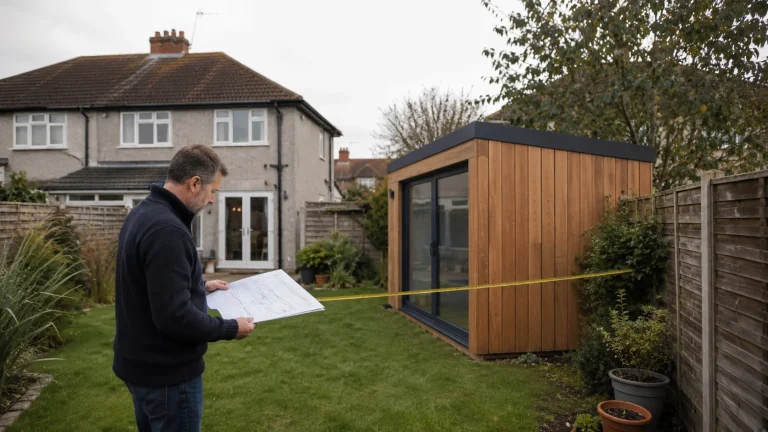
In most parts of the UK, you can build a shed right up to your neighbour’s boundary without planning permission as long as the shed is no taller than 2.5 metres when positioned within 2 metres of the boundary.
These rules fall under permitted development rights in England and apply to typical garden sheds, workshops, and outbuildings used for domestic purposes.
However, additional restrictions apply to listed buildings, conservation areas, and larger structures.
While building directly beside the boundary is legal in many cases, practical considerations such as maintenance access, drainage, and neighbour relations should also be considered before construction begins.
Key Takeaways:
- You can usually place a shed directly beside the boundary without planning permission.
- If the shed is within 2 metres of the boundary, the maximum height is 2.5 metres.
- Sheds positioned more than 2 metres away can be taller.
- The shed cannot cover more than 50% of your total garden area.
- The structure must not be placed in front of the main front wall of your house.
- Roof overhangs and rainwater drainage must stay within your property.
- Rules are stricter for listed buildings, conservation areas, national parks, and Areas of Outstanding Natural Beauty.
- Scotland, Wales, and Northern Ireland may have different regulations from England.
Can You Build a Shed Directly Next to a Boundary?
Yes, under permitted development rules in England, homeowners can generally build a shed directly next to a neighbour’s boundary. There is no legal minimum distance requirement in most standard residential situations.
The most important factor is the height of the structure. Once the shed is within 2 metres of the boundary line, the overall height must not exceed 2.5 metres from ground level to the highest point of the roof.
This applies to:
- Wooden garden sheds
- Metal storage units
- Home workshops
- Summer houses
- Garden offices and outbuildings
If the shed exceeds this height limit while remaining close to the boundary, planning permission will usually be required from your local council.
What Happens if the Shed Is More Than 2 Metres Away?
If you position the shed more than 2 metres away from the boundary, the permitted height increases significantly.
Under standard English planning rules:
| Shed Roof Type | Maximum Height Allowed |
| Dual-pitched roof | Up to 4 metres |
| Flat roof or other roof styles | Up to 3 metres |
This gives homeowners more flexibility when building larger garden rooms, workshops, or storage spaces deeper within the garden.
However, the structure must still remain secondary to the main house and comply with other permitted development conditions.
How Much Garden Space Can a Shed Cover?
Even if the height rules are followed, the total area covered by outbuildings is still limited.
Sheds, garages, garden offices, extensions, and other structures combined must not cover more than 50% of the land surrounding the original house.
This rule exists to prevent gardens from becoming overdeveloped and to maintain reasonable outdoor space around residential properties.
The “original house” refers to the property as it stood when first built, not after later extensions or modifications.
Can the Shed Be Built at the Front of the House?
No. Under permitted development rights, sheds and outbuildings cannot normally be placed forward of the principal elevation of the property.
In simple terms, this means:
- You cannot usually build a shed in front of your home facing the road.
- Sheds are generally restricted to rear gardens or side garden areas behind the main front wall.
If you want to install a shed in a front garden, planning permission is usually required.
Why Leaving a Small Gap Can Still Be a Smart Idea?
Although the law may allow you to build directly on the boundary, many builders and property professionals still recommend leaving a small maintenance gap.
A property surveyor explained this issue clearly:
“I’ve seen many neighbour disputes begin simply because somebody couldn’t access the side of their shed for repairs or painting. Even leaving half a metre can prevent future problems and make maintenance far easier.”
Leaving a gap can help with:
- Painting and wood treatment
- Roof repairs
- Preventing trapped moisture
- Cleaning gutters
- Avoiding accidental trespass onto neighbouring land
Many homeowners only realise these practical issues after construction is complete.
Does the Roof Need to Stay Inside Your Boundary?
Yes. Even if the main structure sits correctly within your land, the roof cannot legally overhang into your neighbour’s property.
This includes:
- Roof edges
- Gutters
- Fascia boards
- Drainage pipes
Rainwater runoff should also remain within your own property boundaries.
A building consultant described a common mistake homeowners make:
“People often focus only on where the walls sit, but legally the roofline matters too. If water drains into the neighbour’s garden or the roof crosses the boundary, complaints can escalate very quickly.”
Careful planning during installation helps avoid expensive alterations later.
Do Different Rules Apply in Conservation Areas or Listed Buildings?
Yes. Planning rules become stricter in certain protected locations.
You may face additional restrictions if your property is located in:
- A conservation area
- A national park
- An Area of Outstanding Natural Beauty (AONB)
- A World Heritage Site
- A listed building property
In some cases, even small sheds may require planning permission.
Local councils can also remove permitted development rights entirely in certain areas through Article 4 Directions.
Checking directly with your local planning authority before building is always recommended if your property falls into one of these categories.
Do These Rules Apply Across the Whole UK?

Not always. The guidance above mainly applies to England.
Planning regulations can differ in:
- Scotland
- Wales
- Northern Ireland
For example, height limits, boundary rules, and permitted development allowances may vary slightly depending on the local planning system.
Before starting construction, homeowners outside England should verify the latest rules through their local authority or government planning guidance.
Final Thoughts
In England, most homeowners can legally build a shed right beside their neighbour’s boundary without planning permission as long as the structure remains 2.5 metres high or lower when within 2 metres of the boundary line.
However, legal permission does not always mean it is the most practical option. Maintenance access, neighbour relationships, drainage, and long-term usability are all important considerations before construction begins.
For larger sheds, protected properties, or unusual garden layouts, seeking advice from your local planning authority or a qualified surveyor can help avoid disputes and unexpected planning issues later on.
FAQs
Can my neighbour stop me from building a shed near the boundary?
Your neighbour usually cannot stop you if the shed complies with permitted development and boundary rules.
Do I need planning permission for a shed under 2.5 metres high?
In most cases, no planning permission is needed if the shed meets permitted development conditions.
Can a shed roof overhang my neighbour’s property?
No, the roof, gutters, and drainage must remain entirely within your own boundary.
How tall can a shed be next to a fence?
A shed within 2 metres of a boundary can normally be no taller than 2.5 metres.
Can I build a shed in my front garden?
Usually not without planning permission, as sheds cannot normally sit forward of the main front wall of the house.